Is It Really Possible to Learn to Speed Read? | Gizmodo #reading


Ninety-five percent of college educated individuals read at a rate between 200-400 words per minute according to extensive research done by University of Massachusetts Amherst professor Dr. Keith Rayner. However, there exists a small, but rather vocal subset of people who insist that they can read several times faster than this using various speed reading techniques.

With very little searching, you’ll also find many-a-company claiming that after going through their program or using their app regularly, you can easily read even as many as 1,000 words per minute. Tim Ferriss of Four Hour Work Week fame offers a method for increasing speed in reading for free on his website, claiming with this method, you’ll see an average increase in reading speed of about 386% in just three hours of practice.

So is any of this really possible? READ MORE: Is It Really Possible to Learn to Speed Read? | Gizmodo
A Typology of Web 2.0 Learning Technologies [Article] | EDUCAUSE.edu


This article presents the outcomes of a typological analysis of Web 2.0 learning technologies. A comprehensive review incorporating over two thousand links led to identification of 212 Web 2.0 technologies that were suitable for learning and teaching purposes. The typological analysis then resulted in 37 types of Web 2.0 technologies that were arranged into 14 clusters. The types of Web 2.0 learning technologies, their descriptions, pedagogical uses and example tools for each category are described, arranged according to the clusters. Results of this study imply that educators typically have a narrow conception of Web 2.0 technologies, and that there is a wide array of Web 2.0 tools as yet to be fully harnessed by learning designers and educational researchers.

READ MORE: A Typology of Web 2.0 Learning Technologies | EDUCAUSE.edu

[Top 100] Books that have stayed with us | Facebook


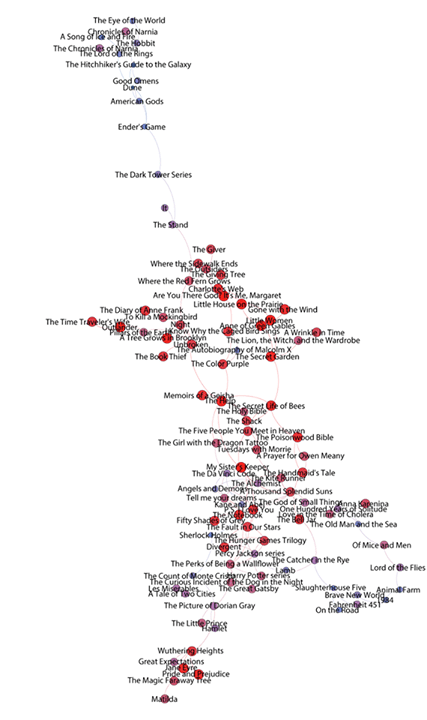
Favorite books are something friends like to share and discuss. A Facebook meme facilitates this very interaction. You may have seen one of your friends post something like “List 10 books that have stayed with you in some way. Don’t take more than a few minutes, and don’t think too hard. They do not have to be the ‘right’ books or great works of literature, just ones that have affected you in some way.” If not great works of literature, what are the books that have stayed with us?

List of the Top 100: Books that have stayed with us | Facebook

IBM Software Learns Your Personality, Could Tailor Ads Accordingly | MIT Technology Review


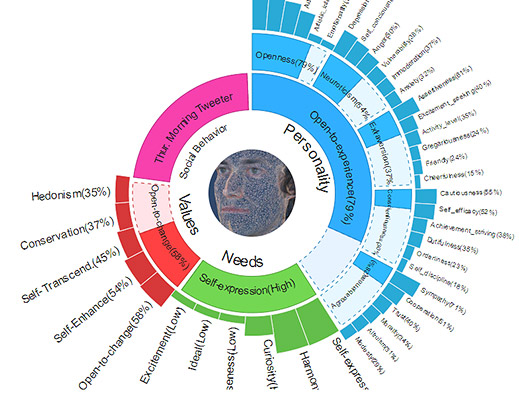
Trying to derive a person’s wants and needs—conscious or otherwise—from online browsing and buying habits has become crucial to companies of all kinds.

Now IBM is taking the idea a step further. It is testing technology that guesses at people’s core psychological traits by analyzing what they post on Twitter, with the goal of offering personalized customer service or better-targeted promotional messages.

Read more: IBM Software Learns Your Personality, Could Tailor Ads Accordingly | MIT Technology Review.

IBM Personality Analysis


Open Source Solve[d] J.K. Rowling Mystery | The Official Rackspace Blog


The software…used—the Java Authorship Attribution Program—is open source and freely available on GitHub for download. The academics studied the machine-readable text of Cuckoo’s and compared it to Rowling’s previous novel. In the course of doing so, they discovered a number of linguistic signatures that pointed to the author of Harry Potter. The software is predicated on the analysis of syntax, style and punctuation, but just as importantly on the distinctive use of prepositions and articles. It turns out writers can change sentence length and rhythm and can cater to a new audience, but they’re unlikely to change how they use “around” and “at” and “on.”

Read the full story: Open Source Solve[d] J.K. Rowling Mystery – The Official Rackspace Blog.

Medieval book in unknown language contains message | Crave – CNET


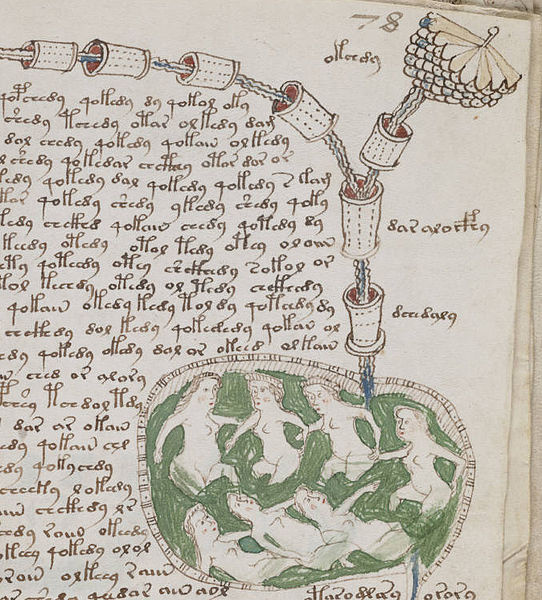
The Voynich Manuscript has eluded every attempt at deciphering. But new computerized statistical analysis suggests it has a genuine message and is not a hoax.

via Medieval book in unknown language contains message | Crave – CNET.

Voynich

CIA Releases Analyst’s Fascinating Tale of Cracking the Kryptos Sculpture | Threat Level | Wired.com


CIA Releases Analyst’s Fascinating Tale of Cracking the Kryptos Sculpture | Threat Level | Wired.com.

This story exemplifies qualities we could all try to nurture in ourselves and others: perseverance, dedication, motivation, discretion, problem-solving…and curiosity!

Quotable: “When confronted with a puzzle or problem, we sometimes can lose sight of the fact that we have issued a challenge to ourselves–not to our tools. And before we automatically reach for our computers, we sometimes need to remember that we already possess the most essential and powerful problem-solving tool within our own minds.”

Hyperlinked web version of The Puzzle at CIA Headquarters: Cracking the Courtyard Crypto by David D. Stein | Elonka.com

What is Text Mining? | Information Space


Text-mining programs go further, categorizing information, making links between otherwise unconnected documents and providing visual maps via What is Text Mining? | Information Space.

Text mining, or the indexing of content, is important because it allows us to make sense and extract meaning out of large amounts of data. Text-mining is an activity also related to data curation, the semantic web, big data and bioinformatics. Its becoming more popular as a way to conduct research and information retrieval within databases.

Here is an informative presentation called The Library as Dataset: Text Mining at Million-Book Scale from Yale University, which discusses a text mining method, digital humanities and libraries.

Here is an article with an information science perspective called Text Mining and Information Retrieval, Canadian Journal of Information and Library Science, 2011, 35(3), pp. 223-227, if you have access to scholarly databases.

Data-Visualization Firm’s New Software Autonomously Finds Abstract Connections | Wired Design | Wired.com


“Ayasdi, a company that has developed data visualization software it says uses big data to answer the questions you never thought to ask…Their new product is called the Iris Insight Discovery platform. It’s a type of machine learning that uses hundreds of algorithms and topological data analysis to mine huge datasets before presenting the results in a visually accessible way. Using algebraic topology, the system automatically hunts down data points close in nature and maps these out to reveal a network of patterns for a researcher to decipher…”

via Data-Visualization Firm’s New Software Autonomously Finds Abstract Connections | Wired Design | Wired.com.