
From Collaborative Coding to Wedding Invitations: GitHub Is Going Mainstream | Wired.com


“The open, collaborative workflow we have created for software development is so appealing that it’s gaining traction for non-software projects that require significant collaboration,” says GitHub cofounder and CEO Tom Preston-Werner.

With 3.4 million users, the five-year-old site is a runaway hit in the hacker community, the go-to place for coders to show off pet projects and crowdsource any improvements. But the company has grander ambitions: It wants to change the way people work. It’s starting with software developers for sure, but maybe one day anyone who edits text in one form or another — lawyers, writers, and civil servants — will do it the GitHub way.

See the full story: From Collaborative Coding to Wedding Invitations: GitHub Is Going Mainstream | Wired Enterprise | Wired.com.
University of Texas at Austin Online Class Aims to Earn Millions | WSJ.com


Two University of Texas at Austin professors this week launched their introductory psychology class from a makeshift studio, with a goal of eventually enrolling 10,000 students at $550 a pop and bringing home millions for the school.

The professors have dubbed the class a SMOC—Synchronous Massive Online Class—and their effort falls somewhere between a MOOC, or Massive Open Online Course, a late-night television show and a real-time research experiment. The professors lecture into a camera and students watch on their computers or mobile devices, in real time.

The class, which made its debut [August 29, 2013], is emblematic of just how quickly the once-static business model of higher education is shifting as technology gives students more options and forces schools and professors to compete for their attention.

See the full story: University of Texas at Austin Online Class Aims to Earn Millions | WSJ.com.

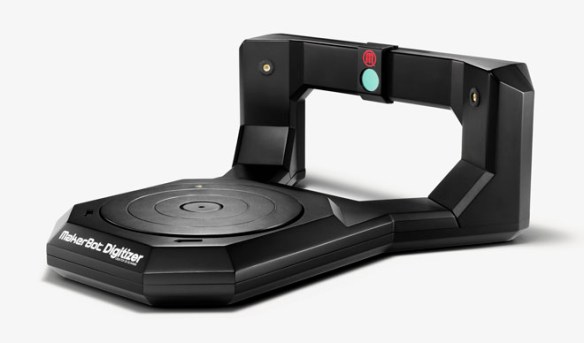
MakerBot Digitizer Will Clone All Your Stuff Using a Turntable and Lasers | Wired.com


See the post: MakerBot Digitizer Will Clone All Your Stuff Using a Turntable and Lasers | Gadget Lab | Wired.com

MakerBot Digitizer Will Clone All Your Stuff Using a Turntable and Lasers | Gadget Lab | Wired.com

Facebook Leads an Effort to Lower Barriers to Internet Access | NYTimes.com


About one of every seven people in the world uses Facebook. Now, Mark Zuckerberg, its co-founder and chief executive, wants to make a play for the rest — including the four billion or so who lack Internet access.

On Wednesday, Facebook plans to announce an effort aimed at drastically cutting the cost of delivering basic Internet services on mobile phones, particularly in developing countries, where Facebook and other tech companies need to find new users. Half a dozen of the world’s tech giants, including Samsung, Nokia, Qualcomm and Ericsson, have agreed to work with the company as partners on the initiative, which they call Internet.org.

The companies intend to accomplish their goal in part by simplifying phone applications so they run more efficiently and by improving the components of phones and networks so that they transmit more data while using less battery power.

There is considerably more content to this article. See the full story:  Facebook Leads an Effort to Lower Barriers to Internet Access | NYTimes.com.

10 open source projects that are leading innovation | TechRepublic


Technology depends upon Innovation. Without boundary-pushing ideas, technology (and those who depend upon it) would get nowhere. Innovation also drives businesses and society. Many people assume that most innovation is derived from closed source software and developers. That assumption is, in many instances, very wrong.

There are thousands upon thousands of open source projects that bring about innovation. Some do so on a small scale, while others are thinking massive and global.

The author lists 10 projects that are leading innovation in the world of technology.

  1. OpenNebula
  2. Ubuntu Unity
  3. OpenClinica
  4. OpenStack
  5. Kitware
  6. OpenDaylight
  7. ForgeRock
  8. Facebook Open Compute
  9. Hadoop
  10. Android

See the full story: 10 open source projects that are leading innovation | TechRepublic.

The Mistake Smart People Make: Being In Motion Vs. Taking Action | LifeHacker


There is a common mistake that often happens to smart people—in many cases, without you ever realizing it. The mistake has to do with the difference between being in motion and taking action. They sound similar, but they’re not the same.

via The Mistake Smart People Make: Being In Motion Vs. Taking Action | LifeHacker.

How Is Information Technology Changing Healthcare? [INFOGRAPHIC] | Mashable


It’s not such a surprise these days when you visit your doctor’s office and your physician uses an iPad to take notes and store your medical records electronically. It makes sense, since managing modern-day medical information involves a great deal of effort and resources.

This tech shift has spurred the field of “health informatics,” which describes the intersection of healthcare, information technology and business. The infographic below — by the University of Illinois at Chicago’s (UIC) Online Masters of Health Informatics program — breaks down and describes health informatics and the mashup of technology and healthcare.

via How Is Information Technology Changing Healthcare? [INFOGRAPHIC] | Mashable

Healthcare & IT

Recent Links Introvert/Extrovert Articles


12 Most Absurd Debates Between Extroverts and Introverts | Kate Nasser

5 myths about extroverts that need to die | Stephen’s Lighthouse

How an Introvert Can Be Happier: Act Like an Extrovert | WSJ

6 Things You Thought Wrong About Introverts | HuffPost

10 Myths About Introverts | Stephen’s Lighthouse

How Introverts and Extroverts Can Peacefully Coexist | LifeHacker

Libraries Weigh Accepting Paid Ads to Keep Afloat | American Libraries Magazine


With the Great Recession still affecting public service budgets nationwide, libraries continue to pursue new funding avenues. The latest foray into fiscal triage, undertaken by at least two libraries—Toronto (Ont.) Reference Public Library and the Port Chester –Rye Brook (N.Y.) Library—is to allow commercial enterprises to advertise their products and services in the library.

In both cases, the libraries have accepted a quid pro quo from ad placement companies. The firms provide a product for free to the library. In exchange, the company keeps whatever revenue comes from selling the ads displayed on that free product.

See the full article: Libraries Weigh Accepting Paid Ads to Keep Afloat | American Libraries Magazine.

More Vendors Help Libraries Stream Video | The Digital Shift


Since the beginning of 2013, four major library vendors have announced the launch of new or expanded streaming services that will enable patrons to view movies and television shows at their library or at home using computers, tablets, smart TVs, or any device equipped with a web browser.

See the full article: More Vendors Help Libraries Stream Video | The Digital Shift.