A Board Game That Teaches Four-Year-Olds How To Code | Kinja


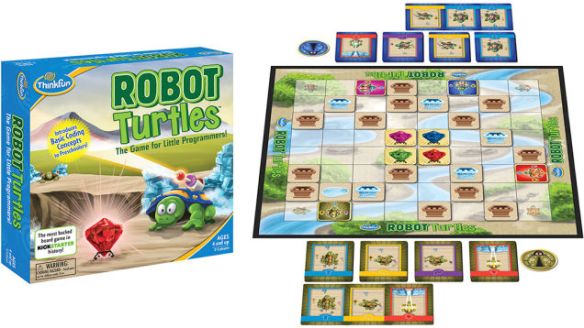
When was the last time a champion speller rolled up to a Bee in a Ferrari? Never. If you really want to guarantee your kids make something of themselves one day, youll want to forget board games like Scrabble and focus on building real-world skills. Not only does Robot Turtles teach a love of Herpetology the study of reptiles it also teaches them the basics of computer programming—aka coding.

Read More: A Board Game That Teaches Four-Year-Olds How To Code | Kinja

Doctor Who’s new web game aims to teach children programming skills | theguardian.com


Doctor Who’s latest adventure sees him teaming up with a Dalek and trying to save the universe, but also teaching children some early computer programming skills.

This isn’t a TV show, however: it’s a game due to launch on Wednesday 22 October on the broadcaster’s CBBC website. The Doctor and the Dalek includes voice narration from current Doctor Peter Capaldi, and a new story by Phil Ford, who has written for the TV show.

The free web game is aimed at 6-12 year-olds, and involves freeing a battered Dalek from a ship of Cybermen, then building it back up to full strength through puzzles based on the programming elements of the new English computing curriculum.

via Doctor Whos new web game aims to teach children programming skills | Technology | theguardian.com.

DPLA Community Reps Produce Hackathon Planning Guide, Now Available | DPLA


We’re excited to announce the release of a new Community Reps-produced resource, GLAM Hack-in-a-box, a short guide to organizing and convening a hackathon using cultural heritage data from GLAM organizations Galleries, Libraries, Archives, Museums including DPLA. We hope this guide will serve as a useful resource for those either unfamiliar with or inexperienced in pulling together a hackathon.

via Digital Public Library of America » Blog Archive » DPLA Community Reps Produce Hackathon Planning Guide, Now Available.

Kids Need To Learn Digital Literacy—Not How To Code | ReadWrite


The new narrative in education, echoed from Silicon Valley to Washington, D.C., is: “Everyone should learn to code.” But something’s getting lost in translation between technologists and parents of students around the country. Let’s get this out of the way: Not everyone needs to learn how to code. Coding is just one part of the constantly evolving technological landscape. There’s a big difference between learning how to code and having a fundamental understanding of how technology and software operate. Of the two, the latter is way more important for most people. What students—and, really, anyone who wants to function in careers in the future—should learn is how to be digitally literate.

READ MORE: Kids Need To Learn Digital Literacy—Not How To Code | ReadWrite

Learn Ruby: 29 of The Best Online Educational Resources to Learn to Ruby and Ruby on Rails | SkilledUp


The very best ways to learn Ruby, Ruby on Rails, and the art of building dynamic web applications, including free and paid tutorials, instructor-guided courses, community support, reference materials, and the tools you need to get going. Learn Ruby: 29 of The Best Online Educational Resources to Learn to Ruby and Ruby on Rails | SkilledUp.

Finally, a Way to Teach Coding to the Touchscreen Generation | WIRED


Finally, a Way to Teach Coding to the Touchscreen Generation | Enterprise | WIRED

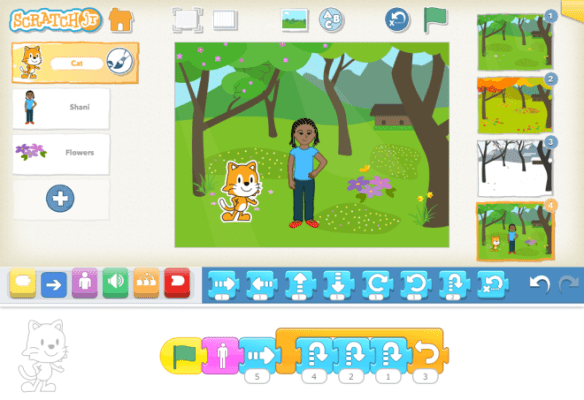
[A] new app might be able to break through that passivity by meeting the Touchscreen generation where their fingers live. ScratchJr is a new iPad variation of the Scratch programming language, a tool created at MIT to help teach kids to code. The premise for both is the same: instead of text, Scratch uses interlocking colored blocks to mimic the logical structures and functions of a typical grown-up programming language. Scratch scripts allow their creators to direct and interact with “sprites”—cartoonish characters on the screen. By introducing kids to coding without the hurdles of arcane syntax and bug-prevention, the hope is that they’ll become engaged enough with the process that their sensibilities will shift.

READ MORE: Finally, a Way to Teach Coding to the Touchscreen Generation | WIRED.

NASA’s About To Release a Mother Lode of Free Software | Gizmodo


If you’ve been thinking about getting started on the rocket project that’s been on your mind for ages, now is a good time to get serious. Next week, NASA will release a massive software catalog with over 1,000 projects. It’s not the first time the space agency’s released code, but it is the first time they’ve made it so easy.

The breadth and variety of the software projects that NASA’s about to give away are difficult to express. It’s not just a bunch of algorithms and star-finding software, though stuff like that is in there. The crazy geniuses that land rovers on Mars are actually releasing code for ultra high-tech NASA stuff like rocket guidance systems and robotics control software. There’s even some artificial intelligence.

And did I mention it’s all free? Read more: NASA’s About To Release a Mother Lode of Free Software | Gizmodo.

See also: NASA Technology Transfer Portal

‘Hour of Code’ Offers Free Coding Lessons | PCMag.com


Code.org today launched a massive campaign aimed at encouraging kids to learn computer programming.

Kicking off Computer Science Education Week, the nonprofit organization joined forces with supporters like Google, Microsoft, Amazon, Apple, Bill Gates, Mark Zuckerberg, Reid Hoffman, and Jack Dorsey to get students, teachers, and parents excited about coding.

The “Hour of Code” initiative, first announced in October, provides an interactive introduction through online tutorials. Are you just a beginner looking to learn the basics, or have you already mastered one coding language and want to pick up another? Visit Code.org to find coaching on building apps and Web pages, programming robots, and more.

Read: ‘Hour of Code’ Offers Free Coding Lessons | News & Opinion | PCMag.com.

Which Programming Language Should I Learn First? | LifeHacker


Dear Lifehacker,

With all the buzz about learning to code, I’ve decided to give it a try. The problem is, I’m not sure where to start. What’s the best programming language for a beginner like me?

Signed,
Could-Be Coder

Dear Could-Be,

That’s probably one of the most popular questions from first-time learners, and it’s something that educators debate as well. The thing is, you can ask ten programmers what the best language is to get your feet wet with and you could get ten different answers—there are thousands of options. Which language you start with depends not only on how beginner-friendly it is, though, but also the kind of projects you want to work on, why you’re interested in coding in the first place, and perhaps also whether you’re thinking of doing this for a living. Here are some considerations and suggestions to help you decide.

Read the answer: Which Programming Language Should I Learn First? | LifeHacker?

Readworthy: Education & Technology, Librarianship


Education & Technology

Librarianship