Forget Searching For Content – Content Is About To Start Searching For You – ReadWrite


The world of search is about to be flipped completely on its head. As part of that sea change, today’s reactive Web-based searches are about to give way to proactive, geo-fenced answers that will pop up before you even frame the question.

In many cases, you won’t be searching for content – content will be searching for you via Forget Searching For Content – Content Is About To Start Searching For You – ReadWrite.

Actipedia. An Database of Creative Activism.


Actipedia is an open-access, user-generated database of creative activism. It’s a place to read about, comment upon, and share experiences and examples of how activists and artists are using creative tactics and strategies to challenge power and offer visions of a better society via Actipedia.

Actipedia

What is Text Mining? | Information Space


Text-mining programs go further, categorizing information, making links between otherwise unconnected documents and providing visual maps via What is Text Mining? | Information Space.

Text mining, or the indexing of content, is important because it allows us to make sense and extract meaning out of large amounts of data. Text-mining is an activity also related to data curation, the semantic web, big data and bioinformatics. Its becoming more popular as a way to conduct research and information retrieval within databases.

Here is an informative presentation called The Library as Dataset: Text Mining at Million-Book Scale from Yale University, which discusses a text mining method, digital humanities and libraries.

Here is an article with an information science perspective called Text Mining and Information Retrieval, Canadian Journal of Information and Library Science, 2011, 35(3), pp. 223-227, if you have access to scholarly databases.

1st website ever restored to its 1992 glory – Technology & Science – CBC News


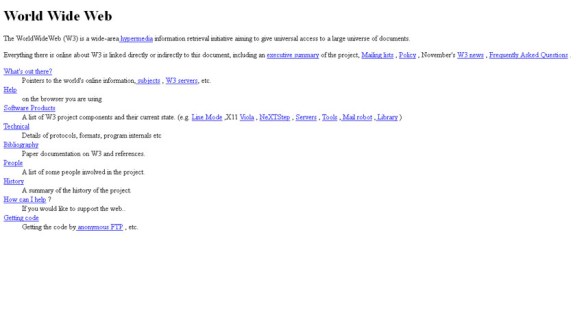
You can now re-visit the first web page ever — built 21 years ago — by directing your browser to the first ever web address. On Monday, the files for the website were put back online at the first ever URL: http://info.cern.ch/hypertext/WWW/TheProject.html.

via 1st website ever restored to its 1992 glory – Technology & Science – CBC News.

Very cool to view the first website – all text and hyperlinks. Not all the links are valid. As an information professional, I especially appreciate How Can I Help ? and What’s out there? by Subject (classified by subject of interest). Project Gutenberg has been around a long time!

First WWW Website

Digital Data Finds an Ancient Abode in DNA | Information Space


In 2012, scientists achieved an engineering feat which combined billions of years of development by nature and the next generation of bio-engineering, opening the gate to a new frontier of bleeding edge data storage technology.

This new data storage solution is encoding DNA to store digital data that can hold millions of gigabytes of data for thousands of years without any power. Researchers, since then, have sought means to code DNA like a data storage device and the results of these works have been nothing short of ground-breaking. After all, DNA is nature’s storage device, replicating and propagating genetic code over thousands of generations.

via Digital Data Finds an Ancient Abode in DNA | Information Space

Closure of fisheries’ libraries called ‘a ‘disaster’ for science | Canada.com


Closure of fisheries’ libraries called ‘a ‘disaster’ for science | Canada.com

Quotables

“Seven DFO libraries across Canada are to close by the fall, including two that have been amassing books and technical reports on the aquatic realm for more than a century.”

“It is information destruction unworthy of a democracy,” said Peter Wells, an ocean pollution expert at Dalhousie University in Halifax, who describes the closing of the libraries as a “national tragedy.”

“It will likely be a decade or more before all DFO’s technical reports are all digitized and available online, the librarian said.  But most of the reference books and materials in the DFO libraries – like Russia’s fishing monograms – cannot be digitized by the department because of copyright restrictions.”

“Wells see the library closures as more evidence of the way the federal government is “eviscerating” aquatic science by cutting jobs and eliminating programs, labs and services. “Libraries cannot simply be replaced by digitized collections,” he said.”

Resources for Interactive Maps


Please note this is not an exhaustive list. Thanks for the spark Jeanne K!

Quotable: “Digital maps provide amazing opportunities for integrating and displaying large sets of data and research in innovative and interactive ways and the world’s taking notice!” via Interactive Maps: Why They’re Awesome for Connecting the Dots | Information Space

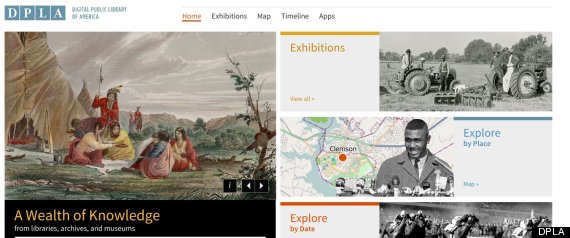
Digital Libraries

Visualize Interactive Maps

You may also like:

Attribution: Description snippets pulled from corresponding website’s about/summary/tagline.

Confirmed: Elsevier Has Bought Mendeley For $69M-$100M To Expand Its Open, Social Education Data Efforts | TechCrunch


Confirmed: Elsevier Has Bought Mendeley For $69M-$100M To Expand Its Open, Social Education Data Efforts | TechCrunch.

Related:

Elsevier In Advanced Talks To Buy Mendeley For Around $100M To Beef Up In Social, Open Education Data | TechCrunch | The Modern MLIS

NYPL Releases Digital Collections API to Public | The Digital Shift


“In a move that will allow libraries and independent software developers to write programs accessing over one million digital objects and records, the New York Public Library this week released an application programming interface (API) that facilitates connection to the NYPL Digital Gallery.” via NYPL Releases Digital Collections API to Public | The Digital Shift