Papyrus Mentioning Jesus’s Wife Is Likely Ancient and Not Fake, Scientists Say | Mashable


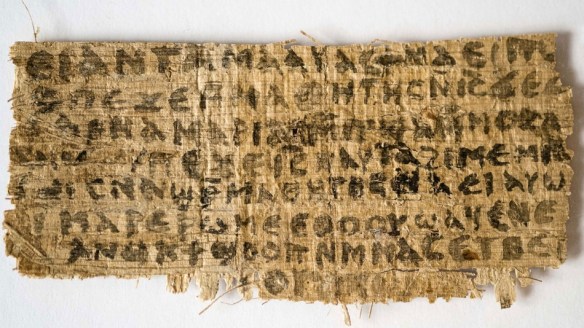
A papyrus fragment that mentions Jesus’s wife is likely ancient, probably dating between the sixth and ninth century, latest research shows.

When Karen L. King, the Hollis Professor of Divinity at Harvard Divinity School, announced the fragment’s existence in September 2012, there was a widespread debate over its authenticity. The fragment, known as the “Gospel of Jesus’s Wife,” probably originated from Egypt. It’s written in Coptic and contains the phrase “Jesus said to them, ‘my wife…,'” never before seen in any ancient text. It also mentions Jesus’s mother and a female disciple, who may be identified as “Mary.”

Now, James Yardley, senior research scientist in the Center for Integrated Science and Engineering at Columbia University, and Alexis Hagadorn, head of conservation at Columbia, used a technique called micro-Raman spectroscopy to determine the papyrus fragment’s age. Furthermore, Malcolm Choat from Macquarie University examined the fragment’s handwriting. Combined, their findings indicate that the papyrus and the ink on it are ancient and not a modern forgery. Read more: Papyrus Mentioning Jesus’s Wife Is Likely Ancient and Not Fake, Scientists Say | Mashable.

For the First Time Ever, Explore Angkor Wat With Google Street View | Travel | Smithsonian


[T]hose interested in exploring the wonder of Angkor don’t need to make a trek to Southeast Asia—and risk contributing to the damage of the site—to enjoy what the ruins have to offer. For the first time ever, Google Maps is granting users an up-close view of Angkor, through Google’s Street View project.

The move is an extension of Google Maps’ mission to make sure that its maps are the most accurate, comprehensive and useful available to users. While to most people, this might materialize in the form of directions—using Google Maps to get you from Point A to Point B— the company doesn’t see this as the limit for the product’s technology.

“Increasingly, if you look at the amount of power we have in our cellphones, the ability for those phones to know your location and customize an experience around you, they are becoming fairly good at making sure that people are able to explore the world around them,” says Manik Gupta, Google Maps Product Manager. “We want to make sure that we have the ability to share all these places with users all over the world.”

Read more: For the First Time Ever, Explore Angkor Wat With Google Street View | Travel | Smithsonian.

Last chapter for many Environment Canada libraries | PostMedia | Canada.com


Full Post

Last chapter for many Environment Canada libraries

Books and reports from a Department of Fisheries library at the Maurice Lamontagne Institute in Mont Joli, Que., tossed into a dumpster, according to scientists distributing the photo.

Photograph by: HANDOUT , Postmedia News

Environment Canada has a phone number for its library in Calgary. But a meteorologist answers, and he can’t say what’s become of the books.

It’s a similar story in Edmonton and Quebec City where federal libraries, with shelves loaded with reference books and scientific reports on everything from beluga whales to songbirds, now exist only in name.

Environment Canada lists the libraries on its website but the books are long gone.

“It’s been moved to Saskatoon,” said a woman named Susan who picked up at the phone number for the Edmonton library. In Yellowknife an answering machine said the Environment Canada library “is closed.” And the number listed for the federal conservation and environment library in Winnipeg is no longer in service.

Environment Canada, like the department of Fisheries and Oceans, is closing and consolidating its science libraries to the dismay of some observers who worry valuable books and materials are being lost.

“My sense is that the Environment Canada policy has been to essentially hack one arm off to save the other,” said one scientist, who asked not to be identified for fear of losing his job. He said the big worry is the loss of so-called “grey literature” — material that hasn’t been widely published, with as few as one or two copies in existence — and historical reports on wildlife and the environment that exist nowhere else.

Environment Canada libraries in Winnipeg, Edmonton, Calgary and Yellowknife have closed and the collections have been shipped to Saskatoon. A skeleton staff of one librarian and a couple of co-op students are said to be dealing with the consolidated collection in Saskatoon, which includes 650 boxes stashed in a “caged” storage areas awaiting sorting and cataloguing.

Several Environment Canada libraries in the East — including the ones in Quebec City and Sackville, N.B., have also been shuttered, others have been downsized, and some cases valuable materials has been tossed, scientists say.

Cuts to the federal science library programs have been underway for years but concern and controversy has grown as the books have been cleared off the shelves, with excess and outdated material landing in dumpsters. Peter Wells, an ocean pollution expert at Dalhousie University in Halifax, describes the closing of the DFO libraries as a “national tragedy.” And recent reports have likened it to burning books.

Barbara Clubb, interim executive director of the Canadian Library Association, said the group’s members are concerned. The reports of loss of access to valuable materials are “very, very worrying,” said Clubb.

The government defends the closures saying they are part of an effort to modernize its science libraries.

Environment Canada’s media office said in a statement Thursday that the department is closing and consolidating 12 libraries and reading rooms as part of a “modernization initiative” and “digitization plan.”

And Gail Shea, Minister of Fisheries and Oceans insisted this week that the closing of DFO libraries will save taxpayers’ money and not impact access.

“It is absolutely false to insinuate that any books were burnt,” Gail Shea, Minister of Fisheries and Oceans said in a statement this week.

Seven DFO libraries across Canada, including two that have been amassing books and technical reports on the aquatic realm for more than a century, are being consolidated at two primary locations in Sidney, B.C., and Dartmouth, N.S.

Shea said duplicate materials were offered to other libraries. “They were also offered to the DFO staff on site at the library, then offered to the general public, and finally were recycled in a ‘green’ fashion if there were no takers,” the statement said.

Shea also said “the decision to consolidate our network of libraries was based on value for taxpayers.”

“An average of only five to 12 people who work outside of DFO visit our 11 libraries each year,” she said. “It is not fair to taxpayers to make them pay for libraries that so few people actually use.”

Science historian Jennifer Hubbard at Ryerson University in Toronto said Shea’s argument is misleading because people cannot “just waltz” into federal research libraries. Hubbard, who has worked extensively with the DFO collection, said a security pass is needed to visit the consolidated DFO library in Nova Scotia.

She also said it made “no economic sense” to close the brand new climate-controlled DFO library at the St. Andrews Biological Station in New Brunswick built by the Harper government at a cost of several million federal tax dollars.

Environment Canada media officer Danny Kingsberry said in the statement much work remains to be done as the department consolidates material from five staffed libraries, seven unstaffed reading rooms and material from retiring scientists who “leave their books, journals behind.”

“There are approximately 650 boxes of print material in a storage cage at the National Hydrology Research Centre in Saskatoon, where the Saskatoon library is located,” Kingsberry said.

“The bulk of it is transferred material from consolidated EC libraries and EC Programs that has not yet been reviewed by local library staff,” he said. “This material will be sorted and either added to the collection or not, based on the relevance of each item.”

Both DFO and Environment Canada have online library catalogues and will arrange interlibrary loans, but many federal librarian jobs have been eliminated with the libraries. Kingsberry said the plan is to digitize “rare, historical and ‘one-off’ ” holdings but it is not clear how long that costly job will take.

“What is the plan for digitization and how much is being done,” said Clubb, at the library association. The association is also looking for information on the government plan for ensuring “information professionals” are available to help people find and access material. “You can not get everything you need on Google, by any means,” said Clubb.

Hubbard agrees.

Claims by DFO that “all material has been scanned and made available online is simply untrue,” said Hubbard. She said she has been having trouble locating historic reports about East Coast marine science that were on the selves of DFO libraries that closed.

Hubbard and other researchers say historical data and reports are increasingly valuable given the change underway in the world’s ecosystems.

“DFO is dumping documents, including grey literature that exists in limited quantities, just at a point when fisheries biologists around the world have been turning to historical studies, data, and graphical information to reconstruct the effects of fishing and fisheries policies, and to document environmental change,” said Hubbard.

“The Department of the Environment’s scientists would similarly need to have access to older data and documents for doing historical time series to investigate environmental change in terms of populations, climate, etc, or even — ironically — potentially to critique some of the current scientific narratives of which the Conservative government is suspicious,” she said.

Environment Canada’s collections include reference materials like the 16-volume Handbook of the Birds of the World, historic photographs of glaciers in the Rockies and reports produced by federal scientists over the decades, some found nowhere else.

Insiders at Environment Canada say a lot of material was discarded as a result of the closures of the regional libraries and renovation and downsizing at the department’s reference library in Gatineau, Que. They said the loss includes dozens of boxes full of historical environmental reports and studies from around the world that had been translated for use by Canadians.

“They were immaculate translations,” said one scientist. While the original reports may still exist in foreign libraries, the translations are lost. “If you knew about the obscure Russian papers from the 1930s, the librarian could probably bring it in for you, but you’d have to read Russian.”

mmunro@postmedia.com

Twitter.com/margaretmunro

Finally, a Digital Library of Bizarre Human Bones From the Middle Ages | Gizmodo


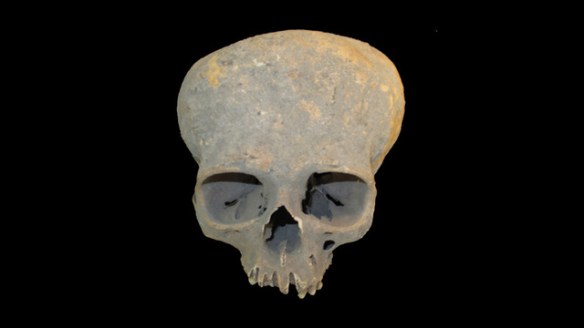
skull from Chichester

A spinal column with fused vertebrae. The bones of a woman with advanced syphilis. Skeletons deformed by rickets and leprosy. A fascinating online library of deformed bones from the Middle Ages goes live today—and while I didn’t even realize such a thing existed, now I can’t imagine living without it. God bless technology.

The Digit[ised] Diseases website is run by the Royal College of Surgeons in London. It brings together 3D scans of over 1,600 bone specimens taken from patients with debilitating and disfiguring conditions like rickets and leprosy, and makes them free for the public to browse. Bored on a Monday morning? Gawk at this deformed spinal column or marvel at this alien-like skull with an enlarged cranium. In the scientists’ own words, “it does not resemble any known hominid species.” Cool!

Read:  Finally, a Digital Library of Bizarre Human Bones From the Middle Ages | Gizmodo

Library of Congress Reports 75% of Silent Films Lost Forever | Mashable


Full Post

A conclusive study by the Library of Congress reports that only 1,575 of the nearly 11,000 films produced during the silent era still exist in their complete form. The study was commissioned by the National Film Preservation Board and written by historian and archivist David Pierce.

It’s not just obscure films of little interest that are lost: Lon Chaney’s London After Midnight – directed by Freaks auteur Tod Browning — is mostly gone (although it can be reconstructed scene for scene using still photographs), 20 Clara Bow films, The Patriot, directed by Ernst Lubitsch, the adaptation of Edna Ferber’s So Big starring Colleen Moore, and many more are just gone forever.

There are myriad reasons for this. Many of these movies were filmed on nitrate, which deteriorates rapidly and is also highly flammable. In 1935, Fox Studios lost its entire film catalog in a fire, hundreds more were lost in a 1967 fire at MGM studios, in 1978, The Eastman House lost 329 nitrate prints of silent films in another fire. Also, many of the studios just did not invest in preserving these films until it was too late for many of them. Before the advent of television and home video, studios just really didn’t see the point in keeping them around for future release. Notable exceptions are the works of D.W. Griffith, Charlie Chaplin and Mary Pickford, who all took it upon themselves to have their films preserved.

However, one reason that doesn’t seem to be popping up in any of the articles about this is the fact that many of these films were intentionally destroyed. The 1917 version of Cleopatra, starring Theda Bara, was not just lost to time, it didn’t just disintegrate. The two remaining copies of the film were set on fire, purposely, along with most of her other films by Fox Studios after the Hays Code went into effect – as they were deemed too risque for the new rules. Though she made more than 40 movies throughout her career, only about three and a half exist today. Which is only slightly better than the fate of her cinematic rival Valeska Surrat, whose entire oeuvre is lost forever.

The first “lost” film was actually one of the films responsible for the introduction of the code in the first place. Convention City — a slightly raunchy comedy starring Joan Blondell, Dick Powell and Mary Astor — was completely destroyed by Warner Brothers after causing a boatload of controversy. There are, of course, rumors that a cut of the film may exist in Britain, but it’s yet to be found.

Not only were many pre-code films destroyed, many of those that weren’t were sealed up in a vault in 1934, and did not see the light of day until the 1950′s during the television era. However, because said pictures were not “up to code,” many were hacked up and re-edited, the original versions lost forever.

Pre-code Hollywood is especially important from a feminist point of view, because it was basically a golden age of female empowerment. Which, quite frankly, is a lot of the reason the government put the kibosh on it. Luckily, people like David Pierce are working to hold onto the ones we do have, and searching for others that may be stored in random old attics throughout the country.

Canada’s parks and historic sites now on Google Street View | CBC News


Google/Parks Canada

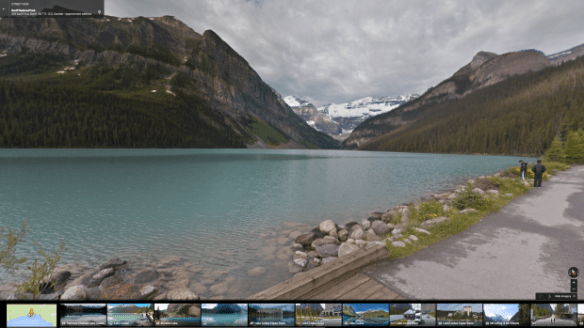
The Google Maps team visited Banff National Park and about 70 other Parks Canada sites this past spring and summer, collecting imagery using its Street View cars and on foot using its Trekker backpack technology. (Google/Parks Canada)

Hikes through spectacular national parks such as Banff and tours of historic sites such as the Viking settlement at L’anse au Meadows in Newfoundland are now available on Google Street View.

Google and Parks Canada announced today that more than 70 Parks Canada locations across the country can now be explored online.

“From planning a summer vacation to augmenting classroom lesson plans, the partnership between Parks Canada and Google will better connect Canadians to the amazing places and geography that defines this country,” wrote Parks Canada’s Michael White on the Google Canada blog.

Read: Canada’s parks and historic sites now on Google Street View | Technology & Science | CBC News.

For the Music Librarians: Leonardo da Vinci piano hybrid heard after 500 years | CNET


An unusual musical instrument that combines keyboard and cellos has seen the light of day some 500 years after the Renaissance superman conceived it.

Leonardo’s viola organista has come to life through the passion of Polish pianist Slawomir Zubrzycki, who has played a lavishly designed version of it in concert.

Zubrzycki produced the mechanically bowed keyboard, which resembles a bowed clavier, based on a sketch and notes in Leonardo’s Codex Atlanticus, a collection of manuscripts covering miscellaneous subjects that is dated 1478 to 1519.

Read more: Leonardo da Vinci piano hybrid heard after 500 years | Crave | CNET

Mystery of 18th century music book| This Is Guernsey


Mystery book

Full Post

Historians are trying to trace the mysterious author of an 18th century music album that has been discovered in a library archive.

The untitled, leather-bound songbook was found by an archivist sorting through a catalogue of collections in the Watt Library in Greenock, Inverclyde.

The inside cover is signed by a Hugh Cameron and dated 1709 and it also contains poems, a book list and a series of religious writings.

The music, such as A Trumpet Air and Auld Robin Gray, were not written by Cameron but copied from a book of popular Scottish music. Cameron’s book has been described as an early example of a music album – a copy of music that can be performed by the owner at their leisure.

An expert from the Royal Conservatoire of Scotland has studied the unusual find and hopes to find out more about the person who wrote it.

Karen McAulay, music librarian at the Conservatoire, said: “A lot of the pieces in the manuscript have been copied out of one particular book.

“There was a publisher in Glasgow called Aird around that time and they published a series of books with fiddle tunes, mainly from Scotland but some from other countries as well, and when you go through this book you find that quite a lot of the tunes are from that one single volume (of the Aird book).

“These days you can quickly copy down with a photocopier or buy an album, but hundreds of years ago what you did was write your favourite tunes out and that’s exactly what this gentleman has done.”

The book is now going on display in the McLean Museum inside the library alongside other items from the archive, such as the Greenock Autograph Book which contains letters from Charles Dickens and Charles Darwin.

Library archivist Neil Dickson discovered the songbook last month when he was preparing the new display for Inverclyde Council.

He said: “The only reason it was found was because I was cataloguing the records which had previously never been catalogued before. We discovered the songbook and straight away I realised it was something special.

“It’s very unique and I always feel privileged to be doing the job I am and to make discoveries like this, because it’s essentially history that’s been untouched and it’s our job to explore and make it available, and hopefully we can find out more about the book and Hugh Cameron.”

Little else is known about the author and the library hope local people will be interested in the story.

Ms McAulay has researched Mr Cameron but has been unable to pinpoint exactly where he was from.

She said: “My guess is that he was possibly a schoolmaster. I found out that there were several Hugh Camerons who were schoolmasters at that time, one in Perthshire, and it could have been him, but I can’t be sure.

“What I can say is that he wasn’t a Church of Scotland minister because he was not in the minister listings for that time.

“The book is dated 1709 and the handwriting of the signature is very young but the handwriting of the lists of books is more mature so that would have been when the same person was a bit older. It may be something he’s added to over his life or it may be that a relative or someone else also used the book.”

The display is part of a nationwide Explore Your Archive campaign which aims to get people interested in local history.

Mr Dickson said: “Archives are very important, it’s essentially raw history.

“They’re usually the only resources we have for getting a detailed description of people’s life and society from the 17th century onwards.

“By searching through our archives in Inverclyde we’ve found some very, very special items and hopefully they can give people an insight in to the history of the area.”

via Mystery of 18th century music book | This Is Guernsey.

The Most Popular Books of All Time | Visual.ly


The Most Popular Books of All Time

Explore more infographics like this one on the web’s largest information design community – Visually.


Smithsonian now lets you view artifacts in 3D | CNET News


Smithsonian X 3D

You can now take a 3D peek at several famous historical artifacts thanks to a project from the Smithsonian Institution.

Launched on Wednesday, the Smithsonian X 3D Web site serves up a collection of 3D images of artifacts digitally scanned by the museum through a partnership with Autodesk. You canexplore the artifacts in detail by manipulating their images via mouse on your computer or via finger on a supported touch-screen device.

Read: Smithsonian now lets you view artifacts in 3D | Internet & Media – CNET News.

Related: The Smithsonian Is Uploading Its Lost Treasures to the Internet | Gizmodo