
Checking in at Little Free Library’s Facebook page is always fun, but a post yesterday was so mesmerizing that even the LFL folks couldn’t resist exclaiming: “Is this the most amazing, stupendously clever, epic, mechanically excellent (?!) and stunningly cool Little Free Library ever? It’s a kinetic sculpture! A neighborhood art piece! Destined for the Museum of Modern Art? The Walker? The Guggenheim? Have you ever seen anything this fab?”
Tag Archives: innovation
10 Futuristic Libraries | Ellyssa Kroski – OEDB.org

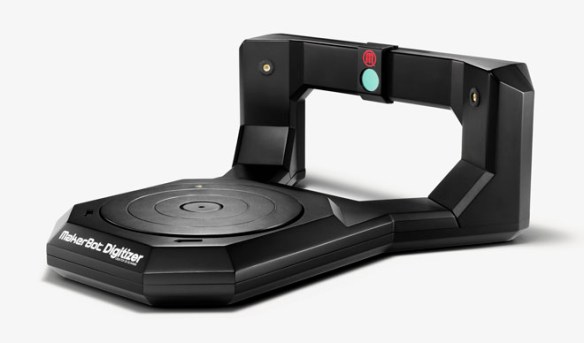
MakerBot Digitizer Will Clone All Your Stuff Using a Turntable and Lasers | Wired.com
Google Translate adds African languages | theguardian.com
Google is planning to add Somali, Igbo, Hausa, Yoruba and Zulu to its list of language options on Google Translate, the search engine giant’s free automatic translation service.
A post published [on August 27, 2013] on the Google Africa page on Google+ called on users to evaluate the translation quality of the five languages. After assessing passages that are translated into English and vice versa, users can rate them as Excellent, Good, Fair or Poor.
via Google Translate adds African languages | World news | theguardian.com.
Gadgets: Going Way Beyond Wearable Technology | Information Space
These mediums of providing information are still exciting and brand new. The opportunities for devices that augment reality, capture life’s moments in real-time and improve on the function of smartphones are limitless, but what about when the the human body actually becomes one with the technology? I want to take a further look at technology that goes deeper than the surface of the skin.
See the full story: Gadgets: Going Way Beyond Wearable Technology | Information Space.
How Selfies Are Re-Energizing The New York Public Library | Co.Exist
The photos look like they could have been taken at a bar, a bat mitzvah, or one of those swanky media parties with sponsored vodka. But they weren’t. These photobooth shots were snapped at the New York Public Library as part of a new social media initiative to engage more with the library’s selfie-loving patrons, and the live photostream is making our hearts melt.

See the full story: How Selfies Are Re-Energizing The New York Public Library | Co.Exist | ideas + impact.
Libraries Meeting Community Needs: Offering Tools, Fishing Rods, Telescopes for Patrons to Borrow
A library card may get you more than you think
The library has evolved and checks out more than just books. Patrons also may borrow things like clippers and fishing rods. NBC’s John Yang reports.
See the news video clip here from NBC News.
Shanghai Metro offers passengers books to borrow | chinadaily.com.cn
Shanghai’s Metro Line 2 is turning a new page with a library taking literally an online approach.
Passengers will be able to select a book at one station, and return it to any of the other stations with customized bookshelves.
Readers do not have to pay a deposit or any rent for the books and magazines they take. Instead, they are encouraged to donate 1 yuan (16 US cents) to charity at the bookshelf.
“Now you can read a real book, rather than staring at the cellphone through the metro ride,” said Zou
Shuxian, a spokeswoman for the Aizhi bookstore, which initiated the project jointly with Hujiang.com and Shanghai Metro Line 2.
“This will encourage more people to read on the Metro and improve the atmosphere of the whole city,” said Chen Kuang, a spokesman with Shanghai No 2 Metro Co Ltd.
The Chinese Academy of Press and Publication released a survey recently that said the general public between the ages of 18 to 70 read 4.39 books in 2012, much fewer than in Western countries.
The program announced its official kickoff on Aug 18, after a trial operation over a period of months.
It has been a resounding success with office workers. Waiting lines have developed during rush hour.
“Most people returned the books after reading, and many left a coin for our charity initiative,” said a staff member for Aizhi at the Nanjing Road West Station.
“Even if some books are not returned, we believe the overall benefit is worthwhile,” another staff member surnamed Li said.
All the books have green tape on the cover to inform people about the program. “Also to remind people it is borrowed and should be returned,” Li said.
Hujiang.com, an online education provider, and Aizhi, a bookstore chain, joined hands to launch the project last year. It called on people to donate their used books to the 20 Aizhi bookstores at the metro stations.
The program allows Hujiang to publicize its educational program.
The public offered more than 100,000 books in eight months. Many were given to schools in less well-off areas. The rest, and magazines, were used for the program.
The trial operation began near office buildings in Zhangjiang, a high-tech park in Shanghai, and then expanded to the Metro.
“We also have a few shops along Metro Lines 3 and 4, and we hope to expand the service,” she said.
“It is a great idea to have books used rather than leaving them to gather dust,” said Yue Tingting, a PR official with Hujiang.
“You can’t force people to read by regulations, but it is sensible to encourage people to read,” said Huang Yuning, head of the literature department at Shanghai Translation Publishing House.
The digital age has seen book sales decline, but this shows there may be a twist in the tale, said Feng Tao, an editor and colleague of Huang.
In order to encourage more people to read, the General Administration of Press and Publication of China plans to issue a guideline promoting reading.
via Shanghai Metro offers passengers books to borrow | Society | chinadaily.com.cn.
The 10 Hottest Fields of Science Research | Wired Science
Scientific research is a large and sprawling endeavor, with thousands of laboratories around the world studying their own ultra-specialized piece of a much more significant whole. It’s the logical intersection of reductionist scientific heritage and centuries of technological advances: in order to advance our understanding of the world around us, we must pursue increasingly specific sub-disciplines.
Which is why Thomson Reuters’ scene-scoping study on “100 Key Scientific Research Fronts” is a welcome report for science enthusiasts eager to stay updated on cutting-edge research but lacking the time to read every issue of Science or Nature cover-to-cover.
The list:
- Impact of Climate Change on Food Crops
- Tectonic Evolution of the Southern Central Asian Orogenic Belt
- Transcatheter Aortic Valve Implantation
- DNA Methylation Analysis and Missing Heritability
- Ocean Acidification and Marine Ecosystems
- Enhanced Visible Light Photocatalytic Hydrogen Production
- Alkali Doped Iron Selenide Superconductors
- Galileon Cosmology
- High Energy Rechargeable Lithium Air Batteries
- Urban Policy Mobilities and Global Governance Issues
via The 10 Hottest Fields of Science Research – Wired Science.
This Comprehensive Map Traces 463 of the Bible’s Contradictions | Gizmodo
Using data from the Skeptic’s Annotated Bible, programmer Daniel G. Taylor created this encyclopedic visualization of 463 of the Bible’s major contradictions. Here’s how to read it: Each vertical blue line represents a different chapter, ordered chronologically. The red arcs trace each represent a question about a specific person or concept. Clicking on one of the red lines takes you to a list of every relevant quote from both Old and New Testaments.

See the full story: This Comprehensive Map Traces 463 of the Bible’s Contradictions | Gizmodo.
 infophile