
Vapor Communications, the Cambridge-based tech startup that debuted a technology last year allowing users to add scents to text messages, has come up with a way to add smells to e-books. The startup debuted “oMedia,” described as a way to integrate scent messages into a range of consumer products including e-books, songs and clothing that uses oNotes technology.
Tag Archives: innovation
World’s First Self-Powered Video Camera Unveiled| Discovery News #digitalimaging #solar #video
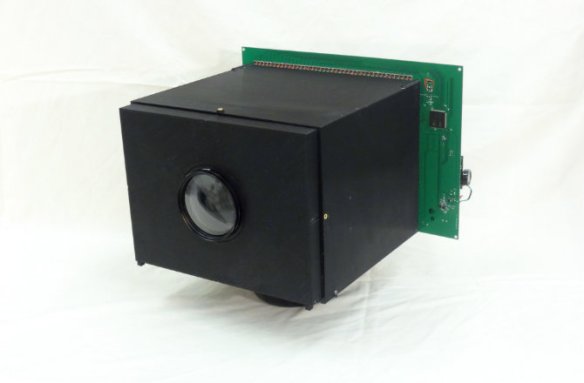
If you think cameras are ubiquitous now, wait until this catches on. Researchers at Columbia University announced today that they have build the world’s first self-powered video camera. By leveraging the technology that powers both digital imaging and solar panels, they’ve made a prototype model that draws energy from the ambient light in a well-lit room. READ MORE: World’s First Self-Powered Video Camera Unveiled | Discovery News.
A Pen For People With Parkinson’s | Co.Design

Lucy Jung never thought much about designing for sick people. Then she was diagnosed with a brain tumor. She recovered, and the experience has driven her toward what she now thinks of her calling: to use design to help improve the quality of life of hospital patients and those with chronic conditions.
It drove the 27-year-old designer to create the Arc, a pen for people with Parkinson’s disease. Along with three fellow students (Hwan Soo Jeon, Tian-jia Hsieh, and Danny Waklin) from the UK’s Royal College of Art and the Imperial College London who took part in the Innovation Design and Engineering joint masters course, Jung designed the pen to not only make it easier for people with Parkinson’s to write legibly, but to actually loosen up the muscles of their hands after they’ve put the pen down.
READ MORE: A Pen For People With Parkinson’s | Co.Design | business + design.
25 Ideas Shaping The Future Of Design | Co.Design
Design is always changing, and with tech and design increasingly aligning, we’re arguably headed to the most radical period of change in design history. How radical will the design landscape of 2020 be, then?
To find out, we asked five elite studios—each and every one a member of Fast Company’s Most Innovative Companies list—to give us their predictions for the near-future of design. Designers from Ammunition, Herman Miller, Code and Theory, and more gave us their thoughts on everything from the future of the office as cathedral, to the rise of the designer CEO. Here’s what they all had to say. READ MORE: 25 Ideas Shaping The Future Of Design | Co.Design | business + design.
High-Tech Glove Could Help the Deaf-Blind Send Text Messages | Mashable
In German-speaking countries, deaf-blind people use a “tactile alphabet” called Lorm to communicate with one another, which involves a series of motions on the hand.
The problem with Lorm, though, is that few people understand it. This means that people who are both deaf and blind are often limited to communicating with others who understand Lorm.
But a new technology aims to help them communicate more easily with people who don’t understand Lorm. Researchers in Berlin are developing the Mobile Lorm Glove, with which deaf-blind people can transmit Lorm to text on a computer or mobile device.
READ MORE: High-tech glove could help the deaf-blind send text messages | Mashable
Versal Helps Teachers Create Interactive Online Lessons, Partners With Wolfram Alpha | TechCrunch
Versal is a service that allows teachers to build and publish interactive online courses, homework assignments and tutorials. The company launched its service out of beta [March 4, 2015], but maybe more importantly, it also announced a partnership with Wolfram Research. Thanks to this deal with Wolfram Research — which includes Stephen Wolfram joining the Versal board of directors — Versal now allows teachers to embed content from Wolfram into their courses.
READ MORE: Versal Helps Teachers Create Interactive Online Lessons, Partners With Wolfram Alpha | TechCrunch
BBC Micro Bit Will Complement Raspberry Pi Not Compete With It | The Guardian
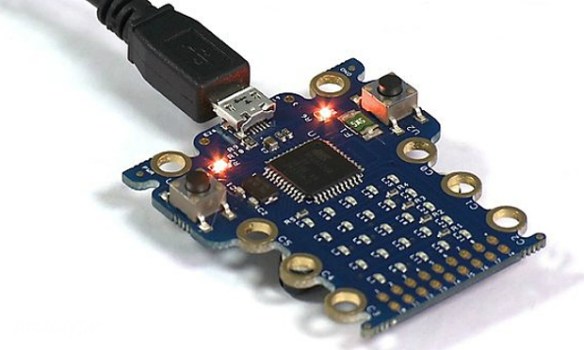
The BBC’s new Micro Bit programmable device is designed to complement computers like the Raspberry Pi rather than compete with them, according to people involved with the project.
The broadcaster is planning to give one million units of the device away in the autumn as part of its Make It Digital initiative, including one for every child in year seven of the British education system – ie 11-12 year-olds.
The BBC hopes that the Micro Bit will get children interested in programming in the same way that its BBC Micro computer did in the 1980s, although the new device is being pitched as a gateway to more complex computers.
READ MORE: BBC Micro Bit will complement Raspberry Pi not compete with it | Technology | The Guardian
Related Posts
This Throwable Computer Teaches Kids How To Code | Co.Design

Coding is a great skill for kids to learn but it can be a lonely, sedentary endeavor. Hackaball, a new toy created from a partnership between the design agencies MAP and Made By Many, promises to get kids off their butts and playing outside—all while teaching basic coding skills and empowering kids to invent their own kind of play.
READ MORE: This Throwable Computer Teaches Kids How To Code | Co.Design | business + design.
Projection Mapping Brings an Ancient Greek Statue to Life | WIRED
PURISTS WILL SCOFF, but we could be nearing a future where new technologies make art museums come to life. Not hyperbolically, in the sense that virtual reality displays and touchscreen tablets let you interact with art in new ways (we’re already seeing that in spades, thanks to smart renovations at places like the Cleveland Museum of Art and the new Cooper Hewitt.)
This is more literal. In this near-future, works of art might actually register facial expressions. They might blink, or look right at you. READ MORE: Projection Mapping Brings an Ancient Greek Statue to Life | WIRED.
3D printing produces a perfect replica of a sixth-century sword | CNET

A damaged sixth-century sword in a museum in Norway has been perfectly reproduced as new through 3D printing.
READ MORE: 3D printing produces a perfect replica of a sixth-century sword | CNET.
 infophile