An unusual musical instrument that combines keyboard and cellos has seen the light of day some 500 years after the Renaissance superman conceived it.
Leonardo’s viola organista has come to life through the passion of Polish pianist Slawomir Zubrzycki, who has played a lavishly designed version of it in concert.
Zubrzycki produced the mechanically bowed keyboard, which resembles a bowed clavier, based on a sketch and notes in Leonardo’s Codex Atlanticus, a collection of manuscripts covering miscellaneous subjects that is dated 1478 to 1519.
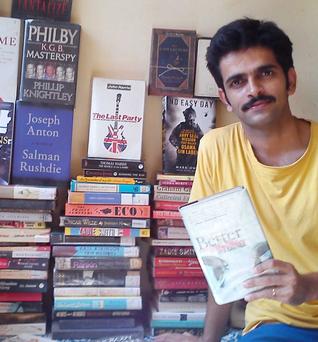
Pushpendra Pandya, a resident of Vasai in Mumbai, works six days a week as a copywriter. On Sundays, though, he hires a cab and travels to different localities in the city, collecting books from those who have either no need for them, or no space to keep them.
Last month he started a crowd-sourced library, and has since built a collection of 1200 titles with help from friends and strangers. The idea for the library came to Pandya in March last year when he started a book sharing arrangement with friends.“Just like we would share notes in college after bunking class to cover up, we started swapping books. I thought it could be taken to a larger audience,” says Pandya, who calls himself an old-fashioned book lover. “In spite of being in such a crowded city, people feel lonely here. You need some company sometimes, and books have been the greatest company for me so far.
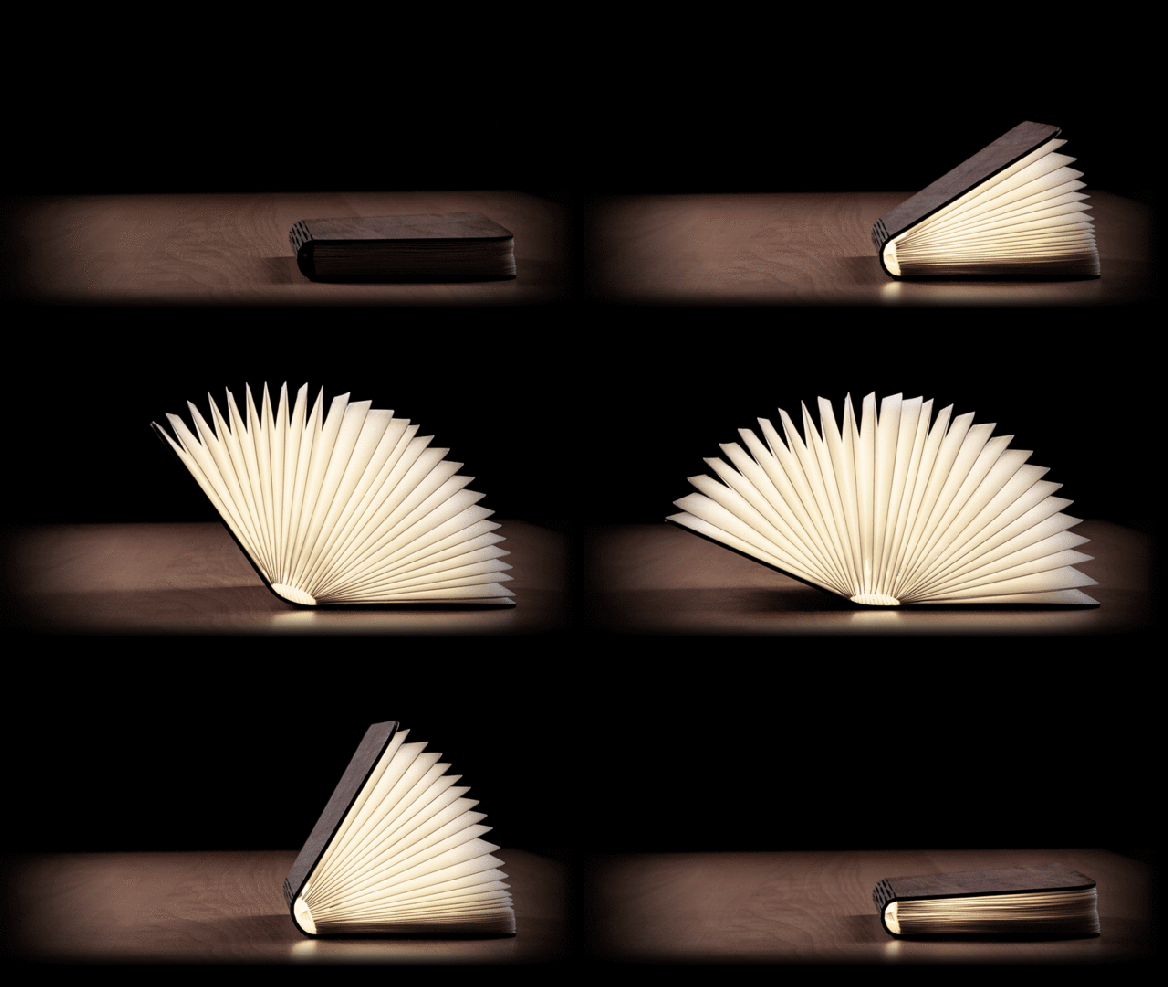
Max Gunawan’s wonderful Lumio accordion book lamp has been popping up on design sites for the past year or so. But after a successful Kickstarter campaign earlier this year, it’s finally available for purchase, bringing its soft glow to home libraries around the world
We live in an age of touch-screen interfaces, but what will the UIs of the future look like? Will they continue to be made up of ghostly pixels, or will they be made of atoms that you can reach out and touch?
At the MIT Media Lab, the Tangible Media Group believes the future of computing is tactile. Unveiled today, the inFORM is MIT’s new scrying pool for imagining the interfaces of tomorrow. Almost like a table of living clay, the inFORM is a surface that three-dimensionally changes shape, allowing users to not only interact with digital content in meatspace, but even hold hands with a person hundreds of miles away. And that’s only the beginning.
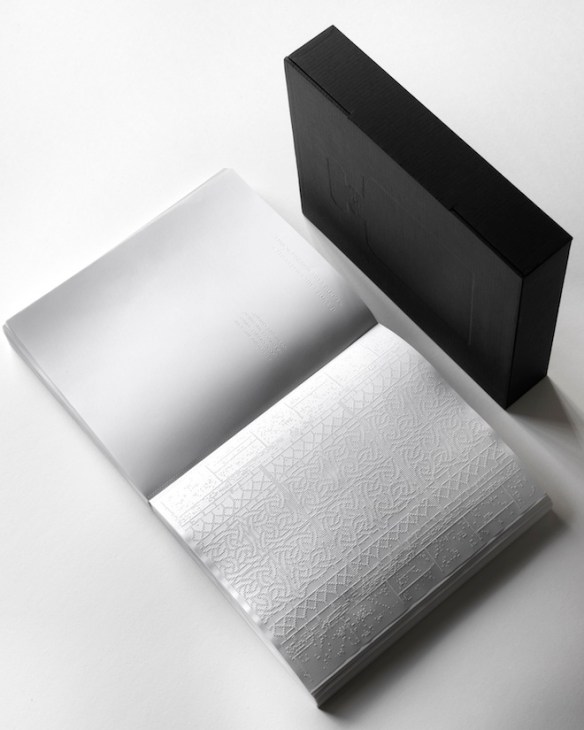
Irma Boom designed a book for the perfume Chanel No. 5. Image: Jonathan Leijonhufvud
It’s not an exaggeration to say that Irma Boom has designed some of the coolest books ever put on a bookshelf. Throughout her career, the Amsterdam-based designer has made more than 250 volumes, and a staggering 20 percent have found a home in a permanent collection at MoMA. They really are works of art, though Boom herself is vehemently against calling them so. “I do not consider and approach my work as art. I do push the boundaries of bookmaking, but it is never art,” she says. “Books are not unique—it is commissioned work, it is a reproduction.”
Ok, so maybe art isn’t quite the right word, but what Boom creates is often more than just a book as we typically know it. A book by Boom is an experience, an object to be appreciated in its own right, even when its technically just a vehicle for another artist. Most recently, she completed a book commissioned by Chanel, the Parisian fashion house, for its Chanel No. 5 perfume. And in classic Boom style, it’s not what you’d expect. The 300-page book has no ink—each of the crisp white pages is embossed with a drawing or quotation that helps the story of Gabrielle Chanel unfold. It’s clean, understated and ephemeral, and somehow still totally engrossing.
It’s not enough anymore for libraries to adopt new technologies and practices once they’ve been out for several years. It’s vital nowadays to know what’s on the horizon so that you can plan for it in your library including training staff, building related applications, and offering new services. One of the best ways to keep up with developments in the library, information, and technology fields is to follow and read trend reports.
Krzywinski developed Circos, an open source visualization tool that arranges tabular data in circular form. It was a simple idea, but transformative: It’s since been used for thousands of visualizations, and its distinctive aesthetic is synonymous with the informational richness of our moment.
An electronic ink that can be printed on a laser and then conducts electricity has been developed by scientists.
The graphene-based ink was used to make a small plastic keyboard by researchers at the University of Cambridge, who found the one atom-thick material could be used to make cheap, printed electronics.
It could be used in the future for people who need heart monitors, as they could be embed onto clothes, or for tracking luggage in an airport to ensure it is loaded on to the correct plane.
The graphene-based ink has a number of interesting properties, including flexibility, optical transparency, and electrical conductivity.
For months now, I have seen the advertisement below on my Facebook news feed.
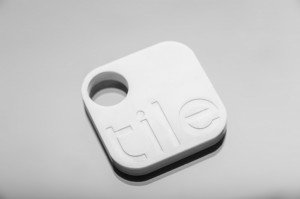
The subject of the ad–Tile–is about to sweep the nation when it finally will be released to users who pre-ordered this very helpful device last winter. Currently, preordered Titles total more than $2 million.
What is Tile?
Tile is a little device (image right) that can go anywhere or attach to any of your belongings in order to keep track of them.

 infophile