
Aaron Smith, Senior Researcher at the Pew Research Center’s Internet Project, discusses the Project’s latest research about internet usage, broadband adoption, and the impact of mobile connectivity among lower-income populations.
Tag Archives: research
Recent Pew Research Links
25 percent of men watch online porn, and other ‘facts’ about Americans’ online video habits | The Washington Post
Do you spend a lot of time watching videos on YouTube? You’re not alone. The Pew Internet & American Life project released new survey data on how Americans engage with video online Thursday. And the percentage of online adults who watch or download videos has grown from 69 percent of adult Internet users in 2009 to 78 percent today.
Online Video 2013 | Pew Internet
Over the past four years, the percent of American adult internet users who upload or post videos online has doubled from 14% in 2009 to 31% today. That includes 18% of adult internet users who post videos they have created or recorded themselves—many of whom hope their creations go viral. The share of online adults who watch or download videos has also grown from 69% of internet users in 2009 to 78% today, and mobile phones have become a key part of the video viewing and creating experience.
Who’s Not Online and Why | Pew Internet
As of May 2013, 15% of American adults ages 18 and older do not use the internet or email. Asked why they do not use the internet:
- 34% of non-internet users think the internet is just not relevant to them, saying they are not interested, do not want to use it, or have no need for it.
- 32% of non-internet users cite reasons tied to their sense that the internet is not very easy to use. These non-users say it is difficult or frustrating to go online, they are physically unable, or they are worried about other issues such as spam, spyware, and hackers. This figure is considerably higher than in earlier surveys.
- 19% of non-internet users cite the expense of owning a computer or paying for an internet connection.
- 7% of non-users cited a physical lack of availability or access to the internet.
Cell Phone Activities 2013 | Pew Internet
Fully 91% of American adults own a cell phone and many use the devices for much more than phone calls. In our most recent nationally representative survey, we checked in on some of the most popular activities people perform on their cell phones and found:
- 81% of cell phone owners send or receive text messages
- 60% of cell phone owners access the internet
- 52% send or receive email
- 50% download apps
- 49% get directions, recommendations, or other location-based information
- 48% listen to music
- 21% participate in a video call or video chat
- 8% “check in” or share their location
The Future Of Storytelling Is About To Get Wild | ReadWrite
Many of us go about our lives constantly surrounded by screens, immersed in various “stories”: movies, TV shows, books, plot-driven video games, news articles, advertising, and more. Whether we realize it or not, we’re creating new behaviors, routines, mindsets, and expectations around what we watch, read or play—which in turn presents new challenges and opportunities for creators and marketers.
In other words, while the fundamentals of good storytelling remain the same, technology is changing how stories can be told. But what does that mean exactly?
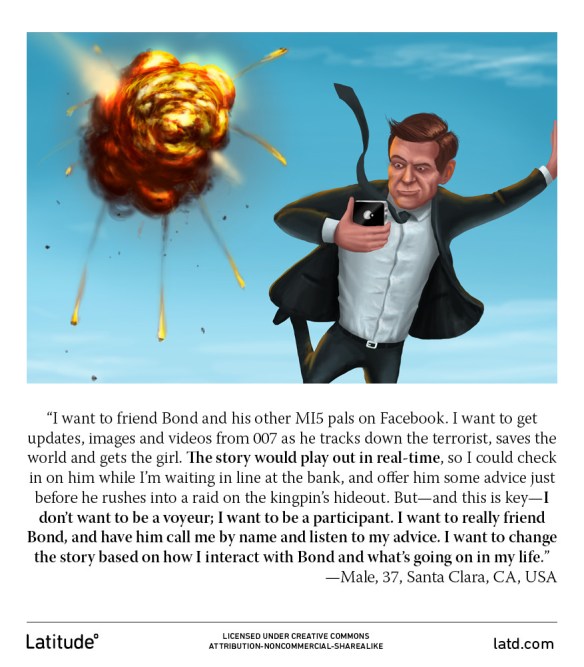
Since last year, Latitude, a strategic insights consultancy, has been conducting an ongoing Future of Storytelling initiative to understand what audiences want for the long haul. Below are eight predictions for the future of storytelling based on what we found. (More information about Latitude’s multi-phase research project is available here.)
- Stories Come Out Of The Screen, Into The Physical World
- Characters Will Become Connections
- Stories Will Unfold From Different Vantage Points
- Stories Will Be Told 24/7
- Storytelling Goes Bottom-Up
- Stories Will Make The World A Better Place
- Videos Will Offer One-Click Storefronts
- Passive Or Active Experience—It’ll Be Your Choice
Read: The Future Of Storytelling Is About To Get Wild | ReadWrite.
What Multitasking Does To Your Brain | Fast Company
In case we needed another reason to close the 15 extra browser tabs we have open, Clifford Nass, a communication professor at Stanford, has provided major motivation for monotasking: according to his research, the more you multitask, the less youre able to learn, concentrate, or be nice to people.
Read: What Multitasking Does To Your Brain | Fast Company | Business + Innovation.
How Daydreaming Can Actually Make You Smarter | HuffPost
Psychology was my undergrad major. I have always been fascinated by theories of intelligence, cognitive development and memory. I’m one of those people who like to take personality and IQ tests. I believe in the value of reading to increase our emotional development and improve communication skills. Its great to see new research challenging our preconceived notions of intelligence.
Daydreaming gets a pretty bad rap. It’s often equated with laziness, and we tend to write off people with wandering minds as being absent-minded “space cadets” who can’t get their heads out of the clouds.
Though we all spend close to 50 percent of our waking lives in a state of mind-wandering, according to one estimate, some research casts daydreaming in a negative light. A 2010 Harvard study linked spacing out with unhappiness, concluding that “a wandering mind is an unhappy mind.” But could these unconscious thinking processes actually play a pivotal role in the achievement of personal goals?
In a radical new theory of human intelligence, one cognitive psychologist argues that having your head in the clouds might actually help people to better engage with the pursuits that are most personally meaningful to them. According to Scott Barry Kaufman, NYU psychology professor and author of Ungifted: Intelligence Redefined, we need a new definition of intelligence — one that factors in our deepest dreams and desires.
Read the full story: How Daydreaming Can Actually Make You Smarter | HuffPost
You may also like: The Case for Preserving the Pleasure of Deep Reading | MindShift | The Modern MLIS
The New Library | Pew Research Center
Why Women Leave Tech Companies, And What To Do About It | Co.Exist
[T]oday, women still leave tech companies at double the rate of men. Even the women who make it past all the hurdles of being a female in the field–the lack of role models, sexism, and so on–don’t stay very long.
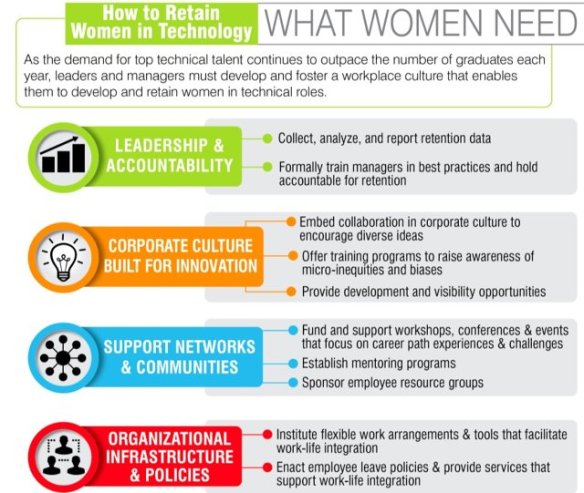
Women Technologists Count, a new report from the Anita Borg Institute (ABI), examines the reasons why women in mid-level roles tend to leave technical career paths to become managers–or decide to leave the industry altogether. ABI offers up pages upon pages of recommendations on how to keep women in technology, but they boil it down to this:
Read the full story: Why Women Leave Tech Companies, And What To Do About It | Co.Exist | ideas + impact.
New Roles for New Times: Transforming Liaison Roles in Research Libraries | ARL®
This report by Janice M. Jaguszewski, University of Minnesota Libraries, and Karen Williams, University of Arizona Libraries presents findings from interviews and other research into current trends in liaison librarianship, surfacing several challenges to the established, overarching liaison structure. This is the third report in the New Roles for New Times series.
Teachers ‘frustrated’ over Reading for Pleasure | The Bookseller
Teachers have a strong desire to teach reading for pleasure but feel frustrated by a restrictive curriculum, a lack of support from parents and a drop-off in school librarian numbers, according to publisher Egmont.
In the latest instalment of Egmont’s Reading Street study into children’s reading habits, the publisher’s consumer insight team surveyed 250 teachers about their pupils’ reading. The majority were classroom teachers, with 77% teaching children at primary stage and 66% having been in the profession for more than a decade.
Over half the teachers surveyed said there had been a decline in the number of children who read for pleasure over the course of their career, with the majority observing this trend over the past decade.
Read the full story: Teachers ‘frustrated’ over Reading for Pleasure | The Bookseller.
Creativity Is Really Just Persistence, And Science Can Prove It | Fast Company
What’s amazing is that advances in science have allowed us to get a better idea as to why better ideas come after jumping into our workflow, rather than waiting for sudden inspiration to strike.
The full story: Creativity Is Really Just Persistence, And Science Can Prove It | Fast Company | Business + Innovation.
 infophile