Pew Research Internet Project [Quiz] » Library User Quiz


What kind of library user are you? Are you a “Library Lover”? An “Information Omnivore”? Or are you totally “Off the Grid”? Take our library engagement quiz to learn how your library habits and attitudes stack up against the general population.

TAKE THE QUIZ » Pew Internet Library User Quiz.

The Most Important Insights From Mary Meeker’s 2014 Internet Trends Report | TechCrunch


A must-read that’s chock full of critical knowledge. Kleiner Perkins partner Mary Meeker’s data dumps have become a highly anticipated event in the tech industry, as her research helps everyone else level up.

The only problem is that the 2014 Internet Trends report is 164 slides of dense data, so we’ve broken it down into a digestible summary of the most important facts, including a look at whether we’re in a bubble.

READ: The Most Important Insights From Mary Meeker’s 2014 Internet Trends Report | TechCrunch.

Link to the PDF of the presentation.

Glasses-free 3-D projector | MIT News Office


Over the past three years, researchers in the Camera Culture group at the MIT Media Lab have steadily refined a design for a glasses-free, multiperspective, 3-D video screen, which they hope could provide a cheaper, more practical alternative to holographic video in the short term.

Read More: Glasses-free 3-D projector | MIT News Office.

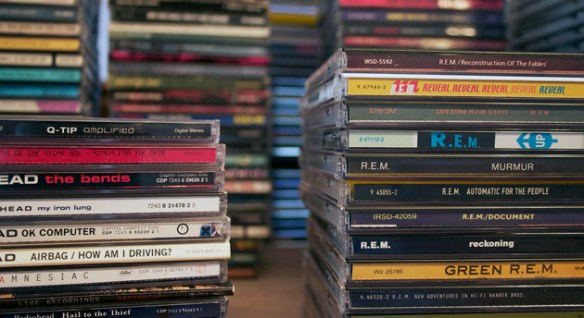
The Library of Congress is wrecking CDs to learn how to save them | Engadget


Like it or not, CDs rot over time — your well-worn copy of Soundgarden’s Superunknown might not play anymore. Just how they rot is frequently a mystery, though, which is why the Library of Congress is currently destroying CDs (including those you donate) in hopes of improving its archival techniques. Researchers are using a combination of artificial aging tests and simple observations to see what factors trigger decay, sometimes with surprising results. As the Library tells The Atlantic, data loss varies widely between manufacturing processes, the lasers in CD players and even individual discs; experimenters can subject two identical copies of an album to extreme heat and lose only one of them.

Read More: The Library of Congress is wrecking CDs to learn how to save them | Engadget

Woman Puts Deus Ex On Computer Chip In Her Hand | Kotaku


Zoe Quinn doesn’t just make heartfelt, experimental games like Depression Quest. She’s also pretty set on becoming a cyborg, judging from the cyberpunk as hell implants she’s gotten over the last couple of years.

READ MORE: Woman Puts Deus Ex On Computer Chip In Her Hand | Kotaku

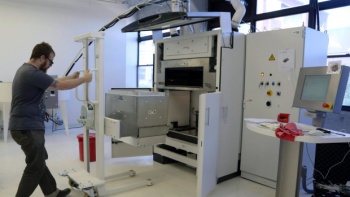
3D Printer Creates Magazine Cover Smaller Than A Grain of Salt | The Escapist


McGill University’s new 3D printer could produce 2000 copies of the same object before you’d finally spot them without a microscope.

If you thought the tech industry had a strange habit of miniaturizing everything, know that the print industry is now fully capable of catching up in that department. Canadian researchers at McGill University recently put a new microscopic 3D printer through its paces by producing a 0.011 by 0.014 millimeter National Geographic Kids cover, along with a map of Canada measured in micrometers. Obviously these images are impossible to view normally and could only be seen with the aid of a screen projecter. In fact, the magazine printout is so miniscule that if you made 2000 copies, you’d have just enough to cover a single grain of salt.

Read more: 3D Printer Creates Magazine Cover Smaller Than A Grain of Salt | The Escapist.

Going to the Library Can Make You as Happy as a Pay Raise, Study Claims | Bustle


Apparently, libraries provide patrons with a happiness that money can’t buy. Or at least nothing less than almost two grand in cash. According to a recent study commissioned by the U.K.’s Department for Culture, Media, and Sport, the act of going to the library induces joy equivalent to that brought on by a £1,359 ($1,878) pay raise.

The study was conducted in an attempt to measure which activities have the most positive impact on an individual’s wellbeing. Visiting a library scored among the top joy-generating activities, alongside dancing and swimming, giving us yet another reason to hang-out at our local library.

Read more: Going to the Library Can Make You as Happy as a Pay Raise, Study Claims | Bustle.

MIT’s FingerReader Helps The Blind Read With A Swipe Of A Digit | TechCrunch


At MIT’s Media Labs, researchers Roy Shilkrot, Jochen Huber and others are working on the “FingerReader,” a ring-like device that straps itself around your finger and reads printed text out loud with a synthesized voice, thanks to a mounted camera and heavily modified open source software. Read more: MIT’s FingerReader Helps The Blind Read With A Swipe Of A Digit | TechCrunch.

Papyrus Mentioning Jesus’s Wife Is Likely Ancient and Not Fake, Scientists Say | Mashable


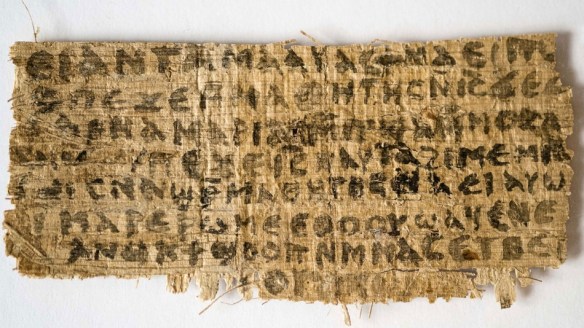
A papyrus fragment that mentions Jesus’s wife is likely ancient, probably dating between the sixth and ninth century, latest research shows.

When Karen L. King, the Hollis Professor of Divinity at Harvard Divinity School, announced the fragment’s existence in September 2012, there was a widespread debate over its authenticity. The fragment, known as the “Gospel of Jesus’s Wife,” probably originated from Egypt. It’s written in Coptic and contains the phrase “Jesus said to them, ‘my wife…,'” never before seen in any ancient text. It also mentions Jesus’s mother and a female disciple, who may be identified as “Mary.”

Now, James Yardley, senior research scientist in the Center for Integrated Science and Engineering at Columbia University, and Alexis Hagadorn, head of conservation at Columbia, used a technique called micro-Raman spectroscopy to determine the papyrus fragment’s age. Furthermore, Malcolm Choat from Macquarie University examined the fragment’s handwriting. Combined, their findings indicate that the papyrus and the ink on it are ancient and not a modern forgery. Read more: Papyrus Mentioning Jesus’s Wife Is Likely Ancient and Not Fake, Scientists Say | Mashable.

‘Mind-reading’ technology can reconstruct faces from the viewer’s brain | CNET


Researchers at Yale have developed a method of reconstructing faces locked in the memories of other people. Read more: ‘Mind-reading’ technology can reconstruct faces from the viewer’s brain | CNET.