The Best Leaders Are Humble Leaders | Harvard Business Review


In a global marketplace where problems are increasingly complex, no one person will ever have all the answers. That’s why Google’s SVP of People Operations, Lazlo Bock, says humility is one of the traits he’s looking for in new hires. “Your end goal,” explained Bock, “is what can we do together to problem-solve. I’ve contributed my piece, and then I step back.” And it is not just humility in creating space for others to contribute, says Bock—it’s “intellectual humility. Without humility, you are unable to learn.”

A recent Catalyst study backs this up, showing that humility is one of four critical leadership factors for creating an environment where employees from different demographic backgrounds feel included. In a survey of more than 1500 workers from Australia, China, Germany, India, Mexico, and the U.S., we found that when employees observed altruistic or selfless behavior in their managers — a style characterized by 1 acts of humility, such as learning from criticism and admitting mistakes; 2 empowering followers to learn and develop; 3 acts of courage, such as taking personal risks for the greater good; and 4 holding employees responsible for results — they were more likely to report feeling included in their work teams. This was true for both women and men.

READ MORE: The Best Leaders Are Humble Leaders | Jeanine Prime, and Elizabeth Salib | Harvard Business Review.
Glasses-free 3-D projector | MIT News Office


Over the past three years, researchers in the Camera Culture group at the MIT Media Lab have steadily refined a design for a glasses-free, multiperspective, 3-D video screen, which they hope could provide a cheaper, more practical alternative to holographic video in the short term.

Read More: Glasses-free 3-D projector | MIT News Office.

Why The Rubiks Cube Fascinates Designers | Co.Design


Why The Rubiks Cube Fascinates Designers | Co.Design | business + design

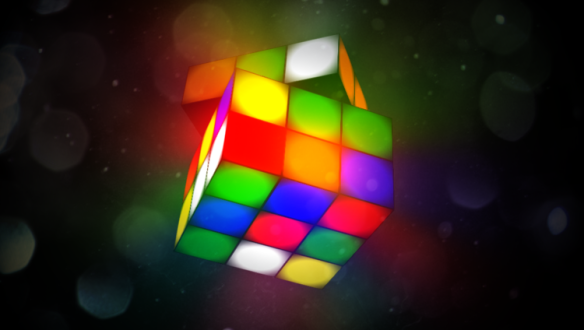
GOOGLES RUBIKS CUBE ISNT JUST A COOL GAME: ITS AN ARGUMENT FOR THE FUTURE OF COMPUTING. Read More: Why The Rubiks Cube Fascinates Designers | Co.Design | business + design.

$1 Million in 1 Day: Reading Rainbow Kickstarter Earns Pot of Gold | Mashable


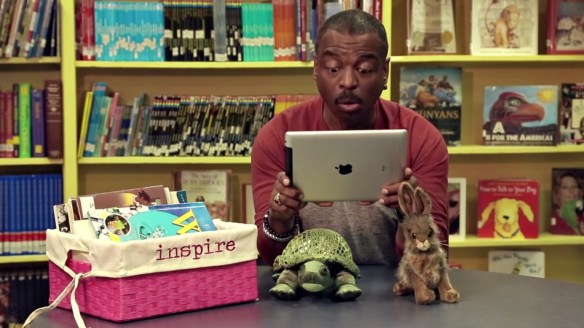
You did it, Internet readers. In just half a day, LeVar Burton’s Reading Rainbow campaign to raise $1 million on crowdfunding website Kickstarter has reached its seven-figure goal.

The money from nearly 23,000 donors will be used to bring Burton’s cult TV classic to a new generation of readers by building a web version for families at home, creating a classroom version for teachers and providing free access to it for schools in need.

The online campaign, fueled by buzz generated on social media, surpassed $1 million shortly before 8 p.m. ET on Wednesday. Burton, the creator and host of PBS’ series Reading Rainbow from 1983 to 2006, launched the Kickstarter project earlier in the day.

Read More: $1 Million in 1 Day: Reading Rainbow Kickstarter Earns Pot of Gold | Mashable

Little wooden hexagons rewrite the tape player | CNET


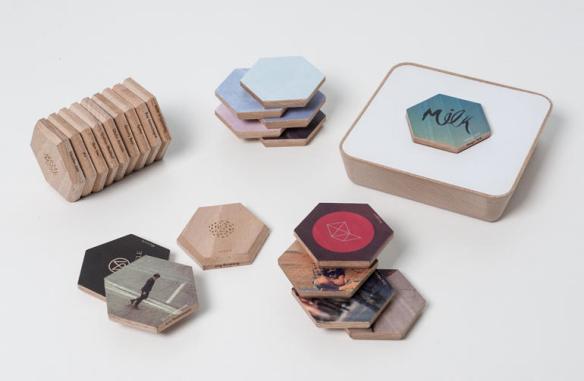
Digitised content is more convenient in many ways, but there’s one thing that it can’t provide: the tactile pleasure of a physical collection. The world may have made a sharp turn away from CDs, but one company believes that physical media can make a return — if, perhaps, that physical media is also beautifully designed.

Qleek, created by Ozenge Studio in France, certainly fits the bill. It consists of the basic Qleek player, a sleek, beechwood-clad player, and wooden hexagons called Tapps — which can be customised with images of your choice — that can be placed on the player to play your content.

The content, however, is not stored on the Tapps. Rather, each Tapp has an NFC chip inside that links to media of your choice, such as a playlist or a season of TV, stored on your PC; or a YouTube channel, a Spotify playlist, an Instagram feed or a podcast. It connects to your devices via Bluetooth, then streams it to your Bluetooth-compatible television, stereo or speaker.

via Little wooden hexagons rewrite the tape player | CNET.

Kinematics | Nervous System Blog


Kinematics is a system for 4D printing that creates complex, foldable forms composed of articulated modules. The system provides a way to turn any three-dimensional shape into a flexible structure using 3D printing. Kinematics combines computational geometry techniques with rigid body physics and customization. Practically, Kinematics allows us to take large objects and compress them down for 3D printing through simulation. It also enables the production of intricately patterned wearables that conform flexibly to the body.

Read More: Kinematics | Nervous System Blog.

Are You An Introvert Or An Extrovert? What It Means For Your Career | Fast Company


Extroverts are outgoing and introverts are shy, right? Not exactly. Truly understanding each personality type–and which one you are–can help you manage a vast range of experiences.

Read More: Are You An Introvert Or An Extrovert? What It Means For Your Career | Fast Company | Business + Innovation (August 21, 2013)

These Harvard And MIT Kids Say They’ve Made NSA-Proof Email | HuffPo


Those who worry that Gmail or the National Security Agency may be rifling through their emails now have a new alternative: ProtonMail, a super-secure email service created by students from Harvard and the Massachusetts Institute of Technology.

“It was the Snowden leaks that got us started,” ProtonMail founder and front-end developer Jason Stockman told The Huffington Post. “A lot of us at the time were working at CERN, the nuclear research facility in Switzerland, and we started hearing about all this and we really freaked out. We ended up posting on Facebook about privacy issues, and it just grew from there.”

ProtonMail’s open beta launched [Saturday May 17th], and its security measures are intense: end-to-end encryption and user authentication protocols so rigorous even the creators can’t read user emails.

Read More: These Harvard And MIT Kids Say They’ve Made NSA-Proof Email | HuffPo

The Library of Congress is wrecking CDs to learn how to save them | Engadget


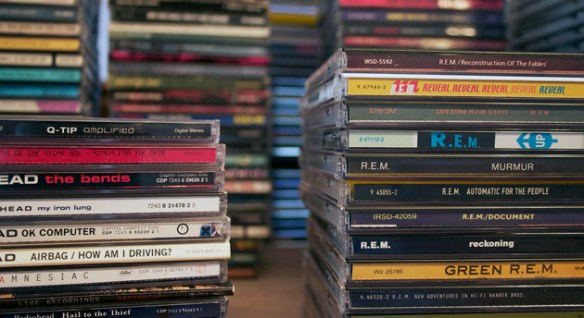
Like it or not, CDs rot over time — your well-worn copy of Soundgarden’s Superunknown might not play anymore. Just how they rot is frequently a mystery, though, which is why the Library of Congress is currently destroying CDs (including those you donate) in hopes of improving its archival techniques. Researchers are using a combination of artificial aging tests and simple observations to see what factors trigger decay, sometimes with surprising results. As the Library tells The Atlantic, data loss varies widely between manufacturing processes, the lasers in CD players and even individual discs; experimenters can subject two identical copies of an album to extreme heat and lose only one of them.

Read More: The Library of Congress is wrecking CDs to learn how to save them | Engadget

Awesomely Gross Medical Illustrations From the 19th Century | WIRED


In the 19th century, doctors couldn’t use photographs to teach their students to distinguish between benign or cancerous growths. Or how teeth looked in patients affected by hereditary syphilis. Or the stages of cholera.

So the physicians, surgeons, and anatomists of the 1800s built close relationships with artists, craftsmen, and publishers to produce beautiful (yet horrifically off-putting at times) illustrations. In The Sick Rose: Disease and the Art of Medical Illustration, Richard Barnett collects up the best examples of these images. They—and the accompanying chapters of text, organized by disease—are endlessly fascinating.


Excerpted from The Sick Rose: Disease and the Art of Medical Illustration, by Richard Barnett, published this month by Distributed Art Publishers.

VIA: Awesomely Gross Medical Illustrations From the 19th Century | Science | WIRED.