Welcome to Night Vale #novel is as weird, existential, and addictive as #podcast that inspired it | Vox #storytelling #transmedia #fiction #worldbuilding


Taking the form of a local radio show, Welcome to Night Vale is a 30-minute, twice-monthly dispatch full of nightmarish community news conveyed in a tranquil manner. Imagine a municipality that features a sinister, five-headed dragon and occasional rifts in space-time, but whose citizens are often more concerned about, say, the dry scones at the last PTA meeting, and you’ll understand why Night Vale has been described as something akin to “if Stephen King and Neil Gaiman started a game of SIMS and then just left it running forever.”

Since its launch in 2012, Welcome to Night Vale has expanded into a sprawling, frightening universe with a lot of charm. In its three-year existence, the podcast has produced 79 episodes (and counting). It’s also spawned a successful live show and, as of October, a novel that debuted at No. 4 on the New York Times best-seller list. Along the way, its creators have demonstrated their ability to comfortably shift mediums while building one of the most immense and compelling fictional “worlds” in recent memory. READ MORE: The Welcome to Night Vale novel is as weird, existential, and addictive as the podcast that inspired it | Vox
The #Future Of #Libraries Is Collaborative, Robotic, And Participatory | FastCompany #learning #community #collaboration #technology


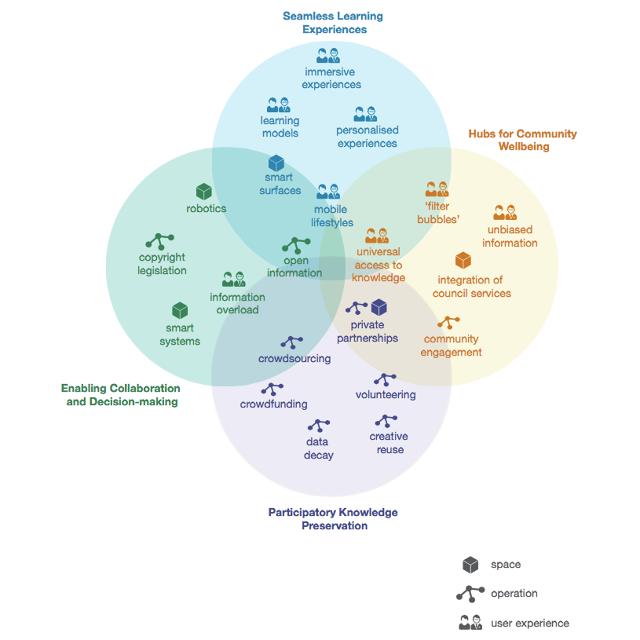
To look at the state of many libraries after the recession, facing cuts and closures and fundamental questions about “relevance,” you could be forgiven for being gloomy about their future. But gloomy is not the predominant tone of a terrific new report from Arup, the well-regarded design consultancy. It shows that some libraries, at least, are undergoing a “renaissance,” and that the future could be good for others. Arup organized workshops in four cities, bringing together a range of people interested in libraries. The report collects ideas from existing projects, as well as ideas for future spaces. There are four main themes…READ MORE: The Future Of Libraries Is Collaborative, Robotic, And Participatory | FastCompany

12 #Women #Artists Who Revolutionized #PrintMaking | HuffPost #art #etchings #engravings #printers #print


This craft used to be a man’s world, but these women changed the game. READ MORE: 12 Women Artists Who Revolutionized Print-Making | HuffPost

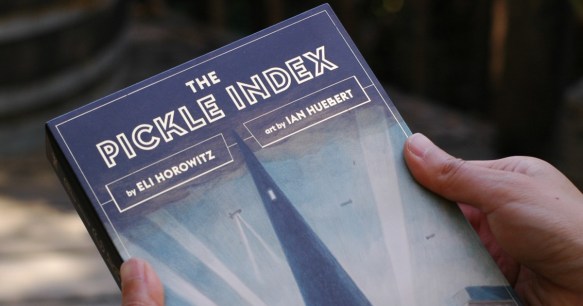
The Pickle Index Is a Delightfully Weird, App-Driven Novel Like No Other | WIRED #apps #books #digital  #storytelling #transmedia #multimedia #interactive


THE PICKLE INDEX  tells the tale of an incompetent circus troupe that sets out to rescue its ringmaster, Zloty Kornblatt, from a dystopian, brine-obsessed government. If that doesn’t pique your interest, maybe this will: The Pickle Index is a paperback. But it’s also a beautifully illustrated, hardcover set of two volumes that tell the story in tandem. Oh, and it’s also an app. Not an e-book, mind you—an app, where a user’s “Citizenship Quotient” points are allocated based on how often you upload actual pickle recipes. Confused? Good. That’s kind of the point.

The fact is, The Pickle Index is not a traditional novel, nor is it a conventional app. When Eli Horowitz and Russell Quinn set out to create the multimedia storytelling experience, they made a conscious decision to eschew hallmarks of design like accessibility and ease of use. Instead, they provide multiple entry-points into an intricate and immersive world. In doing so, they’ve reimagined what a digital literary experience can be.

Source: The Pickle Index Is a Delightfully Weird, App-Driven Novel Like No Other | WIRED

So You Want to Be a #UX Librarian? | hls #librarians #MLIS #libraryschool #users


Are you passionate about making libraries user-centered? Maybe you love designing study or communal spaces based on the experiences of your users. Or you find joy in crafting library services that meet the unmet needs of your community. Or you love creating web experiences that are intuitive, useful, and fun for your library patrons. These are all traits of a good user experience (UX) librarian. READ MORE: [Series] So you want to be a UX Librarian? | hls

GE And Wattpad Combine Modern #Science With Old School #SciFi #Comics | FastCompany #STEM #reading #students #historical #digital #storytelling


Back in the 1950s and 60s, General Electric created a comic book series to help spark interest and excitement in science and engineering. Now the brand has teamed up with Wattpad to bring “Adventures in Science” back to life for a new generation, but with a bit of a twist.

The comic covers still look straight out of the ’60s, but the brand invited six of the writing social app’s most popular writers to create new science-fiction inspired by the old school comic series. The new fiction…is based on the real work of GE scientists and tackles topics from GE’s digital industrial portfolio like transportation, power and water, health care, and energy. READ MORE: General Electric And Wattpad Combine Modern Science With Old School Sci-Fi Comics | FastCompany

This Man’s Wish To Donate Millions Of #Books To Africa Just Came True | HuffPost #donations #education #schools 


In less than two decades, Bob Brown has donated more than 5 million books to Africa. Through his International BookSmart Foundation, Brown, an 86-year-old civil rights activist, friend of Martin Luther King Jr., advisor to the Mandela family and former White House Cabinet member, hopes to contribute many, many more to the continent.

That’s why his wish this holiday season is to keep giving back — and it came true in aH big way with the help of UPS’s Wish Delivered Campaign. Together, Brown and UPS will ship more than 180 tons of additional books to schools across Africa over the next three years. READ MORE: This Man’s Wish To Donate Millions Of Books To Africa Just Came True | HuffPost

Smithsonian #Libraries Receives #Nano #Bible | Smithsonian Libraries #digital #collections #tech


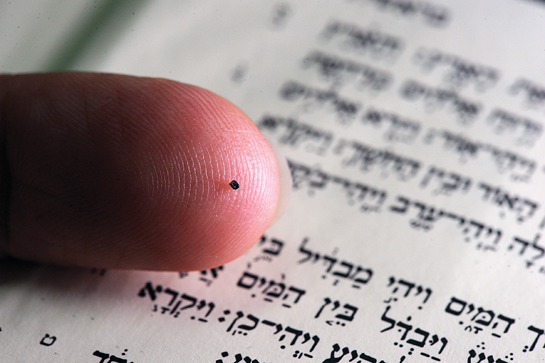
Smithsonian Secretary David J. Skorton recently accepted a Nano Bible from the American Technion Society at the Smithsonian’s National Museum of American History on Oct. 30. The Nano Bible will be part of the Smithsonian Libraries collection, housed in the Dibner Library of the History of Science and Technology at the National Museum of American History.

The Nano Bible is the world’s smallest version of the Hebrew Bible, produced by researchers at the Technion-Israel Institute of Technology in Haifa, Israel. Engraved on a gold-plated silicon chip the size of a sugar grain, the bible’s text consists of more than 1.2 million letters carved with a focused beam of gallium ions. The text engraved on the chip must be magnified 10,000 times to be readable. READ MORE: Smithsonian Libraries Receives Nano Bible | Smithsonian Libraries Unbound

Andreas Ekström: The Moral #Bias Behind Your #Search Results | TED.com #searchengines #tech #algorithms


Search engines have become our most trusted sources of information and arbiters of truth. But can we ever get an unbiased search result? Swedish author and journalist Andreas Ekström argues that such a thing is a philosophical impossibility. In this thoughtful talk, he calls on us to strengthen the bonds between technology and the humanities, and he reminds us that behind every algorithm is a set of personal beliefs that no code can ever completely eradicate.

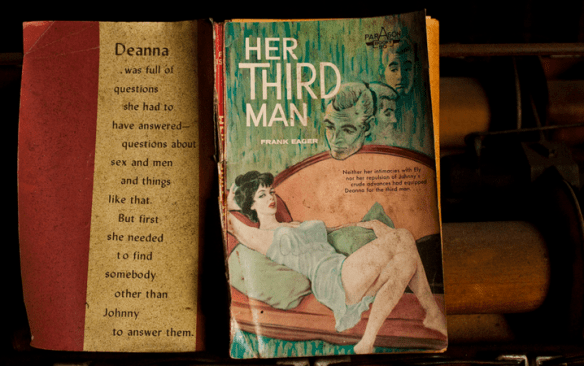
Someone Taught a Neural Network To Talk With #Romance #Novels | Gizmodo #images #storytelling #tech #machinelearning #contextual


Samim Winiger, whose work we’ve covered recently–sent along his latest experiment. He used an open-source neural network that was trained on 14 million passages of romance novels by Ryan Kiros, a University of Toronto PhD student specializing in machine learning. Called the Neural-Storyteller, the network was trained to analyze images and retrieve appropriate captions from its vast store of sexy knowledge, creating “little stories about images,” says Kiros.

And what stories! Winiger fed the network a series of images, and it’s hard to even decide where to begin…Not all of the stories (or any of them, really) make perfect sense: What we’re seeing is an artificial neural network struggle to identify objects in a photo, and make links between images and the passages that it’s trained on. READ MORE: It Was Inevitable: Someone Taught a Neural Network To Talk With Romance Novels | Gizmodo