Makers Are Getting Their Own Social Network [Beta] | Engadget #makerspace makerspace.com


Maker Media founder Dale Dougherty speaks with such an infectious exuberance about creating and building that after speaking to him you want to go home and resurrect that project that’s been sitting in your garage or bedroom. From a magazine, to a series of faires and camps for children, Doughterty’s Maker Media reach – and enthusiasm – spans the globe and beginning today, it’s launching a beta of its new MakerSpace social network.

MakerSpace beta invitations are available [on request]. Like the Google model of beta invites, anyone that gets an invitation, can invite a few friends. If you don’t get into the beta, the full site will launch out of beta later this year. But, if you’re lucky enough to get onboard, you can create a profile, find and bookmark projects you find interesting, and post your own projects. Maker is calling it a place to “show and tell.” READ MORE: Makers are getting their own social network | Engadget

I just signed up! Looking forward to finding some ideas for the CoderDojo program I volunteer with. Also available from Makerspace.com is a free makerspace playbook with all you need to know about getting a makerspace up and running in their school or community.

This Little Robot Wants to Be Your Best Friend [Indiegogo] | WIRED #robots #AI #gadgets


WE’VE LONG KNOWN there’s a market out there for robotic buddies. One compelling piece of evidence: The original Furby sold more than 40 million units, and it didn’t really do anything.

17 years later, an A.I. and machine-learning company is making a robot pal that will do way more than its fuzzy predecessor. It’s called Musio, and it houses a pretty impressive A.I. engine developed by a company called AKA.

The robot remembers details from prior conversations, asks follow-up questions based on that info, and can be used as a smart-home controller. But its main goal is to be your friend: Asking you questions, actually listening to your answers, and learning what you’re all about

READ MORE: This Little Robot Wants to Be Your Best Friend | WIRED

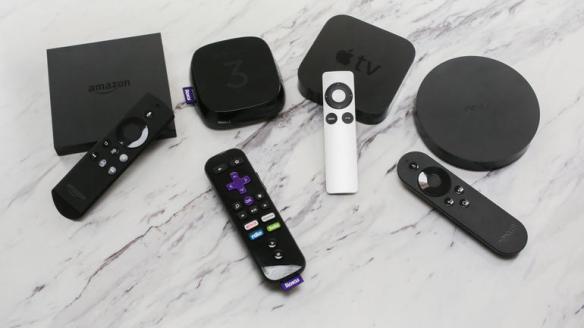
Chromecast vs. Apple TV vs. Roku vs. Amazon Fire TV | CNET #streaming


Which has the most apps? Which has the coolest features? Which one is the best? The most popular media streamers all have their merits, so we’ll help you decide which box is right for you. READ MORE: Chromecast vs. Apple TV vs. Roku vs. Amazon Fire TV | CNET.

STEM Curriculum Turned Into An Addictive [iOS] Game | Co.Design #STEM #apps


Levers, pulleys, and wheels—they’re tools that outline some of the most foundational principles in physics. But foundational principles are boring. What’s fun is using a lever to catapult a boulder at a castle, breaking down the bricks one by one to discover a dragon sleeping inside.

That is the premise of Simple Machines, the latest iOS app by the educational game studio Tinybop. In the past, Tinybop has made interactive books on the human body and plant life. They’ve created a fun simulator for kids to build their own robots. But with Simple Machines, they’re taking aim at a very particular part of student curriculum: The first stages of STEM (science, technology, engineering, and math), in which kids commonly learn about six “simple machines”—the lever, pulley, wheel, wedge, inclined plane, and screw.

READ MORE: STEM Curriculum Turned Into An Addictive Game | Co.Design | business + design.

3 Google Cardboard Articles | WIRED, Engadget, TechCrunch #GoogleCardboard #virtualreality @googlecardboard #makerspaces


Google Cardboard is VR’s Gateway Drug | WIRED
There’s no reason not to try Cardboard now. It’s cheap, it’s easy, it works with your phone. It’s still a million miles away from the best VR demos out there; Oculus, HTC’s Vive, and Project Morpheus all blow Cardboard out of the water—which they should, because they’re not made of cardboard. But Cardboard more than accomplishes what it’s supposed to: It transports you.

Google’s Cardboard Design Lab teaches VR with (what else) VR | Engadget
Google debuted its larger and more robust Cardboard VR headset at I/O yesterday, now it needs some apps that actually run on it. However, designing a program in a virtual 3D environment is quite different than designing one to run on a 2D touchscreen. That’s why Google has also released the Cardboard Design Lab, an app that teaches you the basics of VR design from within a VR environment. The program runs through 10 fundamental design aspects — from “Using a Reticle” and “Keeping the User Grounded” to “Guiding with Light” and “Gaze Cues” — all from within the confines of the Cardboard headset. It won’t transform you into an VR hacking wizard overnight (as it’s not designed to) but CDL will give neophyte coders a solid overview of what they’re getting themselves into. And while the lessons learned here can just as easily be applied to designing for the Rift as Cardboard, the app is currently only available on Android.

Google’s Cardboard VR Now Works (Very Well) With iPhone | TechCrunch
Google’s Cardboard VR app first appeared last year at I/O 2014, but the initial version was somewhat limited in terms of device support. A new version released this year works with devices with screen sizes ranging up to 6 inches, but the more exciting news for many might be that it now also works with iPhone.

The new Cardboard for iOS app is available in the U.S. store now, and includes the same demo apps, as well as the same QR-code based pairing process to make sure it’s optimized for whichever generation of headset you have. Cardboard for iOS is a free download, and works with iPhone 5 and up.

Career Spotlight: What I Do as an “Ethical Hacker” | LifeHacker #cybersecurity #hackers #hacking


You occasionally hear about major security vulnerabilities being discovered before they’re exploited, like the notorious Heartbleed bug last year. Security researchers work hard to weed out those dangerous flaws before they’re found by hackers of more malicious intent. This breed of preemptive hacking is sometimes referred to as white hat, or simply “ethical hacking.”

These hackers work with businesses to probe their networks for security holes, vulnerabilities to social engineering, and more, while considering the mindset of someone who might have criminal motivations. To learn about what such work is like we spoke with Ben Miller, an ethical hacker at Parameter Security. READ MORE: Career Spotlight: What I Do as an “Ethical Hacker” | LifeHacker

Even Tiny Updates to Tech Can Be Obstacles for the Disabled | WIRED #tech #disabilities #access


I completed a web design for usability course during my MLIS program. For one of the sessions, guest lecturers with disabilities demonstrated how they accessed the Internet and provided insight into the challenges they experience with this activity. An eye-opening learning experience which I’m grateful to have had, which has provided me with greater understanding of the issues the disabled confront accessing the web and how designers can improve web content, layout and features to aid access. I highly recommend reviewing W3C Schools Accessibility Guidelines for more information on removing barriers to web information and communication. The article below discusses another challenge for the disabled when using tech: iterative updates.  

WHEN THE AMERICANS with Disabilities Act was passed 25 years ago, it was intended to usher in a new age of accessibility. It promised recourse from discrimination in employment, transportation and communication—in other words, greater access to the physical world. Since then, the world has evolved in radical ways—physical boundaries have come down as our lives have transitioned by varying degrees to online spaces. It is almost impossible to imagine our daily routines without the use of personal technology. For people with disabilities like myself, technology has opened new doors in ways the historic legislation never could have conceived.

As a person with autism and apraxia—a condition that leads me to have great difficulty with planning and organizing everything from moving my mouth when I speak to the steps needed to wash my hands—I rely upon personal technology for many things. A device that translates my typed words into a voice is my link to the world. And the rise of social media and online classrooms has expanded my networks and ability to participate in activities once closed to me.

But often these are positive outcomes of technology made for the masses rather than benefits baked into the design. And as technology is iterated, I can already see ways in which it has and will continue to create new barriers unless its creators consider a more universal approach.

READ MORE: Even Tiny Updates to Tech Can Be Obstacles for the Disabled | WIRED

We Can Now Make Computer Chips Out of Wood | Gizmodo


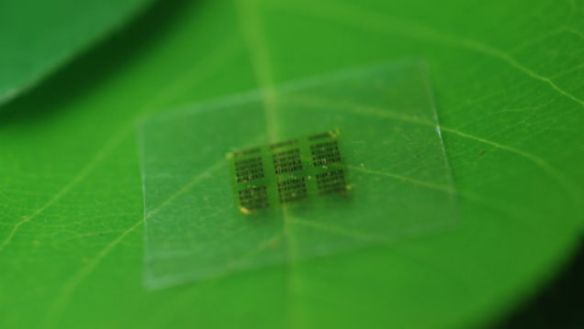
We’re one step closer to biodegradable gadgets. These computer chips are made almost entirely out of wood. Scientists at the University of Wisconsin, Madison teamed up with the U.S. Department of Agriculture’s Forest Products Laboratory to fashion the new semiconductor chip. The paper was published today in Nature Communications.

See, most of a computer chip is composed of a “support” layer that cradles the actual chip. The research team replaced that support layer’s non-biodegradable material with something called cellulose nanofibril (CNF), which is flexible, wood-based, biodegradable—all things that can make a device way less hazardous.

Image credit: University of Wisconsin

READ MORE: We Can Now Make Computer Chips Out of Wood | Gizmodo

The Most Important Insights From Mary Meeker’s 2015 Internet Trends Report | TechCrunch #tech


If you want to understand tech, Mary Meeker’s Internet Trends reports are the closest you’ll get to gospel. Today the Kleiner Perkins partner released her hotly anticipated 2015 edition. But at 197 slides, her presentation can be overwhelming. So we’ve broken down Meeker’s knowledge dump to highlight the most critical data points, and added our analysis so you know what you’re looking at.

READ MORE: The Most Important Insights From Mary Meeker’s 2015 Internet Trends Report | TechCrunch

It’s Not Women Who are the Problem in Tech Land | CNET #tech #sexism #genderequality


We are hearing more and more about gender equality issues in the tech industry. I liked this particular article from CNET, as studies are referenced which provide evidence that the more diverse teams are, the more innovative and financially successful the company will be. Overt and subtle biases of sexism toward women and girls are also discussed.   

Silicon Valley’s male-dominated culture could cost the technology industry the thing it values most: innovation. READ MORE: It’s not women who are the problem in tech land | CNET.

You may also like: Women in tech don’t get the same respect as men, survey says | CNET