
Online classes are a great way to learn new skills. SlideRule makes your search easier by letting you browse and search through over 17,000 online courses. READ: SlideRule Searches for the Best Online Courses in Any Category | LifeHacker

Online classes are a great way to learn new skills. SlideRule makes your search easier by letting you browse and search through over 17,000 online courses. READ: SlideRule Searches for the Best Online Courses in Any Category | LifeHacker
Announced as far back as January, the efforts of founder Alex Bandar, COO Casey McCarty and Shop/Production Manger Matt Hatcher have finally come to fruition; the Columbus Idea Foundry — a 65,000 square ft. “makerspace” in the heart of Columbus, Ohio — is open in its brand new location.
READ MORE: The Largest Makerspace On The Planet Opens In Columbus, Ohio | TechCrunch

If youre an aspiring animator, this might be the best news youll hear this month: Pixar is giving away—thats right, giving away—a version of RenderMan, its in-house rendering software. Gratis. No catch. Youll be able to download the program some time in August. READ MORE: You Can Grab Software That Helped Pixar Make Wall-E For Free Soon | Gizmodo
A must-read that’s chock full of critical knowledge. Kleiner Perkins partner Mary Meeker’s data dumps have become a highly anticipated event in the tech industry, as her research helps everyone else level up.
The only problem is that the 2014 Internet Trends report is 164 slides of dense data, so we’ve broken it down into a digestible summary of the most important facts, including a look at whether we’re in a bubble.
READ: The Most Important Insights From Mary Meeker’s 2014 Internet Trends Report | TechCrunch.
Link to the PDF of the presentation.
Over the past three years, researchers in the Camera Culture group at the MIT Media Lab have steadily refined a design for a glasses-free, multiperspective, 3-D video screen, which they hope could provide a cheaper, more practical alternative to holographic video in the short term.
Read More: Glasses-free 3-D projector | MIT News Office.
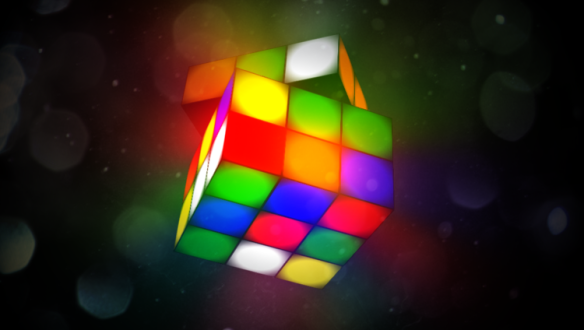
GOOGLES RUBIKS CUBE ISNT JUST A COOL GAME: ITS AN ARGUMENT FOR THE FUTURE OF COMPUTING. Read More: Why The Rubiks Cube Fascinates Designers | Co.Design | business + design.
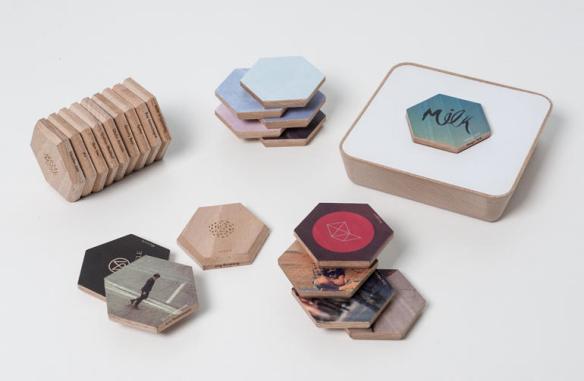
Digitised content is more convenient in many ways, but there’s one thing that it can’t provide: the tactile pleasure of a physical collection. The world may have made a sharp turn away from CDs, but one company believes that physical media can make a return — if, perhaps, that physical media is also beautifully designed.
Qleek, created by Ozenge Studio in France, certainly fits the bill. It consists of the basic Qleek player, a sleek, beechwood-clad player, and wooden hexagons called Tapps — which can be customised with images of your choice — that can be placed on the player to play your content.
The content, however, is not stored on the Tapps. Rather, each Tapp has an NFC chip inside that links to media of your choice, such as a playlist or a season of TV, stored on your PC; or a YouTube channel, a Spotify playlist, an Instagram feed or a podcast. It connects to your devices via Bluetooth, then streams it to your Bluetooth-compatible television, stereo or speaker.

Kinematics is a system for 4D printing that creates complex, foldable forms composed of articulated modules. The system provides a way to turn any three-dimensional shape into a flexible structure using 3D printing. Kinematics combines computational geometry techniques with rigid body physics and customization. Practically, Kinematics allows us to take large objects and compress them down for 3D printing through simulation. It also enables the production of intricately patterned wearables that conform flexibly to the body.
Read More: Kinematics | Nervous System Blog.
Those who worry that Gmail or the National Security Agency may be rifling through their emails now have a new alternative: ProtonMail, a super-secure email service created by students from Harvard and the Massachusetts Institute of Technology.
“It was the Snowden leaks that got us started,” ProtonMail founder and front-end developer Jason Stockman told The Huffington Post. “A lot of us at the time were working at CERN, the nuclear research facility in Switzerland, and we started hearing about all this and we really freaked out. We ended up posting on Facebook about privacy issues, and it just grew from there.”
ProtonMail’s open beta launched [Saturday May 17th], and its security measures are intense: end-to-end encryption and user authentication protocols so rigorous even the creators can’t read user emails.
Read More: These Harvard And MIT Kids Say They’ve Made NSA-Proof Email | HuffPo
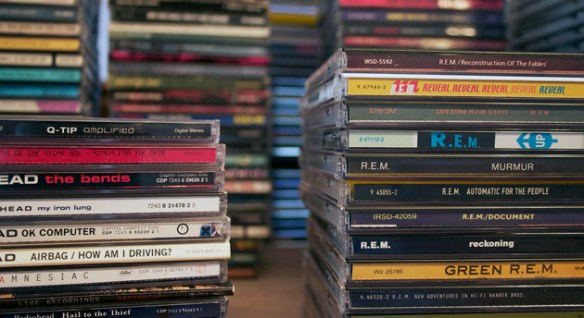
Like it or not, CDs rot over time — your well-worn copy of Soundgarden’s Superunknown might not play anymore. Just how they rot is frequently a mystery, though, which is why the Library of Congress is currently destroying CDs (including those you donate) in hopes of improving its archival techniques. Researchers are using a combination of artificial aging tests and simple observations to see what factors trigger decay, sometimes with surprising results. As the Library tells The Atlantic, data loss varies widely between manufacturing processes, the lasers in CD players and even individual discs; experimenters can subject two identical copies of an album to extreme heat and lose only one of them.
Read More: The Library of Congress is wrecking CDs to learn how to save them | Engadget
 infophile