Hiding Your Online Activity News Links, Infographic


This Graphic Shows How to Keep Your Browsing, Email, and Chats Private | LifeHacker

Tips for Keeping Your Internet Usage Private

Google, Facebook and Yahoo petition court to disclose government data requests | Engadget


It’s not every day you see Google, Facebook and Yahoo aligned on a issue, but a push toward increased governmental transparency is just the sort of cause that’ll put competing web companies on the same outraged page. All three noted [September 9, 2013] through their respective channels that they’ve filed petitions with the Foreign Intelligence Surveillance Court (FISC) to disclose the number of requests the government has issued for user data under national security statutes.

The full story: Google, Facebook and Yahoo petition court to disclose government data requests | Engadget.

The 10 Governments That Requested (And Got) The Most Facebook User Data | Co.Exist


74 countries sought data from Facebook for 38,000 of the network’s total 1.15 billion users.

Requests for Facebook data made from Jan to June 2013 (some requests include multiple users):

  1. United States (11,000-12,000 requests, 79% success)
  2. India (3,245 requests, 50% success)
  3. United Kingdom (1,975 requests, 68%success)
  4. Germany (1,886 requests, 37% success)
  5. Italy (1,705 requests, 53% success)
  6. France (1,574 requests, 39% success)
  7. Brazil (715 requests, 33% success)
  8. Australia (546 requests, 64% success)
  9. Spain (479 requests, 51% success)
  10. Poland (233 requests, 9% success)

The full discussion: The 10 Governments That Requested (And Got) The Most Facebook User Data | Co.Exist | ideas + impact.

Pew: 86% Of U.S. Adults Make Efforts To Hide Their “Digital Footprints” Online; Fear Of Creeping Ads And Malicious Hackers Outweighs State Spy Worries | TechCrunch


As surveyed by the Pew Research Center, the average U.S. citizen appears to be more concerned about the data collecting abilities of advertising networks like those of Google and Facebook, faceless malicious hackers, and even friends and family, than they are the government.

See the full discussion of the research findings: Pew: 86% Of U.S. Adults Make Efforts To Hide Their “Digital Footprints” Online; Fear Of Creeping Ads And Malicious Hackers Outweighs State Spy Worries | TechCrunch.

Governments Requested Information On 38,000 Facebook Users In The First Half Of 2013 | Fast Company


Facebook received about 38,000 data requests from government agents in 71 countries in the first half of 2013, according to the company’s first Global Government Requests Report, which it published [Tuesday]. The report comprises both criminal and national security requests made in the first six months of the year, with half of those requests coming from the United States.

via Governments Requested Information On 38,000 Facebook Users In The First Half Of 2013 | Fast Company | Business + Innovation.

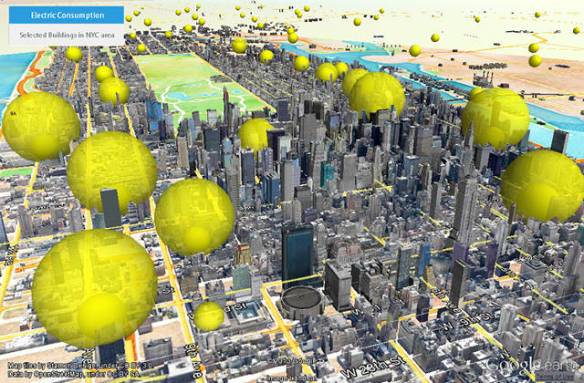
Do-It-Yourself GIS: 20 Free Tools & Data Sources for Creating Data Maps | Ellyssa Kroski – OEDB.org


The world of mapping and presenting data sets through geographical representations is no longer relegated to GIS librarians and highly trained technologists. New free and open source applications now make it possible to create complex and robust data visualizations in the form of maps that display statistics and poll results. Here’s a guide to 20 free applications and data sources.

via Do-It-Yourself GIS: 20 Free Tools & Data Sources for Creating Data Maps | Ellyssa Kroski – OEDB.org.

There are 6 data visualization tools listed and 14 sources for GIS mapping data.

Also see my list of Interactive Mapping Resources on The Modern MLIS. I have categorized resources as either digital libraries, visualization tools or stargazing maps. There is only a little overlap with Ellyssa’s list.

You may also like:  Ten Places to Find and Create Data Visualizations | FreeTech4Teachers

New IFLA Global Trends Report | American Libraries Magazine


It’s designed to assess “the impact of new technology on our global information environment,” said IFLA President Ingrid Parent, introducing the new IFLA Trend Report August 19[, 2013] during the World Library and Information Congress in Singapore.

Commissioned in 2012 and involving social scientists, economists, business leaders, educators, legal experts, and technologists, Riding the Waves or Caught in the Tide? examines “high-level societal trends,” challenging library professionals to be aware that:

  • (1) new technology will both expand and limit who has access to information,
  • (2) online education will transform and disrupt traditional learning,
  • (3) boundaries of data protection and privacy will be redefined,
  • (4) hyper-connected societies will listen to and empower new groups, and
  • (5) the global information economy will be transformed by new technologies.

via New Report Portends Global Societal Trends, as IFLA Continues in Singapore | American Libraries Magazine.

New Report Portends Global Societal Trends, as IFLA Continues in Singapore | American Libraries Magazine

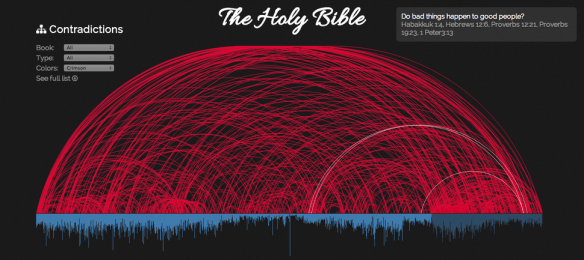
This Comprehensive Map Traces 463 of the Bible’s Contradictions | Gizmodo


Using data from the Skeptic’s Annotated Bible, programmer Daniel G. Taylor created this encyclopedic visualization of 463 of the Bible’s major contradictions. Here’s how to read it: Each vertical blue line represents a different chapter, ordered chronologically. The red arcs trace each represent a question about a specific person or concept.  Clicking on one of the red lines takes you to a list of every relevant quote from both Old and New Testaments.

The Holy Bible Contradictions

See the full story: This Comprehensive Map Traces 463 of the Bible’s Contradictions | Gizmodo.

Facebook Leads an Effort to Lower Barriers to Internet Access | NYTimes.com


About one of every seven people in the world uses Facebook. Now, Mark Zuckerberg, its co-founder and chief executive, wants to make a play for the rest — including the four billion or so who lack Internet access.

On Wednesday, Facebook plans to announce an effort aimed at drastically cutting the cost of delivering basic Internet services on mobile phones, particularly in developing countries, where Facebook and other tech companies need to find new users. Half a dozen of the world’s tech giants, including Samsung, Nokia, Qualcomm and Ericsson, have agreed to work with the company as partners on the initiative, which they call Internet.org.

The companies intend to accomplish their goal in part by simplifying phone applications so they run more efficiently and by improving the components of phones and networks so that they transmit more data while using less battery power.

There is considerably more content to this article. See the full story:  Facebook Leads an Effort to Lower Barriers to Internet Access | NYTimes.com.