Even Tiny Updates to Tech Can Be Obstacles for the Disabled | WIRED #tech #disabilities #access


I completed a web design for usability course during my MLIS program. For one of the sessions, guest lecturers with disabilities demonstrated how they accessed the Internet and provided insight into the challenges they experience with this activity. An eye-opening learning experience which I’m grateful to have had, which has provided me with greater understanding of the issues the disabled confront accessing the web and how designers can improve web content, layout and features to aid access. I highly recommend reviewing W3C Schools Accessibility Guidelines for more information on removing barriers to web information and communication. The article below discusses another challenge for the disabled when using tech: iterative updates.  

WHEN THE AMERICANS with Disabilities Act was passed 25 years ago, it was intended to usher in a new age of accessibility. It promised recourse from discrimination in employment, transportation and communication—in other words, greater access to the physical world. Since then, the world has evolved in radical ways—physical boundaries have come down as our lives have transitioned by varying degrees to online spaces. It is almost impossible to imagine our daily routines without the use of personal technology. For people with disabilities like myself, technology has opened new doors in ways the historic legislation never could have conceived.

As a person with autism and apraxia—a condition that leads me to have great difficulty with planning and organizing everything from moving my mouth when I speak to the steps needed to wash my hands—I rely upon personal technology for many things. A device that translates my typed words into a voice is my link to the world. And the rise of social media and online classrooms has expanded my networks and ability to participate in activities once closed to me.

But often these are positive outcomes of technology made for the masses rather than benefits baked into the design. And as technology is iterated, I can already see ways in which it has and will continue to create new barriers unless its creators consider a more universal approach.

READ MORE: Even Tiny Updates to Tech Can Be Obstacles for the Disabled | WIRED
Learn to Avoid the Most Common Design Mistakes with This Free Course | LifeHacker


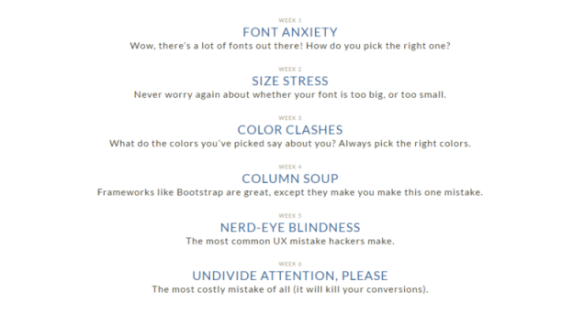
Beginning designers tend to make the same common mistakes. Design Pitfalls is a free course delivered weekly to your email inbox that will teach you how to avoid them.

The course comes from Design for Hackers author and professor David Kadavy. If you sign up, every Tuesday for 6 weeks, you’ll learn about a new pitfall and the tips to prevent it. Here’s what the email course will cover:

Avoid the top mistakes beginning designers make, Kadavy says, and you’ll quickly be doing at least halfway-decent design.

Sign up for the course below or read more about it here. Hurry, though. Class starts May 26th and signup ends on midnight (GMT) May 22nd.

via Learn to Avoid the Most Common Design Mistakes with This Free Course | LifeHacker

The Next Big Thing In Design? Less Choice | Co.Design #design #tech


The article discusses the importance and applications of anticipatory design.

Technology has revolutionized the way we live our lives and do business, but it has done a terrible job reducing the stress of so many decisions. Industry by industry, great digital design has eliminated middlemen from the economy and put users in control, making it fast and easy for us to determine what we want and purchase it directly, whether on a computer or over a phone. Now, with unlimited opportunities for decision-making, we have essentially made ourselves the middlemen in our own lives.

The enjoyment, and even fetishization, of the beautifully designed experiences we rely on to make these decisions has distracted us from our original goal of simplifying our lives. We’ve forgotten that the ultimate purpose of an interface is to make things simpler. In the future, the best interface will be no interface at all and the best decisions will be made without me having to make them (but according to my preferences and goals). 

READ MORE: The Next Big Thing In Design? Less Choice | Co.Design | business + design

6 Buildings That Are Redefining The Library | Co.Design


The winners of the 2015 American Institute of Architects Library Awards reflect how libraries are adapting—how they’re investing in technology and trying to reframe themselves as vital community gathering spaces. This year’s winners include a children’s library that teaches kids to grow their own food, a university library that has ditched half its collections to create collaborative work spaces, and libraries that are at the heart of catalyzing redevelopment in their neighborhoods. And they prove that even buildings filled with thousands of objects created from dead trees can be environmentally friendly.

READ MORE AND VIEW SLIDESHOW: 6 Buildings That Are Redefining The Library | Co.Design | business + design.

Also See: 2015 AIA / ALA Library Building Awards

50 Comic Books That Explain Comic Books Today | Vox


Flip open any comic book and you’ll find a story of overcoming the odds. Whether it’s a web-slinger seeking to make his way in the world, a caped crusader intent on making his city a better place, or a mutant who has to deal with human hate, comic books have always been a beacon of hope for the underdogs of this world. But perhaps the greatest comic book story ever told is that of the books themselves…

…Today, comic books command a seat at pop culture’s table. They rule the box office and television screens. But most of all, from Superman to Sex Criminals, they’re still places where the greatest stories are being told. Here are 50 comic books that explain the vast history, how certain books shaped the medium, and the state of comics today…READ MORE: 50 comic books that explain comic books today | Vox

A Pen For People With Parkinson’s | Co.Design


A Pen For People With Parkinson's | Co.Design | business + design

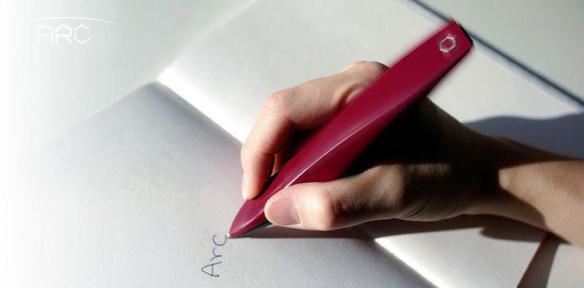
Lucy Jung never thought much about designing for sick people. Then she was diagnosed with a brain tumor. She recovered, and the experience has driven her toward what she now thinks of her calling: to use design to help improve the quality of life of hospital patients and those with chronic conditions.

It drove the 27-year-old designer to create the Arc, a pen for people with Parkinson’s disease. Along with three fellow students (Hwan Soo Jeon, Tian-jia Hsieh, and Danny Waklin) from the UK’s Royal College of Art and the Imperial College London who took part in the Innovation Design and Engineering joint masters course, Jung designed the pen to not only make it easier for people with Parkinson’s to write legibly, but to actually loosen up the muscles of their hands after they’ve put the pen down.

READ MORE: A Pen For People With Parkinson’s | Co.Design | business + design.

25 Ideas Shaping The Future Of Design | Co.Design


Design is always changing, and with tech and design increasingly aligning, we’re arguably headed to the most radical period of change in design history. How radical will the design landscape of 2020 be, then?

To find out, we asked five elite studios—each and every one a member of Fast Company’s Most Innovative Companies list—to give us their predictions for the near-future of design. Designers from Ammunition, Herman Miller, Code and Theory, and more gave us their thoughts on everything from the future of the office as cathedral, to the rise of the designer CEO. Here’s what they all had to say. READ MORE: 25 Ideas Shaping The Future Of Design | Co.Design | business + design.

Ex-Apple Designer Rethinks The Bible For A Mobile World | Co.Design


Ex-Apple Designer Rethinks The Bible For A Mobile World | Co.Design | business + design

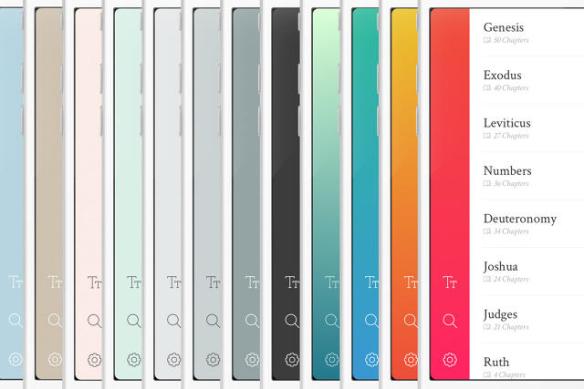
Kory Westerhold and his cofounder, Yahoo Design Director Aaron Martin, give co.Design an exclusive look at their beautiful new bible app. READ MORE: Ex-Apple Designer Rethinks The Bible For A Mobile World | Co.Design | business + design.

The Story of Lorem Ipsum: How Scrambled Text by Cicero Became the Standard For Typesetters Everywhere | Open Culture


READ: The Story of Lorem Ipsum: How Scrambled Text by Cicero Became the Standard For Typesetters Everywhere | Open Culture

You may also like:

The Gorgeous Typeface That Drove Men Mad and Sparked a 100-Year Mystery | Gizmodo


No one seemed to notice him: A dark figure who often came to stand at the edge of London’s Hammersmith Bridge on nights in 1916. No one seemed to notice, either, that during his visits he was dropping something into the River Thames. Something heavy.

Over the course of more than a hundred illicit nightly trips, this man was committing a crime—against his partner, a man who owned half of what was being heaved into the Thames, and against himself, the force that had spurred its creation. This venerable figure, founder of the legendary Doves Press and the mastermind of its typeface, was a man named T.J. Cobden Sanderson. And he was taking the metal type that he had painstakingly overseen and dumping thousands of pounds of it into the river.

As a driving force in the Arts & Crafts movement in England, Cobden Sanderson championed traditional craftsmanship against the rising tides of industrialization. He was brilliant and creative, and in some ways, a luddite—because he was concerned that the typeface he had designed would be sold to a mechanized printing press after his death by his business partner, with whom he was feuding.

So, night after night, he was making it his business to “bequeath” it to the river, in his words, screwing his partner out of his half of their work and destroying a legendarily beautiful typeface forever. Or so it seemed.

READ MORE: The Gorgeous Typeface That Drove Men Mad and Sparked a 100-Year Mystery | Gizmodo

Related