
Startup VA-ST thinks its depth-sensing glasses can help people with little sight get around more easily. READ MORE: Augmented-Reality Goggles Aim to Help Legally Blind See | MIT Technology Review
Tag Archives: gadgets
Parrot Unveils 13 New Minidrones to Tackle Air, Sea and Land | Engadget #drones

Well, here’s a fun surprise! Parrot has just revealed a pile of inexpensive new minidrones, 13 in all, including one that tackles a new medium: water. That hybrid UAV/Boat is called the Hydrofoil Drone, and is joined by a couple of new ‘Jumping’ drones and a new flying model, the ‘Airborne.’ Parrot chose to reveal all these new models, which cost a maximum of €200, on its French site and nowhere else, though it recently scheduled a UK event to launch them on July 2nd. We have all the details (and videos) for the new products now, however, so let’s, um, dive in! READ MORE: Parrot unveils 13 new minidrones to tackle air, sea and land | Engadget
How Can You Prevent Sexual Assault? Web Comic ‘Game’ Has Advice | CNET + Can #Wearable #Tech Prevent Sexual Assault? | FastCompany
How Can You Prevent Sexual Assault? Web Comic ‘Game’ Has Advice | CNET. With this choose-your-own-adventure online comic [interactive graphic novel], students discover how their decisions can ignite or diffuse uncomfortable sexual situations.
Can Wearable Tech Prevent Sexual Assault? | FastCompany Roar is a startup that’s building a wearable device designed to deter attackers and notify loved ones.
This Little Robot Wants to Be Your Best Friend [Indiegogo] | WIRED #robots #AI #gadgets
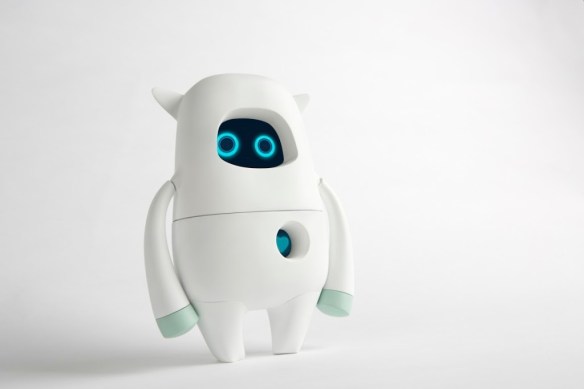
WE’VE LONG KNOWN there’s a market out there for robotic buddies. One compelling piece of evidence: The original Furby sold more than 40 million units, and it didn’t really do anything.
17 years later, an A.I. and machine-learning company is making a robot pal that will do way more than its fuzzy predecessor. It’s called Musio, and it houses a pretty impressive A.I. engine developed by a company called AKA.
The robot remembers details from prior conversations, asks follow-up questions based on that info, and can be used as a smart-home controller. But its main goal is to be your friend: Asking you questions, actually listening to your answers, and learning what you’re all about
READ MORE: This Little Robot Wants to Be Your Best Friend | WIRED
Chromecast vs. Apple TV vs. Roku vs. Amazon Fire TV | CNET #streaming
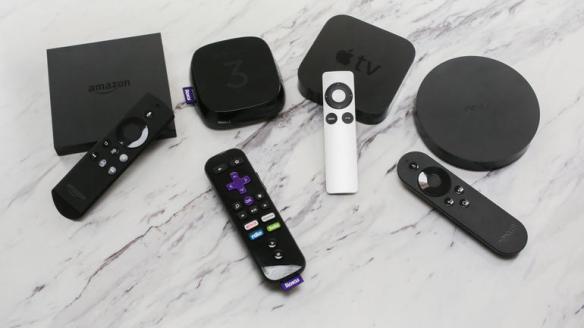
Which has the most apps? Which has the coolest features? Which one is the best? The most popular media streamers all have their merits, so we’ll help you decide which box is right for you. READ MORE: Chromecast vs. Apple TV vs. Roku vs. Amazon Fire TV | CNET.
3 Google Cardboard Articles | WIRED, Engadget, TechCrunch #GoogleCardboard #virtualreality @googlecardboard #makerspaces
Google Cardboard is VR’s Gateway Drug | WIRED
There’s no reason not to try Cardboard now. It’s cheap, it’s easy, it works with your phone. It’s still a million miles away from the best VR demos out there; Oculus, HTC’s Vive, and Project Morpheus all blow Cardboard out of the water—which they should, because they’re not made of cardboard. But Cardboard more than accomplishes what it’s supposed to: It transports you.
Google’s Cardboard Design Lab teaches VR with (what else) VR | Engadget
Google debuted its larger and more robust Cardboard VR headset at I/O yesterday, now it needs some apps that actually run on it. However, designing a program in a virtual 3D environment is quite different than designing one to run on a 2D touchscreen. That’s why Google has also released the Cardboard Design Lab, an app that teaches you the basics of VR design from within a VR environment. The program runs through 10 fundamental design aspects — from “Using a Reticle” and “Keeping the User Grounded” to “Guiding with Light” and “Gaze Cues” — all from within the confines of the Cardboard headset. It won’t transform you into an VR hacking wizard overnight (as it’s not designed to) but CDL will give neophyte coders a solid overview of what they’re getting themselves into. And while the lessons learned here can just as easily be applied to designing for the Rift as Cardboard, the app is currently only available on Android.
Google’s Cardboard VR Now Works (Very Well) With iPhone | TechCrunch
Google’s Cardboard VR app first appeared last year at I/O 2014, but the initial version was somewhat limited in terms of device support. A new version released this year works with devices with screen sizes ranging up to 6 inches, but the more exciting news for many might be that it now also works with iPhone.
The new Cardboard for iOS app is available in the U.S. store now, and includes the same demo apps, as well as the same QR-code based pairing process to make sure it’s optimized for whichever generation of headset you have. Cardboard for iOS is a free download, and works with iPhone 5 and up.
Even Tiny Updates to Tech Can Be Obstacles for the Disabled | WIRED #tech #disabilities #access
I completed a web design for usability course during my MLIS program. For one of the sessions, guest lecturers with disabilities demonstrated how they accessed the Internet and provided insight into the challenges they experience with this activity. An eye-opening learning experience which I’m grateful to have had, which has provided me with greater understanding of the issues the disabled confront accessing the web and how designers can improve web content, layout and features to aid access. I highly recommend reviewing W3C Schools Accessibility Guidelines for more information on removing barriers to web information and communication. The article below discusses another challenge for the disabled when using tech: iterative updates.
WHEN THE AMERICANS with Disabilities Act was passed 25 years ago, it was intended to usher in a new age of accessibility. It promised recourse from discrimination in employment, transportation and communication—in other words, greater access to the physical world. Since then, the world has evolved in radical ways—physical boundaries have come down as our lives have transitioned by varying degrees to online spaces. It is almost impossible to imagine our daily routines without the use of personal technology. For people with disabilities like myself, technology has opened new doors in ways the historic legislation never could have conceived.
As a person with autism and apraxia—a condition that leads me to have great difficulty with planning and organizing everything from moving my mouth when I speak to the steps needed to wash my hands—I rely upon personal technology for many things. A device that translates my typed words into a voice is my link to the world. And the rise of social media and online classrooms has expanded my networks and ability to participate in activities once closed to me.
But often these are positive outcomes of technology made for the masses rather than benefits baked into the design. And as technology is iterated, I can already see ways in which it has and will continue to create new barriers unless its creators consider a more universal approach.
READ MORE: Even Tiny Updates to Tech Can Be Obstacles for the Disabled | WIRED
8 STEM Toys for Pint-Sized Einsteins | Mashable #kids #STEM #toys #play
Often times, parents want the toys their children play with to teach STEM skills — recently updated to STREAM, or Science, Technology, Reading, Engineering, Arts and Math.
At the 2015 International American Toy Fair, there was a bevy of toys that were anything but mindless. Better yet, they’re made to get kids interested in one of these educational topics — without slathering on the “learning” part so they will be disinterested.
Here are some of our favorites that will keep kids learning beyond the classroom.
Check Out This Coding Toy—For Grownups | ReadWrite @TeamKano #coding #diy #makerspaces #tech
I think its a very smart marketing move for Kano to launch products that are gender and age neutral. I volunteer with my public library’s CoderDojo program, which is for 9 to 17 year olds. One of the participant’s parents has actually stayed to learn as well. Its heartwarming to see parent and child learning new concepts together. Learning to code, makerspaces, hackfests, arduino…these activities are fun and instructive for all ages and can be a family activity too.
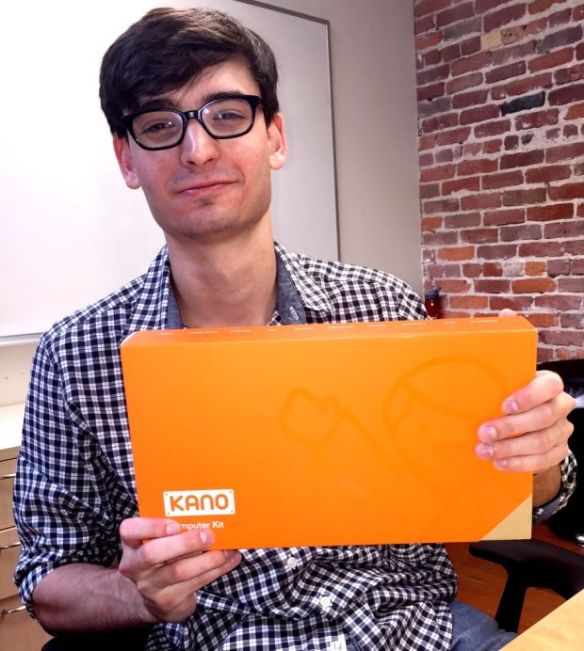
Kickstarted into existence in 2013, with a campaign that blasted through its $100,000 goal with $1.5 million in pledges, Kano now makes Raspberry Pi–based computer kits commercially available to children ages 6 to 14. Inspired by those young users, who founder Alex Klein says have created and shared as many as 5 million lines of code, he wants to spread that enthusiasm to a larger audience.
Engineering kits have been popular among kids and a natural fit in the educational space. Likewise, Kano set out following in the footsteps of companies like Little Bits, Adafruit, and Goldie Blox. But Klein now wants to extend Kano’s reach, taking it into grown-up territory. Simply put, he wants to appeal to everyone’s inner “inventor and tinkerer,” he said.
Klein wants to push into the adult maker market by putting out products that are both gender- and age-neutral. The core design, he hopes, speaks to fundamental human impulses: “Everyone has shared urges to look inside,” he said. “Everyone wants to take control. Everyone wants to make and play.”
Kano’s next stage of evolution will involve some fundamental shifts. The company is expanding its line-up with new add-on kits, and plans to open up Kano Blocks—its game-making arena—and online platform Kano World to community development.
All Kano products run on Kano OS, the open source operating system that sits on top of Raspberry Pi. It boasts high computational powers that let it run fast, boot quickly and offer clear graphical rendering. For developers, this means that they will have ample resources to jump on board and quickly create their own projects. Kano World allows for the Kano community to share their creations and add on to existing projects.
READ MORE: Check Out This Coding Toy—For Grownups | ReadWrite
Say Hello to the Final Oculus Rift—Coming 2016 | Gizmodo #virtualreality #OculusRift

I’ve been fortunate to experience a prototype Oculus Rift…the consumer version looks way cool and much more refined.
Virtual reality is coming—and now, we finally know when. You will actually be able to buy a real, consumer version of the Oculus Rift in the first quarter of next year. You’re looking at it right now. Let me repeat: this is not another prototype. READ MORE: Say Hello to the Final Oculus Rift—Coming 2016 | Gizmodo
 infophile