The Almost Completely Open Source Laptop Goes on Sale | WIRED


Andrew “bunnie” Huang and Sean “xobs” Cross want to sell you a laptop you can completely trust.

Earlier this year, the two Singapore-based engineers fashioned a laptop made almost entirely from open source hardware, hardware whose designs are freely available to the world at large. They called it Project Novena. Anyone could review the designs, looking for bugs and security flaws, and at least in theory, that meant you could be confident the machine was secure from top to bottom, something that’s more desirable than ever in the post-Edward Snowden age.

The original idea was simply to encourage others to build their own open source laptops at home. But now the pair are taking the project a step further. Starting today, you can order your own pre-built Novena laptop through the crowd-funding site Crowd Supply, and it will ship out in the coming months. Much like Kickstarter, Crowd Supply is place where you can put up money to help fund a company and then get a product in exchange.

The project is part of larger movement towards open source hardware. Open source software has become a mainstay across the web and inside many businesses, and now, open source hardware is beginning to find its own place in the world, not only among hobbyists but inside big companies such as Facebook. The idea is not only to improve security, but to help spur innovation. If you share designs, others can make them better. The new, commercial version of the Novena does include some parts that are closed source, such as the processor, but Huang and Cross have tried to minimize these as much as possible.

Read more: The Almost Completely Open Source Laptop Goes on Sale | Enterprise | WIRED.
Palette’s modular controller brings dials and sliders to your laptop (hands-on) | Engadget


Palette

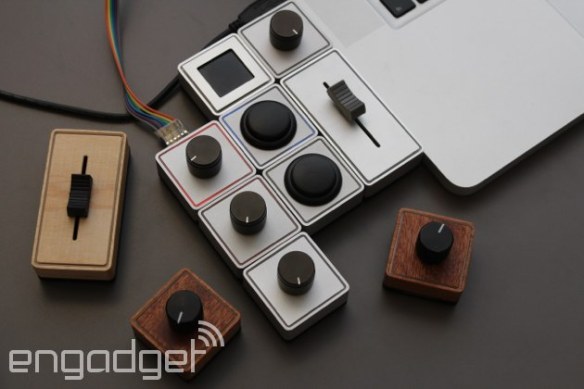
Palette co-founder Calvin Chu has a problem with how people work. “Creative professionals spend so much of their time on the computer, and at the moment, they still use a very generic one-size-fits-all keyboard and mouse interface.” It doesn’t make sense, he says — photographers, gamers, film editors, musicians and accountants all using the same interface? Surely there is a better way. “It should be specialized and made for your needs, and that’s where we came up for the idea for Palette.” Palette is Chu’s answer to a world that’s discarded tactile dials and switches for keyboards, mice and touch screens. It’s a modular collection of buttons, sliders and potentiometers that can be programmed to do almost anything on your PC. We took a look at an early prototype of the customizable controller to reacquaint ourselves with the tactile world.

Read: Palette’s modular controller brings dials and sliders to your laptop (hands-on)  | Engadget

Device & Conquer: SLJ’s 2013 Tech Survey | The Digital Shift


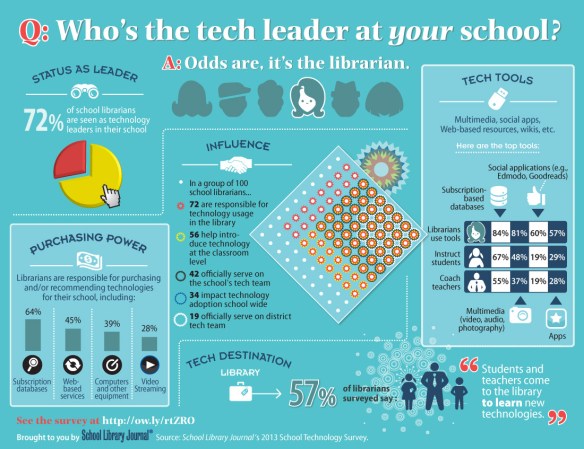
As education technology has evolved, so, too, have the kinds of digital tools that school librarians use with their students, as shown in School Library Journal’s 2013 School Technology Survey. Handheld tablets and devices are coveted items for classroom and instructional use, along with access to online sites and apps that school librarians believe can revolutionize the way they instruct—and the way students learn. More than 750 school librarians responded to SLJ’s survey, representing K–12 public and private schools across the country. According to the data, school librarians make the most of what they have, learning one day and sharing that knowledge the next. They not only make tech tools available for students and teachers, but teach them how to use the tools as well.

Read More: Device & Conquer: SLJ’s 2013 Tech Survey | The Digital Shift.

School Library Journal’s 2013 School Technology Survey


PS4: Everything you need to know | CNET Reviews


The PlayStation 4 is finally available. Here’s the quick skinny on what you need to know about Sony’s just-released game console.

Read: PS4: Everything you need to know | Reviews – Games and Gear | CNET Reviews.

Intel launches Galileo, an Arduino-compatible development board | Engadget


Notice how so many maker projects require open-source hardware like Arduino and Raspberry Pi to function? Intel has, and the company is leaping into bed with the former to produce the Galileo development board.

Read: Intel launches Galileo, an Arduino-compatible development board  | Engadget.

Power Tools | Roy Tennant – The Digital Shift


Excerpt of article content specific to libraries:

Tools in a digital library context often provide similar benefits, although they tend to be different in nature. I would say that a basic tool for any digital librarian is likely a computer running a LAMP stack:

L = Linux
A = Apache web server
M = MySQL
P = A “P” programming language such as Perl or Python

With that, there is very little you can’t do. Well, that is, once you install the dependencies of whatever else you’re wanting to run. But you get the idea. It’s a basic platform from which much else is made possible. It’s an essential tool set.

Some of the other digital library tools in my repertoire include:

Swish-e – I’ve used this indexing software since the mid-90s, and haven’t seen a reason to change. With it, I’ve set up and maintained a variety of web sites that function as if they are database-supported but in fact are simply flat XML files that are indexed using Swish-e (see, for example, FreeLargePhotos.com).

XSLTProc – Sure, there are many options for XML processing out there and I won’t attempt to defend this particular decision except to say that it is easy to use and does what I need it to do (process XSLT stylesheets against specified XML files). Again, it underpins a number of my web sites.

Nano – You can stop laughing now. Seriously. Stop laughing. I mean it. Nano is a simple text editor (before it was Pico, which was what the PINE linemode email system used for message editing). I use it to do simple editing tasks in text files and programs on the server. I know it isn’t nearly as cool emacs, or even vi, but hey, it’s what I’m used to.

Tools are power. They give you capabilities you would not have without them.

via Power Tools | Roy Tennant – The Digital Shift.

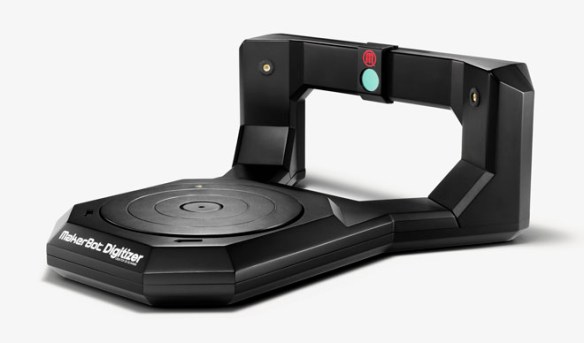
MakerBot Digitizer Will Clone All Your Stuff Using a Turntable and Lasers | Wired.com


See the post: MakerBot Digitizer Will Clone All Your Stuff Using a Turntable and Lasers | Gadget Lab | Wired.com

MakerBot Digitizer Will Clone All Your Stuff Using a Turntable and Lasers | Gadget Lab | Wired.com

Five trends driving the hardware boom | Tech Culture – CNET News


For years, venture investors and entrepreneurs were all about software. Now, more and more money is flowing into hardware. Why the excitement over hardware? The way I see it, there are five key trends driving the hardware renaissance. See the full article: Five trends driving the hardware boom | Tech Culture – CNET News.

Review of Internet of Things Device Twine | Wired.com


With the powers that be continuing to expand their use of sensors to monitor our every action as we move about in the world, it’s nice to encounter a product that lets us do the same inside our own homes. 

Twine is an inexpensive, customizable little box that can be rigged to monitor your home for various changes or actions, and alert you when they happen. It debuted in 2011 as a Kickstarter project, and became a fully funded reality in early 2012. For the full article see Review: Twine by Supermechanical | Wired.com.

Twine

Apple: On the Horizon


Steve Jobs looked to reinvent Apple’s iPhone photography with instant capture system, advanced light-field sensors | 9to5Mac | Apple Intelligence.