Well, here’s a fun surprise! Parrot has just revealed a pile of inexpensive new minidrones, 13 in all, including one that tackles a new medium: water. That hybrid UAV/Boat is called the Hydrofoil Drone, and is joined by a couple of new ‘Jumping’ drones and a new flying model, the ‘Airborne.’ Parrot chose to reveal all these new models, which cost a maximum of €200, on its French site and nowhere else, though it recently scheduled a UK event to launch them on July 2nd. We have all the details (and videos) for the new products now, however, so let’s, um, dive in! READ MORE: Parrot unveils 13 new minidrones to tackle air, sea and land | Engadget
Tag Archives: innovation
#Holus Is A Tabletop Device That Turns Digital Media Into A #3D Hologram | TechCrunch @Kickstarter #holographics
Launched on Kickstarter this morning, Holus is a tabletop device that converts digital content into a 3D hologram. Created by H+ Technologies out of Vancouver, the campaign has nearly doubled its goal of $40,000 in its first 2 hours.
Don’t expect to use this to summon Obiwan with a seven-inch image of Princess Leia. Objects aren’t 3D in any sense we’re used to. Instead, the device is a square tabletop platform which encases a glass pyramid upon which media is projected from below. The result is an ostensibly 3D image which can be viewed from 360 degrees around the machine.
READ MORE: Holus Is A Tabletop Device That Turns Digital Media Into A 3D Hologram | TechCrunch.
Tony Fadell: The first secret of design is … noticing | TED.com #design
As human beings, we get used to “the way things are” really fast. But for designers, the way things are is an opportunity … Could things be better? How? In this funny, breezy talk, the man behind the iPod and the Nest thermostat shares some of his tips for noticing — and driving — change.
via Tony Fadell: The first secret of design is … noticing | Talk Video | TED.com.
This Little Robot Wants to Be Your Best Friend [Indiegogo] | WIRED #robots #AI #gadgets
WE’VE LONG KNOWN there’s a market out there for robotic buddies. One compelling piece of evidence: The original Furby sold more than 40 million units, and it didn’t really do anything.
17 years later, an A.I. and machine-learning company is making a robot pal that will do way more than its fuzzy predecessor. It’s called Musio, and it houses a pretty impressive A.I. engine developed by a company called AKA.
The robot remembers details from prior conversations, asks follow-up questions based on that info, and can be used as a smart-home controller. But its main goal is to be your friend: Asking you questions, actually listening to your answers, and learning what you’re all about
READ MORE: This Little Robot Wants to Be Your Best Friend | WIRED
3 Google Cardboard Articles | WIRED, Engadget, TechCrunch #GoogleCardboard #virtualreality @googlecardboard #makerspaces
Google Cardboard is VR’s Gateway Drug | WIRED
There’s no reason not to try Cardboard now. It’s cheap, it’s easy, it works with your phone. It’s still a million miles away from the best VR demos out there; Oculus, HTC’s Vive, and Project Morpheus all blow Cardboard out of the water—which they should, because they’re not made of cardboard. But Cardboard more than accomplishes what it’s supposed to: It transports you.
Google’s Cardboard Design Lab teaches VR with (what else) VR | Engadget
Google debuted its larger and more robust Cardboard VR headset at I/O yesterday, now it needs some apps that actually run on it. However, designing a program in a virtual 3D environment is quite different than designing one to run on a 2D touchscreen. That’s why Google has also released the Cardboard Design Lab, an app that teaches you the basics of VR design from within a VR environment. The program runs through 10 fundamental design aspects — from “Using a Reticle” and “Keeping the User Grounded” to “Guiding with Light” and “Gaze Cues” — all from within the confines of the Cardboard headset. It won’t transform you into an VR hacking wizard overnight (as it’s not designed to) but CDL will give neophyte coders a solid overview of what they’re getting themselves into. And while the lessons learned here can just as easily be applied to designing for the Rift as Cardboard, the app is currently only available on Android.
Google’s Cardboard VR Now Works (Very Well) With iPhone | TechCrunch
Google’s Cardboard VR app first appeared last year at I/O 2014, but the initial version was somewhat limited in terms of device support. A new version released this year works with devices with screen sizes ranging up to 6 inches, but the more exciting news for many might be that it now also works with iPhone.
The new Cardboard for iOS app is available in the U.S. store now, and includes the same demo apps, as well as the same QR-code based pairing process to make sure it’s optimized for whichever generation of headset you have. Cardboard for iOS is a free download, and works with iPhone 5 and up.

We Can Now Make Computer Chips Out of Wood | Gizmodo
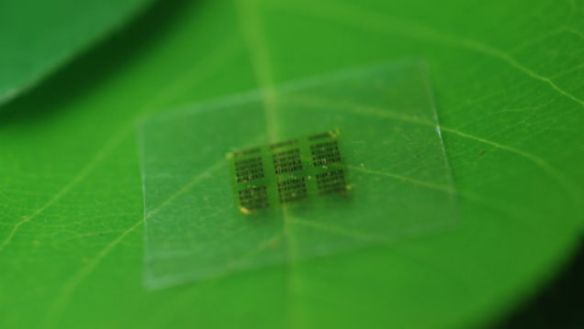
We’re one step closer to biodegradable gadgets. These computer chips are made almost entirely out of wood. Scientists at the University of Wisconsin, Madison teamed up with the U.S. Department of Agriculture’s Forest Products Laboratory to fashion the new semiconductor chip. The paper was published today in Nature Communications.
See, most of a computer chip is composed of a “support” layer that cradles the actual chip. The research team replaced that support layer’s non-biodegradable material with something called cellulose nanofibril (CNF), which is flexible, wood-based, biodegradable—all things that can make a device way less hazardous.
Image credit: University of Wisconsin
READ MORE: We Can Now Make Computer Chips Out of Wood | Gizmodo
It’s Not Women Who are the Problem in Tech Land | CNET #tech #sexism #genderequality
We are hearing more and more about gender equality issues in the tech industry. I liked this particular article from CNET, as studies are referenced which provide evidence that the more diverse teams are, the more innovative and financially successful the company will be. Overt and subtle biases of sexism toward women and girls are also discussed.
Silicon Valley’s male-dominated culture could cost the technology industry the thing it values most: innovation. READ MORE: It’s not women who are the problem in tech land | CNET.
You may also like: Women in tech don’t get the same respect as men, survey says | CNET
This $169 Computer Is Designed For The World’s Emerging Middle Class | Co.Exist #computers
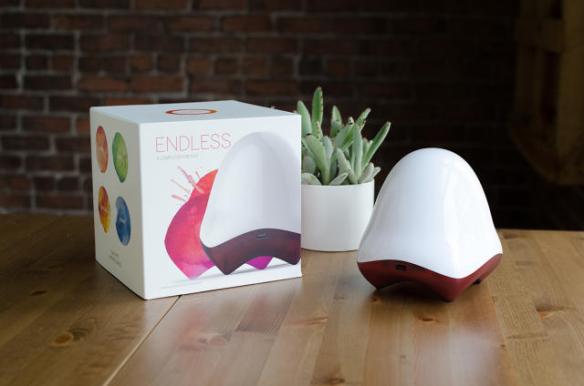
On a trip to India, entrepreneur Matt Dalio noticed something about the country’s emerging middle class: While many families owned TVs, few could also afford to have a computer. He had an epiphany. Why not make TV screens double as the monitor for a low-cost, but fully-functioning PC?
For the next three years, he worked with a team to develop Endless, a $169 computer designed for the burgeoning middle class in the developing world. It’s loaded with around 150 apps—from health and farming to Wikipedia—that can work offline, so if someone has a spotty Wi-Fi connection, they can keep working.
READ MORE: This $169 Computer Is Designed For The World’s Emerging Middle Class | Co.Exist | ideas + impact.
Say Hello to the Final Oculus Rift—Coming 2016 | Gizmodo #virtualreality #OculusRift
I’ve been fortunate to experience a prototype Oculus Rift…the consumer version looks way cool and much more refined.
Virtual reality is coming—and now, we finally know when. You will actually be able to buy a real, consumer version of the Oculus Rift in the first quarter of next year. You’re looking at it right now. Let me repeat: this is not another prototype. READ MORE: Say Hello to the Final Oculus Rift—Coming 2016 | Gizmodo
C.H.I.P. — The super tiny computer that only costs $9 [@Kickstarter] | Mashable #makerspaces @nextthingco
If you thought the $35 Raspberry Pi 2 was a small and cheap computer, think again. Next Thing Co.’s open-source C.H.I.P. is an even smaller barebones microcomputer that only costs $9.
Like the Raspberry Pi, C.H.I.P. can be used in a variety of ways. Connect the necessary parts — a keyboard, mouse, and a display — to it and it becomes a personal computer. Otherwise, you can hack it into a retro games emulator, or robot, or whatever you can dream up. Next Thing Co. encourages users to learn how to code and make things with C.H.I.P.
Next Thing Co. is currently crowdfunding C.H.I.P. through a Kickstarter campaign. At the time of this writing, the project has successfully reached its $50,000 funding goal with 29 days to go. The first C.H.I.P computers are expected to start shipping in December.
READ MORE: C.H.I.P. — the super tiny computer that only costs $9 | Mashable