Researchers in Japan Show off Super Fast Laser #Holograms You Can Touch | Mashable #lasers #tech #holographics


The dream of being able to touch and interact with holograms was the subject of many science fiction stories, but a lab in Japan has actually accomplished the feat.

Unlike the fictional holodeck on Star Trek, which used force fields to create a sense of touch, researchers at Japan’s Digital Nature Group used a different method: femtosecond lasers.

READ MORE: Researchers in Japan show off super fast laser holograms you can touch | Mashable

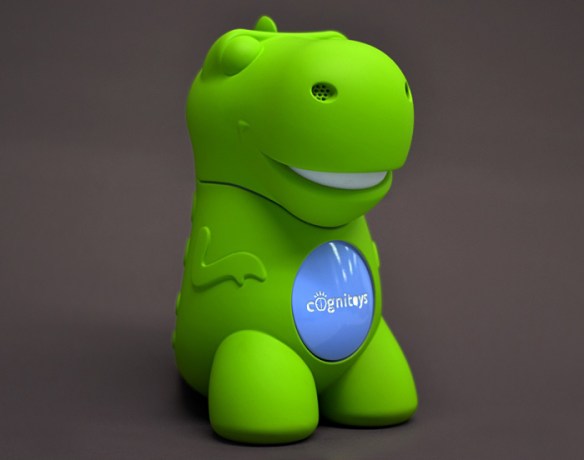
A Toy Dinosaur Powered by IBM’s Watson Supercomputer | WIRED #AI #toys #IBMWatson @Kickstarter


Image Credit: CogniToy

DON COOLIDGE AND JP Benini are bringing cognitive smarts to the world of children’s toys. Coolidge and Benini just launched a Kickstarter for a toy dinosaur toy driven by IBM Watson, the machine learning service based on the company’s Jeopardy-playing cognitive system.

Developed under the aegis of a company called Elemental Path and a project called CogniToys, this tiny plastic dinosaur uses speech recognition techniques to carry on conversations with kids, and according to Coolidge and Benini, it even develops a kind of smart personality based on likes and dislikes listed by each child.

The toy is another example of online machine learning pushing even further into our everyday lives. This is made possible not only by an improvement in AI techniques, but also by the ability to readily deliver these techniques across the net. READ MORE: A Toy Dinosaur Powered by IBM’s Watson Supercomputer | WIRED.

What Emotion-Reading #Computers Are Learning About Us | Fast Company #emotionalintelligence


https://embed-ssl.ted.com/talks/rana_el_kaliouby_this_app_knows_how_you_feel_from_the_look_on_your_face.html
Rana el Kaliouby, a Cambridge- and MIT-trained scientist and leader in facial-recognition technology, is concerned about how computers are affecting the emotional lives of her two small children.

There is much research that suggests that emotional intelligence develops from social interactions, yet children are increasingly spending their days in front of computers, tablets, and smartphones. Today, children under the age of eight spend on average two full hours a day in front of screens. El Kaliouby is deeply concerned about what happens when children grow up around technology that does not express emotion and cannot read our emotion. Does that cause us, in turn, to stop expressing emotion?

The answer, according to recent research, is yes. A University of California-Los Angeles study last year found that children who had regular access to phones, televisions, and computers were significantly worse at reading human emotions than those who went five days without exposure to technology.

But El Kaliouby does not believe the solution lies in ridding the world of technology. Instead, she believes we should be working to make computers more emotionally intelligent.

READ MORE: What Emotion-Reading Computers Are Learning About Us | Fast Company | Business + Innovation

BBC Experiment Lets You Control iPlayer With Your Mind | Engadget #gadgets #disabilities #tech


http://www.bbc.co.uk/programmes/p02tx270/player
Instead of grabbing the remote or poking at your smartphone, the BBC thinks the future of TV navigation could lie in mind control. For its latest experiment, the broadcaster is testing a brainwave reading headset developed by This Place that lets you launch iPlayer and choose programmes with your thoughts. READ MORE: BBC experiment lets you control iPlayer with your mind | Engadget

Caring Pepper Robot Hits the Market, Sells Out in a Minute | CNET #robots #empathy


The adorable Pepper robot unveiled a year ago by Japan-based mobile and telecommunications company SoftBank has finally been made available to consumers, and it’s been a roaring success.

According to CIO, the robot was launched on to the market at 10 a.m. on Saturday, June 20. Within a minute, all 1,000 robots in the first wave had been snapped up by customers, going for 198,000 yen (around $1,610) apiece.

Pepper aims to act as a household companion. It is programmed to communicate with users, follow vocal commands, and, in what SoftBank claims is a first, read human emotions and react accordingly. Pepper is not built for physical tasks. The robot’s role is more emotional. READ MORE: Caring Pepper robot hits the market, sells out in a minute – CNET

How Can You Prevent Sexual Assault? Web Comic ‘Game’ Has Advice | CNET + Can #Wearable #Tech Prevent Sexual Assault? | FastCompany


How Can You Prevent Sexual Assault? Web Comic ‘Game’ Has Advice | CNET. With this choose-your-own-adventure online comic [interactive graphic novel], students discover how their decisions can ignite or diffuse uncomfortable sexual situations.

Can Wearable Tech Prevent Sexual Assault? | FastCompany Roar is a startup that’s building a wearable device designed to deter attackers and notify loved ones.

#Holus Is A Tabletop Device That Turns Digital Media Into A #3D Hologram | TechCrunch @Kickstarter #holographics


Launched on Kickstarter this morning, Holus is a tabletop device that converts digital content into a 3D hologram. Created by H+ Technologies out of Vancouver, the campaign has nearly doubled its goal of $40,000 in its first 2 hours.

Don’t expect to use this to summon Obiwan with a seven-inch image of Princess Leia. Objects aren’t 3D in any sense we’re used to. Instead, the device is a square tabletop platform which encases a glass pyramid upon which media is projected from below. The result is an ostensibly 3D image which can be viewed from 360 degrees around the machine.

READ MORE: Holus Is A Tabletop Device That Turns Digital Media Into A 3D Hologram | TechCrunch.

Play Lego Worlds, A New Minecraft Competitor From Lego, Right Now | TechCrunch #LEGOWorlds #Minecraft


When Minecraft came out, I heard a lot of people describe as sort of like virtual Lego. Now, there’s a game for which that description is even more apt: Lego Worlds, an open world building game that lets users create using virtual Lego bricks, and interact with the world as a customizable minifigure avatar. READ MORE: Play Lego Worlds, A New Minecraft Competitor From Lego, Right Now | TechCrunch.

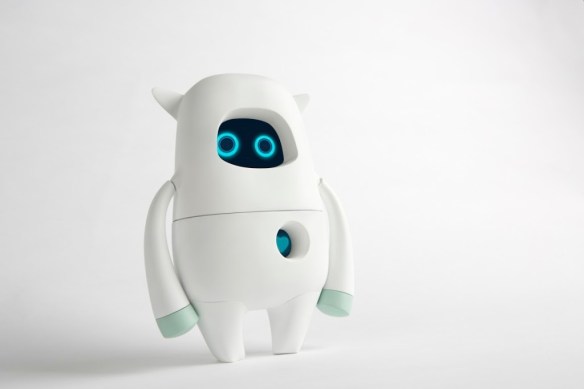
This Little Robot Wants to Be Your Best Friend [Indiegogo] | WIRED #robots #AI #gadgets


WE’VE LONG KNOWN there’s a market out there for robotic buddies. One compelling piece of evidence: The original Furby sold more than 40 million units, and it didn’t really do anything.

17 years later, an A.I. and machine-learning company is making a robot pal that will do way more than its fuzzy predecessor. It’s called Musio, and it houses a pretty impressive A.I. engine developed by a company called AKA.

The robot remembers details from prior conversations, asks follow-up questions based on that info, and can be used as a smart-home controller. But its main goal is to be your friend: Asking you questions, actually listening to your answers, and learning what you’re all about

READ MORE: This Little Robot Wants to Be Your Best Friend | WIRED

STEM Curriculum Turned Into An Addictive [iOS] Game | Co.Design #STEM #apps


Levers, pulleys, and wheels—they’re tools that outline some of the most foundational principles in physics. But foundational principles are boring. What’s fun is using a lever to catapult a boulder at a castle, breaking down the bricks one by one to discover a dragon sleeping inside.

That is the premise of Simple Machines, the latest iOS app by the educational game studio Tinybop. In the past, Tinybop has made interactive books on the human body and plant life. They’ve created a fun simulator for kids to build their own robots. But with Simple Machines, they’re taking aim at a very particular part of student curriculum: The first stages of STEM (science, technology, engineering, and math), in which kids commonly learn about six “simple machines”—the lever, pulley, wheel, wedge, inclined plane, and screw.

READ MORE: STEM Curriculum Turned Into An Addictive Game | Co.Design | business + design.