Recent Research Studies Links


Study: 38 Percent of Toddlers Have Used a Mobile Device | PCMag
According to a recent Common Sense Media research study, 38 percent of kids under two years old have used a mobile device — with a watchful eye from their parents, surely. In 2011, that number reached only 10 percent.

Pediatricians: Limit kids’ media use to 2 hours a day | CNET
American Academy of Pediatrics also tells parents to discourage any screen time for children 2 and younger and keep Internet-connected devices out of kids’ bedrooms.

Report: Piracy Isn’t Killing Content | Gizmodo
Contrary to what the popular press might have us believe, piracy isn’t killing content. At least, that’s what a team of scholars from the London School of Economics has found after conducting a deep analysis of the situation.

Deloitte Survey Finds 18% of U.S. College Students Own Tablets, 14% Own E-Readers | InfoDocket

Oyster Brings ‘Netflix for E-Books’ App to iPad, Opens to Public | Mashable


A little more than a month after launching an iPhone app in invitation-only beta, Oyster is making its e-book subscription service available to all users and expanding to iPad.

Oyster charges $9.95 a month for access to more than 100,000 books from big and small publishers, but it now offers users one free month with the hope of getting more people to try the app experience. The startup declined to provide data on the number of users or books read during the beta period, but noted that 1 million pages were read in the first 10 days the app was available and another million pages were read in the following six days.

Read: Oyster Brings ‘Netflix for E-Books’ App to iPad, Opens to Public | Mashable.

You may also like: Test Driving Oyster, a “Netflix for Ebooks” | The Digital Shift

Recent Pew Research Links


25 percent of men watch online porn, and other ‘facts’ about Americans’ online video habits | The Washington Post
Do you spend a lot of time watching videos on YouTube? You’re not alone. The Pew Internet & American Life project released new survey data on how Americans engage with video online Thursday. And the percentage of online adults who watch or download videos has grown from 69 percent of adult Internet users in 2009 to 78 percent today.

Online Video 2013 | Pew Internet
Over the past four years, the percent of American adult internet users who upload or post videos online has doubled from 14% in 2009 to 31% today. That includes 18% of adult internet users who post videos they have created or recorded themselves—many of whom hope their creations go viral. The share of online adults who watch or download videos has also grown from 69% of internet users in 2009 to 78% today, and mobile phones have become a key part of the video viewing and creating experience.

Who’s Not Online and Why | Pew Internet
As of May 2013, 15% of American adults ages 18 and older do not use the internet or email. Asked why they do not use the internet:

  • 34% of non-internet users think the internet is just not relevant to them, saying they are not interested, do not want to use it, or have no need for it.
  • 32% of non-internet users cite reasons tied to their sense that the internet is not very easy to use. These non-users say it is difficult or frustrating to go online, they are physically unable, or they are worried about other issues such as spam, spyware, and hackers. This figure is considerably higher than in earlier surveys.
  • 19% of non-internet users cite the expense of owning a computer or paying for an internet connection.
  • 7% of non-users cited a physical lack of availability or access to the internet.

Cell Phone Activities 2013 | Pew Internet
Fully 91% of American adults own a cell phone and many use the devices for much more than phone calls. In our most recent nationally representative survey, we checked in on some of the most popular activities people perform on their cell phones and found:

  • 81% of cell phone owners send or receive text messages
  • 60% of cell phone owners access the internet
  • 52% send or receive email
  • 50% download apps
  • 49% get directions, recommendations, or other location-based information
  • 48% listen to music
  • 21% participate in a video call or video chat
  • 8% “check in” or share their location

HarperCollins partners with Scribd for ebook subscription service | Quill & Quire


HarperCollins has partnered with document-sharing website Scribd on a new ebook subscription service.

Dubbed “Netflix for ebooks,” subscribers pay $8.99 a month for the ability to check out an unlimited number of ebooks – up to 10 titles at time – from the Scribd catalogue, which includes backlists from HarperCollins and several small U.S. presses. The service allows readers to switch between browsers, Android, and Apple devices without losing their place.

HarperCollins CEO Brian Murray told the Associated Press that the partnership will provide the publisher with valuable data about Scribd readers. “This is going to help us make even better publishing and marketing decisions for our authors,” he says.

The international service is now available in Canada, although not all titles are accessible for download.

HarperCollins partners with Scribd for ebook subscription service | Quill & Quire

Stolen phones blacklist launches in Canada | CBC News


Cellphones, tablets and other wireless devices that have been reported lost or stolen can no longer be activated — and therefore used — on most wireless networks in Canada, following the launch of a new national “blacklist” of such devices Monday.

Read the full story: Stolen phones blacklist launches in Canada | Technology & Science | CBC News.

Why Free Software Is More Important Now Than Ever Before | Richard Stallman | Wired.com


It is now 30 years since I launched the campaign for freedom in computing, that is, for software to be free or “libre” (we use that word to emphasize that we’re talking about freedom, not price). Some proprietary programs, such as Photoshop, are very expensive; others, such as Flash Player, are available gratis — either way, they subject their users to someone else’s power.

Much has changed since the beginning of the free software movement: Most people in advanced countries now own computers — sometimes called “phones” — and use the internet with them. Non-free software still makes the users surrender control over their computing to someone else, but now there is another way to lose it: Service as a Software Substitute, or SaaSS, which means letting someone else’s server do your own computing activities.

Both non-free software and SaaSS can spy on the user, shackle the user, and even attack the user. Malware is common in services and proprietary software products because the users don’t have control over them. That’s the fundamental issue: while non-free software and SaaSS are controlled by some other entity (typically a corporation or a state), free software is controlled by its users.

Why does this control matter? Because freedom means having control over your own life.

If you use a program to carry out activities in your life, your freedom depends on your having control over the program. You deserve to have control over the programs you use, and all the more so when you use them for something important in your life.

Read the full story: Why Free Software Is More Important Now Than Ever Before | Richard Stallman | Wired.com

8 Ways to Use Instagram’s API | Mashable


Instagram has become one of the web’s most popular platforms for photo and video sharing. To help users integrate the social network even further into their daily lives, it has released a public application programming interface (API).

For those who have never heard the term before, an API is a seamless software-to-software interface, meaning there is no user involvement during the passing of information. For example, when you enter credit card information to make an online purchase, the website sends your credit card information through an API to another application, which confirms that the provided information is correct.

By using Instagram’s public API, users — tech-savvy or otherwise — have a number of options on how to best implement the code. For some ideas on how to begin, here are eight basic ways to use the API for your own online presence.

Discusses:

  1. Search Tags
  2. Incorporate Photos on Websites
  3. View Photos from Specific Locations in Real Time
  4. View Popular and Trending Photos
  5. Print Photos from Events and Tags Instantly
  6. Make Custom Items
  7. Market Venues, Events and Businesses
  8. Create Event Live Feeds

Read 8 Ways to Use Instagram’s API | Mashable.

Libraries of the Future [Infographic] | LibraryScienceList.com


Libraries of the Future [Infographic] | LibraryScienceList.com

Libraries of the Future

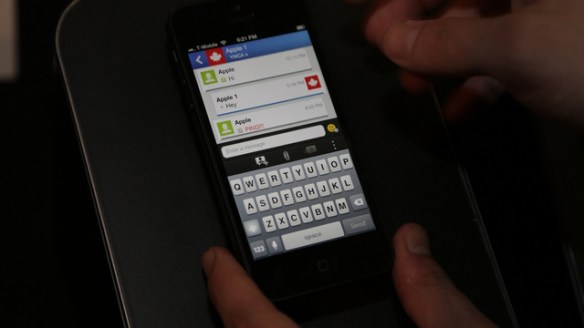
BBM for iOS and Android Hands-On: The Best Blackberry Thing In Years? | Gizmodo


Even as Blackberry has fallen from grace over the last few years, its proprietary messaging service BBM has remained a solid, well-designed product. A few months back, the company announced plans to bring the product to iOS and Android. We were excited then, and after spending a few minutes with the final build of both apps, we’re thinking this could be Blackberry’s foothold into a new future.

BBM

Read: BBM for iOS and Android Hands-On: The Best Blackberry Thing In Years? | Gizmodo.

Infographic: How Mobile Apps Have Changed the World | Marketing Technology Blog


Infographic: How Mobile Apps Have Changed the World | Marketing Technology Blog

Global Mobile App Stats