A bookseller explains how Kamila Shamsie’s call for gender equality in the industry, and the fiery debate it provoked, could lead to greater diversity all around. READ MORE: Battling bias on the shop floor: how bookstores can support diversity | Books | The Guardian
Tag Archives: publishing
For One Year, This Publisher Will Only Release #Books By #Women | HuffPost #publishing #genderequality
In 2014, only 27 percent of authors represented in The Times Literary Supplement were women, only 40 percent from The Paris Review, only 29 percent from The Nation. These numbers are courtesy of the annual VIDA count, an effort to shed light on gender inequity in the Western literary world.
Although the count, in its fifth year, has promoted positive change — The New York Times has steadily upped its coverage of women, and writer Joanna Walsh declared 2014 the Year of Reading Women as a result — there is still much ground to cover, as the above statistics only begin to indicate. Books about women still don’t win major prizes; books by women are still likely to be packaged as unserious.
To begin to address these discrepancies, author Kamila Shamsie published “a provocation” in the Guardian this month: Let 2018, the centennial anniversary of women’s suffrage in the U.K., be a Year of Publishing Women.
READ MORE: For One Year, This Publisher Will Only Release Books By Women | HuffPost
Novelist Finds That #Books About #Women Don’t Win Major #Awards | Jezebel #sexism #genderequality
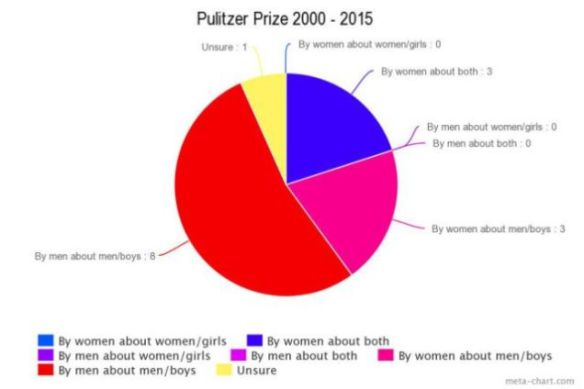
We already knew that publishing is hard for women. VIDA’s annual count is a persistent reminder that, while the gender gap in publishing has begun to close, it’s still far from approaching equality.
But novelist Nicola Griffith had a feeling that it just wasn’t women writers that were underrepresented; books about women were absent as well. “I’ve been counting, subconsciously then consciously, for 20 years when I was first published and started to see how skewed the playing field was,” Griffith told Fusion. So Griffith gathered the data, and published it on her blog last week.
She found that regardless of the gender of the author, major awards overwhelming favored books about men and boys. READ MORE: Novelist Finds That Books About Women Don’t Win Major Awards | Jezebel
How to Self-Publish Your Book on a Budget | Mediashift | PBS #books #selfpublishing #selfpub
There are 14 different steps discussed in this post on How to Self-Publish Your Book on a Budget | Mediashift | PBS.
The 10 Most Controversial Books of the Year | BookBub Blog #bannedbooks
As part of National Library Week, the American Library Association just released its annual State of America’s Libraries Report analyzing the shifting role libraries play in today’s society. The full report is interesting in and of itself, but it also includes one of the most fascinating book lists of the year — the most frequently challenged books of the year.
In 2014, the ALA received 311 requests to ban books from schools and libraries. [Here] are the top 10 books that caused the most controversy over the past year, including the reasons they were challenged, as well as each book’s publisher description. READ: The 10 Most Controversial Books of the Year | BookBub Blog
50 Comic Books That Explain Comic Books Today | Vox
Flip open any comic book and you’ll find a story of overcoming the odds. Whether it’s a web-slinger seeking to make his way in the world, a caped crusader intent on making his city a better place, or a mutant who has to deal with human hate, comic books have always been a beacon of hope for the underdogs of this world. But perhaps the greatest comic book story ever told is that of the books themselves…
…Today, comic books command a seat at pop culture’s table. They rule the box office and television screens. But most of all, from Superman to Sex Criminals, they’re still places where the greatest stories are being told. Here are 50 comic books that explain the vast history, how certain books shaped the medium, and the state of comics today…READ MORE: 50 comic books that explain comic books today | Vox
The Story of Lorem Ipsum: How Scrambled Text by Cicero Became the Standard For Typesetters Everywhere | Open Culture
Meet The Woman Who Sold A Million Copies Of Her Coloring Books For Adults | BuzzFeed
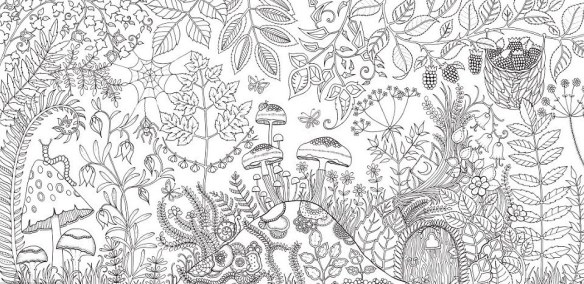
Johanna Basford’s first adult coloring book, Secret Garden, was translated into 14 languages, outselling the most popular cookbook in Paris. “I think everyone has a creative spark; they just need the opportunity to let it flourish,” she said. READ MORE: Meet The Woman Who Sold A Million Copies Of Her Coloring Books For Adults | BuzzFeed
The Insane History of How American Paranoia Ruined and Censored Comic Books | Vox
One of the most hurtful things you can say to a comic book reader is that comic books are for kids.
It’s a chilling insult that the stuff they read — the stuff they love — never advanced beyond its funny-page beginnings. But it’s also — often unknown to comics fans — a blunt reminder of one of the worst things to ever happen to comic books.
Some 60 years ago, during the era of McCarthyism, comic books became a threat. The panic culminated in a Senate hearing in 1954. This, of course, isn’t to say that McCarthyism and the comic book panic were comparable in their human toll. But they share the same symptoms of American fear and a harsh, reactive response to it.
The reaction to the suspected scourge was the Comics Code — a set of rules that spelled out what comics could and couldn’t do. Good had to triumph over evil. Government had to be respected. Marriages never ended in divorce. And it was in the best interests of publishers to remain compliant.
What adults thought was best for children ended up censoring and dissolving away years of progress and artistry, as well as comics that challenged American views on gender and race. Consequently, that cemented the idea that this was a medium for kids — something that we’ve only recently started disbelieving.
READ MORE: The insane history of how American paranoia ruined and censored comic books | Vox
The Gorgeous Typeface That Drove Men Mad and Sparked a 100-Year Mystery | Gizmodo

No one seemed to notice him: A dark figure who often came to stand at the edge of London’s Hammersmith Bridge on nights in 1916. No one seemed to notice, either, that during his visits he was dropping something into the River Thames. Something heavy.
Over the course of more than a hundred illicit nightly trips, this man was committing a crime—against his partner, a man who owned half of what was being heaved into the Thames, and against himself, the force that had spurred its creation. This venerable figure, founder of the legendary Doves Press and the mastermind of its typeface, was a man named T.J. Cobden Sanderson. And he was taking the metal type that he had painstakingly overseen and dumping thousands of pounds of it into the river.
As a driving force in the Arts & Crafts movement in England, Cobden Sanderson championed traditional craftsmanship against the rising tides of industrialization. He was brilliant and creative, and in some ways, a luddite—because he was concerned that the typeface he had designed would be sold to a mechanized printing press after his death by his business partner, with whom he was feuding.
So, night after night, he was making it his business to “bequeath” it to the river, in his words, screwing his partner out of his half of their work and destroying a legendarily beautiful typeface forever. Or so it seemed.
READ MORE: The Gorgeous Typeface That Drove Men Mad and Sparked a 100-Year Mystery | Gizmodo
Related
- Resource: Typography and Type Design
 infophile