
We recently asked members of the BuzzFeed Community to tell us what contemporary book should be taught in high school. Here are the brilliant results. READ MORE: 26 Contemporary Books That Should Be Taught In High School | BuzzFeed
Tag Archives: students
Kids Need To Learn Digital Literacy—Not How To Code | ReadWrite
The new narrative in education, echoed from Silicon Valley to Washington, D.C., is: “Everyone should learn to code.” But something’s getting lost in translation between technologists and parents of students around the country. Let’s get this out of the way: Not everyone needs to learn how to code. Coding is just one part of the constantly evolving technological landscape. There’s a big difference between learning how to code and having a fundamental understanding of how technology and software operate. Of the two, the latter is way more important for most people. What students—and, really, anyone who wants to function in careers in the future—should learn is how to be digitally literate.
READ MORE: Kids Need To Learn Digital Literacy—Not How To Code | ReadWrite
When Library School Hands You Lemons | Hack Library School
Originally posted to HLS November 2013.
My library school experience has, I’m sad to say, handed me a bunch of lemons. There are the professors who aren’t as inspiring as I would prefer sorry, the journal articles that look like they weren’t proofread, the classes that are scheduled at times that are inconvenient for everyone. Including the instructor. And then there’s the fact that one of the classes I need for my specialization is offered only in the spring, and this spring it is offered at a time when I cannot take it for religious reasons probably NSFW, which is the biggest lemon of all. Meanwhile, I’m paying a not-insignificant amount for my education, so let’s talk about how to turn these lemons into lemonade.
READ MORE: When Library School Hands You Lemons | hls
20 Things Educators Need To Know About Digital Literacy Skills | InformED
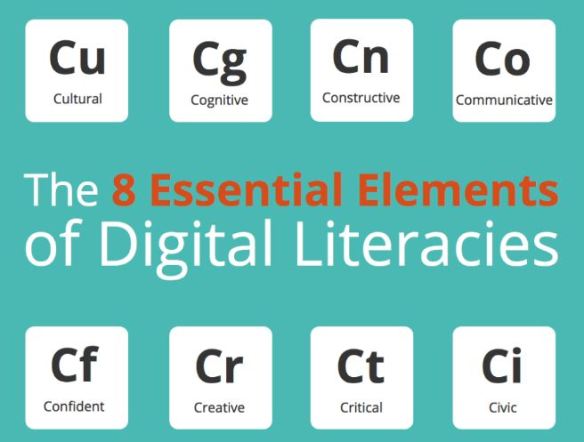
Teaching digital literacy is about more than just integrating technology into lesson plans; it’s about using technology to understand and enhance modern communication, to locate oneself in digital space, to manage knowledge and experience in the Age of Information.
These are vague descriptions, as are most of the descriptions you’ll find of digital literacy in blog posts and journal articles online. What teachers need, more than a fancy synopsis of how digital publication affects the meaning of a text, is a practical and applicable guide to helping students think productively about the digital world.
[These are] the top do’s and don’ts we’ve come across–in research and in our own experience–when it comes to making students digitally literate. The post reviews 5 Teaching Practices That Destroy Digital Literacy (e.g. criticizing digitalk) and 15 Habits to Cultivate in Your Students (e.g. get used to multiple literacies).
READ: 20 Things Educators Need To Know About Digital Literacy Skills | InformED
Staying Connected as a Distance Learner | Hack Library School
When I applied for my MLS a few years ago, the realities of the working world had me dreaming of a retreat from the outside world in the arms of academia. I pictured days spent in stimulating classes and evenings immersed in my studies, totally plugged into the world of libraries and library science at all times. I would specialize in something fantastic, meet tons of like-minded people, and not have to report to a desk job every day. Student loan debt be damned, I wanted an escape.
Shortly after hitting “send,” life intervened. Between a 500+ mile move, a new job with just enough travel to make night classes impossible, and sheer economic reality, it quickly became apparent that escaping into classes and living off student loans for two years was just not going to happen. Two years and two deferments later, I find myself almost finished with my first semester in the University of Maryland College Park’s online MLS program.
I’m happy with my decision to switch to the online program, but I do sometimes feel that I’m missing out on the intangible benefits of face-to-face learning. My day job has NOTHING to do with libraries, so I don’t get the water cooler chitchat, the special programming posters in the hallway, the classroom tangents that have nothing to do with that day’s planned discussion but are oh-so-valuable. I get online class discussion boards, and nothing more. Not quite the immersive experience I had in mind when I sent in my application, and an easy recipe for low motivation. So to keep myself from feeling totally cut off, I’ve come up with a few strategies to get my library buzz. Read more: Staying Connected as a Distance Learner | Hack Library School.
What Teens, Screens and Digitally Divided Attention Spans Mean for Learning [Infographic] | The LAMP

Facebook Launches Open Academy To Give Kids College Credit For Open Source Contributions | TechCrunch
A perfect GPA isn’t cool. You know what’s cool? Advancing an open source project. To help computer science students prepare for jobs (and boost its own recruiting efforts) Facebook today publicly launched Open Academy. The partnership with premier CS universities sets up a special class where students get college credit for contributing to open source projects.
News: Education & Technology, Librarianship
Education & Technology
Startup Gives Free Stuff to Student Influencers | Mashable
Sumpto, a startup that identifies top social-media influencers at colleges across the country, sends students free gifts from brands in hopes that they will tweet, post and share photos of the free swag on their social-media accounts.
Twitter strives to explain itself to the public | CNET
A new “About Twitter” page attempts to describe the social network and explain how and why people tweet.
Bill Gates Believes Human Health Is More Important Than Tech | Mashable
In a wide-ranging interview with the Financial Times, which focused primarily on his work to bring health aid to the world’s impoverished regions, Gates offers a glimpse into how much his views have changed regarding the importance of technology in our lives.
E Ink Looks Beyond E-Readers | MIT Technology Review
Facing a declining market for e-readers, E Ink’s new R&D facility is trying out some different ideas.
Lenovo pursued BlackBerry bid, but Ottawa rejected idea | Globe & Mail
[T]he Canadian government told the smartphone company it would not accept a Chinese takeover because of national security concerns.
Apple: “Our Business Does Not Depend on Collecting Personal Data” | AllThingsD
Apple published a formal report on federal government data requests and in so doing became the first tech company to disclose such inquiries by both account and device.
- Wearable Computing: Is It Ready for Prime Time? | LifeHacker
- 3D-printing encryption program disguises blueprints for controversial objects | Engadget
- Facebook’s Mobile Tipping Point: 48% Of Daily Users Are Now Mobile-Only (But No Mention Of BlackBerry) | TechCrunch
Librarianship
Museum of Science Fiction might be coming to DC | CNET
Trekkies and wanna-be Mars colonists might soon have a permanent brick-and-mortar site for sharing their love of all things science fiction
Illinois Library Comes Under Fire | American Libraries Magazine
“Sometimes libraries that are doing ‘all the right things’ pay a price for their excellence through uncivil attacks and attempts to dismantle their work,” Barbara Jones, director of ALA’s Office for Intellectual Freedom (OIF), told American Libraries. She is referring to Orland Park (Ill.) Public Library (OPPL) in south suburban Chicago, which has endured several intellectual-freedom challenges over the past few months.
MELSA, 3M Develop New Ebook Sharing Feature for Consortia | The Digital Shift
The Library Vending Machine | BookRiot
Changing demographics and difficulty securing new funds for new libraries, The Pioneer Library System in Norman, Oklahoma decided to to use technology to meet its patrons needs. So last week, it opened the first 24-hour library vending machine in the United States. Built by EnvisionWare, this fully automated machine will be able to to dispense more than 400 pieces of media (books/DVDs/audiobooks) and store more than 1000 returned items.
Recent Research Studies Links
Study: 38 Percent of Toddlers Have Used a Mobile Device | PCMag
According to a recent Common Sense Media research study, 38 percent of kids under two years old have used a mobile device — with a watchful eye from their parents, surely. In 2011, that number reached only 10 percent.
Pediatricians: Limit kids’ media use to 2 hours a day | CNET
American Academy of Pediatrics also tells parents to discourage any screen time for children 2 and younger and keep Internet-connected devices out of kids’ bedrooms.
Report: Piracy Isn’t Killing Content | Gizmodo
Contrary to what the popular press might have us believe, piracy isn’t killing content. At least, that’s what a team of scholars from the London School of Economics has found after conducting a deep analysis of the situation.
Deloitte Survey Finds 18% of U.S. College Students Own Tablets, 14% Own E-Readers | InfoDocket
An “All You Can Eat” College Degree Could Be The Future Of Higher Education | Co.Exist
Wisconsin’s public university system will start granting some degrees based on testing instead of credits, and letting you use as much of the school as you want for a flat fee. Schools around the country are watching.
 infophile