The Next Big Thing In Design? Less Choice | Co.Design #design #tech


The article discusses the importance and applications of anticipatory design.

Technology has revolutionized the way we live our lives and do business, but it has done a terrible job reducing the stress of so many decisions. Industry by industry, great digital design has eliminated middlemen from the economy and put users in control, making it fast and easy for us to determine what we want and purchase it directly, whether on a computer or over a phone. Now, with unlimited opportunities for decision-making, we have essentially made ourselves the middlemen in our own lives.

The enjoyment, and even fetishization, of the beautifully designed experiences we rely on to make these decisions has distracted us from our original goal of simplifying our lives. We’ve forgotten that the ultimate purpose of an interface is to make things simpler. In the future, the best interface will be no interface at all and the best decisions will be made without me having to make them (but according to my preferences and goals). 

READ MORE: The Next Big Thing In Design? Less Choice | Co.Design | business + design
Publishers Know You Didn’t Finish “The Goldfinch” — Here’s What That Means For The Future Of Books | BuzzFeed News


Millions may have held their suspicions, but last month the Canadian e-reader company Kobo confirmed it: Most people who buy The Goldfinch don’t actually finish it. According to the company’s data, less than half of Canadian and British Kobo readers in 2014 made it to the end of Donna Tartt’s behemoth novel, one of the best-selling of the year.

How did Kobo know this? Like every e-reader and reading-app maker today, the company, a subsidiary of the Japanese e-commerce titan Rakuten, has access to a comprehensive suite of data about the reading behavior of its users. In a white paper titled “Publishing in the Era of Big Data” and released this fall, the company announced that “with the onset of digital reading … it is now possible to know how a customer engages with the book itself — what books were left unopened, which were read to the very last word and how quickly.” In other words, if you read books digitally, the people who serve you those books more than likely know just what kind of reader you are…READ MORE: Publishers Know You Didn’t Finish “The Goldfinch” — Here’s What That Means For The Future Of Books | BuzzFeed News.

Adobe’s e-book reader sends your reading logs back to Adobe—in plain text [Updated] | Ars Technica


Adobe’s Digital Editions e-book and PDF reader—an application used by thousands of libraries to give patrons access to electronic lending libraries—actively logs and reports every document readers add to their local “library” along with what users do with those files. Even worse, the logs are transmitted over the Internet in the clear, allowing anyone who can monitor network traffic such as the National Security Agency, Internet service providers and cable companies, or others sharing a public Wi-Fi network to follow along over readers’ shoulders.

Ars has independently verified the logging of e-reader activity with the use of a packet capture tool. The exposure of data was first discovered by Nate Hoffelder of The Digital Reader, who reported the issue to Adobe but received no reply.

via Adobe’s e-book reader sends your reading logs back to Adobe—in plain text [Updated] | Ars Technica.

The Next Big Thing In Responsive Design | Co.Design


The Next Big Thing In Responsive Design | Co.Design | business + design

Responsive design, which allows designers and developers to build websites that adapt to every screen size, is one of the most empowering web tools to be adopted in the last decade.

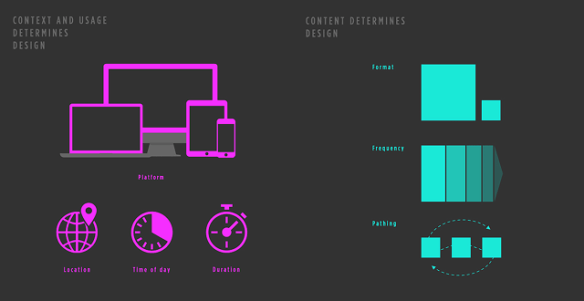
But adapting to the screen is only the first frontier of a new, responsive web. Today, users expect online experiences that not only respond to what device theyre using, but also their location, time of day, what they’ve already read, and events happening in real time.

To capture a user’s attention for the next generation of the web, you’ll need more than just responsive design. You’ll need a responsive philosophy.

READ MORE: The Next Big Thing In Responsive Design | Co.Design | business + design.

Comixology DRM-Free Comics | $1 for Access to 15,000 Marvel Comics | Gizmodo


You Can Finally Download DRM-Free Comic Book Backups From Comixology | Gizmodo
The biggest digital comic book distributor in all of digital comics land, Comixology, just took a relatively unprecedented move for a platform its size. Customers will now be able to download DRM-free backups—meaning when you buy a book, you’ll finally get to own it, too.

You Can Access 15,000 Marvel Comics Right Now For a Buck | Gizmodo
As we all prepare our brains and Twitter feeds for the unstoppable flood of comics and entertainment news that will pour out of San Diego Comic-Con, Marvel announced some news in the quiet before the storm. Now, for 99 cents, readers can gain access to Marvel Unlimited, the publisher’s treasure trove of 15,000 issues from current series (well, at least six months old) and classic golden- and silver-age titles. You can also store up to 12 issues offline so you can read without a reliable Wi-Fi connection. As long as you have a Mac, PC, iOS, or Android device, you’re in business.


Calgary tops Amazons list of most well-read cities in Canada | Calgary Herald


Here’s another way to confound your friends who still harbour wildly silly notions of Calgary as a city driven by good ole boys and Cowboys beer-tub girls: Calgary is the most well-read city in Canada, according to online retailer Amazon.ca.The city moved into the top spot in Amazon’s annual list of Most Well-Read Cities in Canada, measured by compiling sales of print and Kindle e-books from May 2013 to May 2014. Calgary overtook Vancouver, which held onto the No. 2 spot.

Read more: Calgary tops Amazons list of most well-read cities in Canada  | Calgary Herald

Pew Research Internet Project [Quiz] » Library User Quiz


What kind of library user are you? Are you a “Library Lover”? An “Information Omnivore”? Or are you totally “Off the Grid”? Take our library engagement quiz to learn how your library habits and attitudes stack up against the general population.

TAKE THE QUIZ » Pew Internet Library User Quiz.

Older Adults and Internet Use: Some of What we know | Pew


50 year after JFK’s death, new website asks people to share their stories about his legacy | The Washington Post


There’s no shortage of places for people to share memories of where they were 50 years ago when they found out John F. Kennedy had been assassinated. But a website debuting Monday aims to take the focus from past to future by asking people of all ages — even those who weren’t alive when Kennedy died — to share their thoughts about how he has inspired them.

The website is part of the JFK Library and Museum’s commemoration of the 50th anniversary of JFK’s death, which is Friday. The museum also plans a new exhibit of never-before-displayed items from his three-day state funeral, including the flag that draped his casket and notes written by first lady Jacqueline Kennedy.

Visitors to the “An Idea Lives On” site can explore an interactive video that includes NASA Commander Chris Cassidy, former Massachusetts Gov. Michael Dukakis, comedian Conan O’Brien, Freedom Rider Charles Person and others talking about Kennedy’s lasting impact.

Read more: 50 year after JFK’s death, new website asks people to share their stories about his legacy | The Washington Post.

Why Facebook Would Pay $3 Billion for Snapchat (And Why It Shouldn’t) | Wired.com


Facebook just tried to spend $3 billion on a 20-person company that lets you send disappearing photos. At least, that’s the word from The Wall Street Journal, a rather trustworthy source.

According to the paper, SnapChat rejected the offer. But the amazing thing is that Facebook would offer that much money in the first place. SnapChat has no revenues, and its collection of users — however many there are — is puny when you consider that Facebook reaches over 1.2 billion people around the world. Across the internet, so many people are asking themselves: Why on earth would Facebook offer so much for this tiny company?

Read more: Why Facebook Would Pay $3 Billion for Snapchat (And Why It Shouldn’t) | Wired Business | Wired.com.