Stories For All (Diversity & Inclusion) | First Book #diversity #books


Although the First Book Marketplace is for educators (to purchase books and educational materials at low prices for children in need), the resource highlights books for children and youth that showcase topics of diversity and inclusion. You can explore books by themes that include African American Interest, Asian American & Pacific Islander, Global Stories, Immigrant Experience, Latino Interest, LGBTQ, Muslim American, Native American, Religion and Special Needs & Abilities. Browse the themes to discover books within each interest area. There are also resources recommended for other topics and themes such as STEM and Me & My Feelings, etc. 

“Through the Stories for All ProjectFirst Book strives to provide all kids with diverse books that act as mirrors and windows. Kids feel valued and validated when they see their own experiences reflected on the pages of books, and they develop curiosity and empathy when they read about experiences different from their own. To help your kids grow as both readers and global citizens, [view] our ever-expanding selection of diverse books.”
BookShout Serves Simon & Schuster Ebooks with Cheerios | Digital Book World #ebooks #kids #children


Note: This promotion may only be available to residents of the United States. 

The ebook distribution platform BookShout partners with Cheerios to serve select Simon & Schuster titles to breakfasting children across the U.S.

The publisher’s “Cheer on Reading” literacy program has placed free Simon & Schuster children’s books inside Cheerios boxes since 2003. Now, instead of stuffing print titles into cereal boxes, they’ll come printed with BookShout-provided codes offering free access to one of nine popular children’s ebooks. Each one can be downloaded and read online or through BookShout’s iOS, Android, Kindle or Nook apps.

READ MORE: BookShout Serves Simon & Schuster Ebooks with Cheerios | Digital Book World.

Young Girls Are Much, Much Better Readers Than Boys, And Have Been For A Long Time | HuffPo


The gap between boys’ and girls’ respective reading abilities has been getting a lot of attention lately, but the trend itself is not new.

Girls have been better readers than boys for a long, long time, according to a report released Tuesday by the Brown Center on Education Policy at the Brookings Institution. The annual report analyzes three topics in contemporary education through the lens of up-to-date research. This year, the report looked at the effectiveness of the Common Core state standards, the relationship between student engagement and academic achievement, and the gender gap in reading.

READ MORE: Young Girls Are Much, Much Better Readers Than Boys, And Have Been For A Long Time | Huffington Post

This Throwable Computer Teaches Kids How To Code | Co.Design


This Throwable Computer Teaches Kids How To Code | Co.Design | business + design

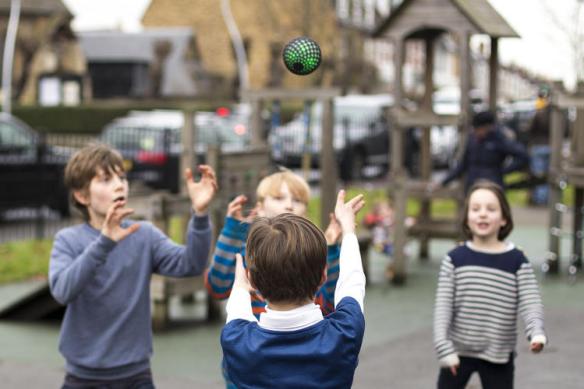
Coding is a great skill for kids to learn but it can be a lonely, sedentary endeavor. Hackaball, a new toy created from a partnership between the design agencies MAP and Made By Many, promises to get kids off their butts and playing outside—all while teaching basic coding skills and empowering kids to invent their own kind of play.

READ MORE: This Throwable Computer Teaches Kids How To Code | Co.Design | business + design.

Sesame Street’s executive producer on staying relevant after 46 years | Engadget


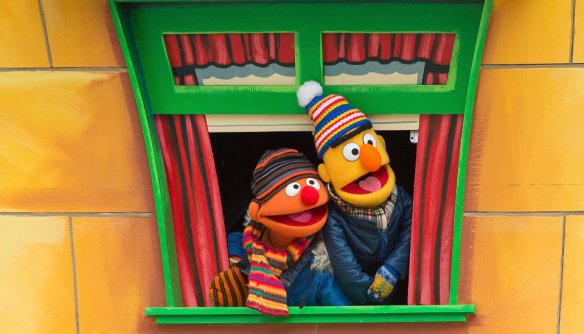
Thanks to Netflix, Amazon and YouTube, the competition for kid’s eyeballs is fiercer than ever, but that’s not slowing down Sesame Street. Now in its 46th year, the show is making a bigger and bigger push into social media, with often hilarious (but secretly educational) results. I sat down with the show’s Senior Vice President and Executive Producer, Carol Lynn-Parente, shortly after meeting my new best friend, Cookie Monster, to talk about the show’s digital life and more.

READ MORE: Sesame Street’s executive producer on staying relevant after 46 years |  | Engadget

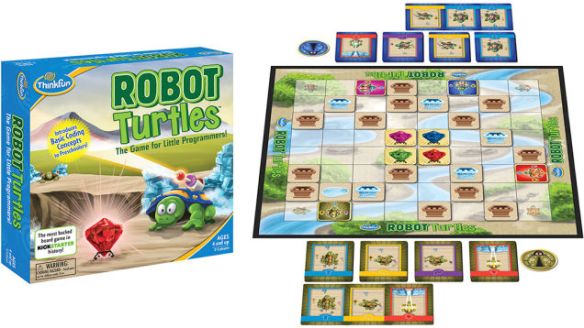
A Board Game That Teaches Four-Year-Olds How To Code | Kinja


When was the last time a champion speller rolled up to a Bee in a Ferrari? Never. If you really want to guarantee your kids make something of themselves one day, youll want to forget board games like Scrabble and focus on building real-world skills. Not only does Robot Turtles teach a love of Herpetology the study of reptiles it also teaches them the basics of computer programming—aka coding.

Read More: A Board Game That Teaches Four-Year-Olds How To Code | Kinja

Doctor Who’s new web game aims to teach children programming skills | theguardian.com


Doctor Who’s latest adventure sees him teaming up with a Dalek and trying to save the universe, but also teaching children some early computer programming skills.

This isn’t a TV show, however: it’s a game due to launch on Wednesday 22 October on the broadcaster’s CBBC website. The Doctor and the Dalek includes voice narration from current Doctor Peter Capaldi, and a new story by Phil Ford, who has written for the TV show.

The free web game is aimed at 6-12 year-olds, and involves freeing a battered Dalek from a ship of Cybermen, then building it back up to full strength through puzzles based on the programming elements of the new English computing curriculum.

via Doctor Whos new web game aims to teach children programming skills | Technology | theguardian.com.

Study: Children With Mentors Find Happier, More Fulfilling Careers | Fast Company


While most of the evidence has been largely anecdotal, the idea that a mentor can help guide you along a better path in life is hard to argue against. Now, a large study from North Carolina State University seems to support the claim that, yes, having a mentor at a young age can lead to better, more-fulfilling employment later on.

READ MORE: Study: Children With Mentors Find Happier, More Fulfilling Careers | Fast Company | Business + Innovation.

Kids Need To Learn Digital Literacy—Not How To Code | ReadWrite


The new narrative in education, echoed from Silicon Valley to Washington, D.C., is: “Everyone should learn to code.” But something’s getting lost in translation between technologists and parents of students around the country. Let’s get this out of the way: Not everyone needs to learn how to code. Coding is just one part of the constantly evolving technological landscape. There’s a big difference between learning how to code and having a fundamental understanding of how technology and software operate. Of the two, the latter is way more important for most people. What students—and, really, anyone who wants to function in careers in the future—should learn is how to be digitally literate.

READ MORE: Kids Need To Learn Digital Literacy—Not How To Code | ReadWrite

Finally, a Way to Teach Coding to the Touchscreen Generation | WIRED


Finally, a Way to Teach Coding to the Touchscreen Generation | Enterprise | WIRED

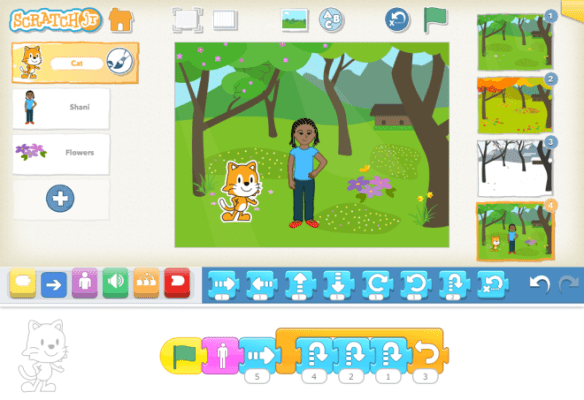
[A] new app might be able to break through that passivity by meeting the Touchscreen generation where their fingers live. ScratchJr is a new iPad variation of the Scratch programming language, a tool created at MIT to help teach kids to code. The premise for both is the same: instead of text, Scratch uses interlocking colored blocks to mimic the logical structures and functions of a typical grown-up programming language. Scratch scripts allow their creators to direct and interact with “sprites”—cartoonish characters on the screen. By introducing kids to coding without the hurdles of arcane syntax and bug-prevention, the hope is that they’ll become engaged enough with the process that their sensibilities will shift.

READ MORE: Finally, a Way to Teach Coding to the Touchscreen Generation | WIRED.