Disney Research-CMU Tool Helps Novices #Design #3D Printable Robotic Creatures | KurzweilAI #robots #3DPrinting #tech #tools #makerspaces


Digital designs for robotic creatures are shown on the left and the physical prototypes produced via 3-D printing are on the right (credit: Disney Research, Carnegie Melon University)

Now you can design and build your own customized walking robot using a 3-D printer and off-the-shelf servo motors, with the help of a new DYI design tool developed by Disney Research and Carnegie Mellon University.

You can specify the shape, size, and number of legs for your robotic creature, using intuitive editing tools to interactively explore design alternatives. The system takes over much of the non-intuitive and tedious task of planning the motion of the robot, and ensures that your design is capable of moving the way you want and not fall down. Or you can alter your creature’s gait as desired. READ MORE: Disney Research-CMU design tool helps novices design 3-D-printable robotic creatures | KurzweilAI
The Pickle Index Is a Delightfully Weird, App-Driven Novel Like No Other | WIRED #apps #books #digital  #storytelling #transmedia #multimedia #interactive


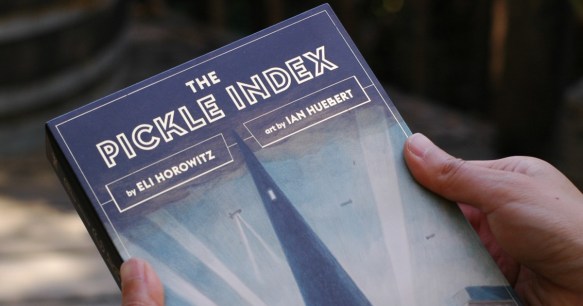
THE PICKLE INDEX  tells the tale of an incompetent circus troupe that sets out to rescue its ringmaster, Zloty Kornblatt, from a dystopian, brine-obsessed government. If that doesn’t pique your interest, maybe this will: The Pickle Index is a paperback. But it’s also a beautifully illustrated, hardcover set of two volumes that tell the story in tandem. Oh, and it’s also an app. Not an e-book, mind you—an app, where a user’s “Citizenship Quotient” points are allocated based on how often you upload actual pickle recipes. Confused? Good. That’s kind of the point.

The fact is, The Pickle Index is not a traditional novel, nor is it a conventional app. When Eli Horowitz and Russell Quinn set out to create the multimedia storytelling experience, they made a conscious decision to eschew hallmarks of design like accessibility and ease of use. Instead, they provide multiple entry-points into an intricate and immersive world. In doing so, they’ve reimagined what a digital literary experience can be.

Source: The Pickle Index Is a Delightfully Weird, App-Driven Novel Like No Other | WIRED

GE And Wattpad Combine Modern #Science With Old School #SciFi #Comics | FastCompany #STEM #reading #students #historical #digital #storytelling


Back in the 1950s and 60s, General Electric created a comic book series to help spark interest and excitement in science and engineering. Now the brand has teamed up with Wattpad to bring “Adventures in Science” back to life for a new generation, but with a bit of a twist.

The comic covers still look straight out of the ’60s, but the brand invited six of the writing social app’s most popular writers to create new science-fiction inspired by the old school comic series. The new fiction…is based on the real work of GE scientists and tackles topics from GE’s digital industrial portfolio like transportation, power and water, health care, and energy. READ MORE: General Electric And Wattpad Combine Modern Science With Old School Sci-Fi Comics | FastCompany

We Aren’t Imagining It: The #Tech Industry Needs More #Women | LifeHacker #diversity #STEM #gender #skills #sexism #racism #discrimination


This evening I’m giving a talk to my daughter’s Girl Scouts troop about careers in technology. I’m going to tell them that women have done amazing things in tech. I’m going to tell them that they too can do anything they set their minds to in this arena. But I will be lying to them. “You can do whatever you set your mind to” is a half-truth, because there are real obstacles—if not barriers—that keep women and minorities from truly thriving in this field. The tech industry has a diversity problem, and it’s a problem not just for these young girls, but for all of us. READ MORE: We Aren’t Imagining It: The Tech Industry Needs More Women | LifeHacker

Gaming-Inspired Glove Helps Stroke Patients Relearn Vital Skills | Mashable #gaming #wellness #affective #tech #rehab #disabilities #learning #gadgets


The Rapael Smart Glove looks a lot like the Nintendo Power Glove, but it’s not exactly a video game controller. It’s a smart rehabilitation glove for recovering stroke patients. Gaming was definitely a huge part of it, however. The glove, created by Korean health tech company Neofect, incorporates motion-based games to help stroke patients relearn how to use their arm and hand.

Neofect founder Ban Ho Young told Tech In Asia that everything they have now was made with collaboration between rehabilitation experts and game designers.

With Rapael, users can play games depending on which movements they want to work on. Want to improve your forearm supination and pronation (facing your palm upward and downward)? Strap on the glove and virtually pretend to pour yourself a glass of wine. Want to improve your finger flexion and extension? Bend and unbend your fingers to decorate cupcakes with icing. READ MORE: This gaming-inspired glove helps stroke patients relearn vital skills | Mashable

Smithsonian #Libraries Receives #Nano #Bible | Smithsonian Libraries #digital #collections #tech


Smithsonian Secretary David J. Skorton recently accepted a Nano Bible from the American Technion Society at the Smithsonian’s National Museum of American History on Oct. 30. The Nano Bible will be part of the Smithsonian Libraries collection, housed in the Dibner Library of the History of Science and Technology at the National Museum of American History.

The Nano Bible is the world’s smallest version of the Hebrew Bible, produced by researchers at the Technion-Israel Institute of Technology in Haifa, Israel. Engraved on a gold-plated silicon chip the size of a sugar grain, the bible’s text consists of more than 1.2 million letters carved with a focused beam of gallium ions. The text engraved on the chip must be magnified 10,000 times to be readable. READ MORE: Smithsonian Libraries Receives Nano Bible | Smithsonian Libraries Unbound

Microsoft and Code.org Want to Teach #Kids to Code With #Minecraft | CNET #coding #hourofcode #learning #tech #STEM #skills #gaming


Image Credit: Microsoft

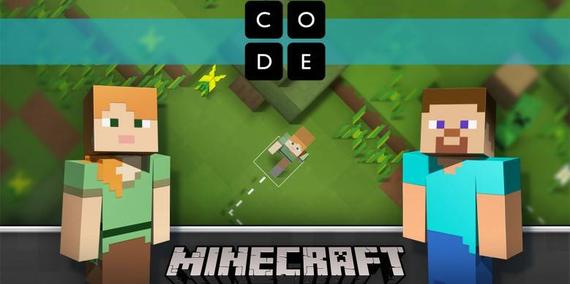
The new Minecraft module is part of Code.org’s third annual Hour of Code, a worldwide campaign that tries to demystify code by teaching the basics of computer science in just an hour. The Hour of Code takes place during Computer Science Education Week from December 7 – 13.

If users sign up for the free Hour of Code Minecraft module, they’ll learn how to use blocks of code to make Steve or Alex, the two main character skins from the game, adventure through a Minecraft world. Other modules, including some based on Star Wars, “Frozen” and other popular content, are also available on the Code.org site. READ MORE: Microsoft and Code.org want to teach kids to code with Minecraft | CNET

With CodinGame, #Learning To #Code Becomes A Game | TechCrunch #coding #gaming #programming #users #fundraising #startups


French startup CodinGame just raised $1.6 million from Isai for its innovative code learning platform. As the name suggests, CodinGame is all about games — not game development, not gamification, just plain games. The logic behind each exercise is tied to an actual game so that you get visual feedback and an actual reward when you solve an exercise.

“This is not just a gimmick as we have metrics to back our vision. If you mix games with learning, you get a very motivating experience,” co-founder and CEO Frédéric Desmoulins told me. “Playing and learning at the same time is a virtuous circle.”

For each exercise, you can pick a programming language among more than 20, such as Python, Ruby, Java, Scala and more. The company targets people who already know the basics when it comes to programming and also has tough challenges for expert developers. In particular, a multiplayer mode is getting quite popular among developers. In this mode, you learn the basics of artificial intelligence and clash with others to see if your code is more efficient.

Source: With CodinGame, Learning To Code Becomes A Game | TechCrunch

Andreas Ekström: The Moral #Bias Behind Your #Search Results | TED.com #searchengines #tech #algorithms


Search engines have become our most trusted sources of information and arbiters of truth. But can we ever get an unbiased search result? Swedish author and journalist Andreas Ekström argues that such a thing is a philosophical impossibility. In this thoughtful talk, he calls on us to strengthen the bonds between technology and the humanities, and he reminds us that behind every algorithm is a set of personal beliefs that no code can ever completely eradicate.

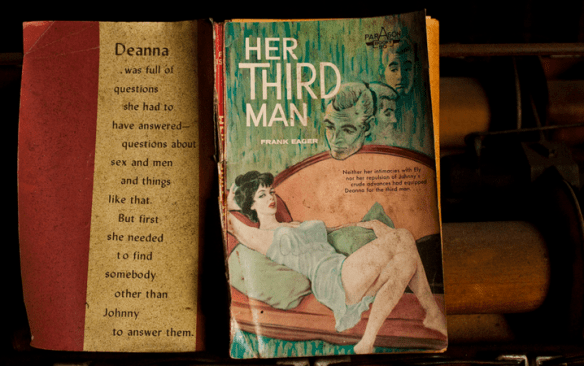
Someone Taught a Neural Network To Talk With #Romance #Novels | Gizmodo #images #storytelling #tech #machinelearning #contextual


Samim Winiger, whose work we’ve covered recently–sent along his latest experiment. He used an open-source neural network that was trained on 14 million passages of romance novels by Ryan Kiros, a University of Toronto PhD student specializing in machine learning. Called the Neural-Storyteller, the network was trained to analyze images and retrieve appropriate captions from its vast store of sexy knowledge, creating “little stories about images,” says Kiros.

And what stories! Winiger fed the network a series of images, and it’s hard to even decide where to begin…Not all of the stories (or any of them, really) make perfect sense: What we’re seeing is an artificial neural network struggle to identify objects in a photo, and make links between images and the passages that it’s trained on. READ MORE: It Was Inevitable: Someone Taught a Neural Network To Talk With Romance Novels | Gizmodo