This Massive, Open Source Map Makes the World More Wheelchair Friendly | Gizmodo #maps #accessibility #disabilities


The world is tough place to navigate in a wheelchair. But finding ramps and elevators can be easier thanks to this handy map app that anyone can edit.

It’s called Wheelmap, and it tells you the accessibility status of public places all over the world. It’s free and grades locations in a traffic light-style, red-yellow-green scale of wheelchair accessibility. Developed by German nonprofit SOZIALHELDEN e.V., it’s now celebrating five years since launch. Since 2010, users have added nearly half a million entries across the globe.

“Accessible” means you can enter the place without steps, and that all rooms inside a building can be entered without steps, as well. “Limited accessibility” refers to entrances with a max of one step no higher than seven centimeters, and that the “most important rooms” can be entered without steps.

Wheelmap launched back in 2010, and since then, has become available in 22 languages. It’s available for both iOS and Android users.

READ MORE: This Massive, Open Source Map Makes the World More Wheelchair Friendly | Gizmodo
STEM Curriculum Turned Into An Addictive [iOS] Game | Co.Design #STEM #apps


Levers, pulleys, and wheels—they’re tools that outline some of the most foundational principles in physics. But foundational principles are boring. What’s fun is using a lever to catapult a boulder at a castle, breaking down the bricks one by one to discover a dragon sleeping inside.

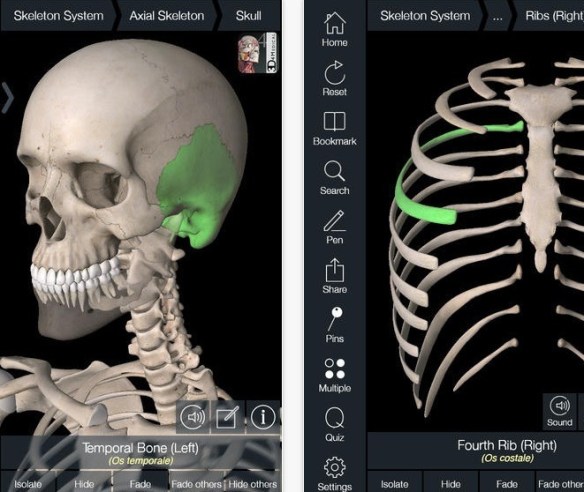
That is the premise of Simple Machines, the latest iOS app by the educational game studio Tinybop. In the past, Tinybop has made interactive books on the human body and plant life. They’ve created a fun simulator for kids to build their own robots. But with Simple Machines, they’re taking aim at a very particular part of student curriculum: The first stages of STEM (science, technology, engineering, and math), in which kids commonly learn about six “simple machines”—the lever, pulley, wheel, wedge, inclined plane, and screw.

READ MORE: STEM Curriculum Turned Into An Addictive Game | Co.Design | business + design.

Readlang Helps You Learn a Foreign Language as You Surf the Web | LifeHacker #language


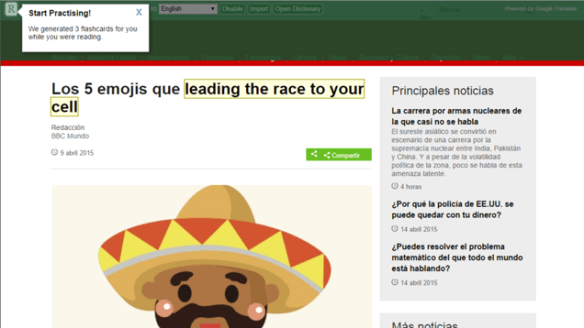
The most effective way to learn a foreign language is to immerse yourself as much as possible in it. Readlang is a webapp and Chrome extension that helps you learn by translating web sites and creating flashcards and word lists for you. READ MORE: Readlang Helps You Learn a Foreign Language as You Surf the Web | LifeHacker

Ex-Apple Designer Rethinks The Bible For A Mobile World | Co.Design


Ex-Apple Designer Rethinks The Bible For A Mobile World | Co.Design | business + design

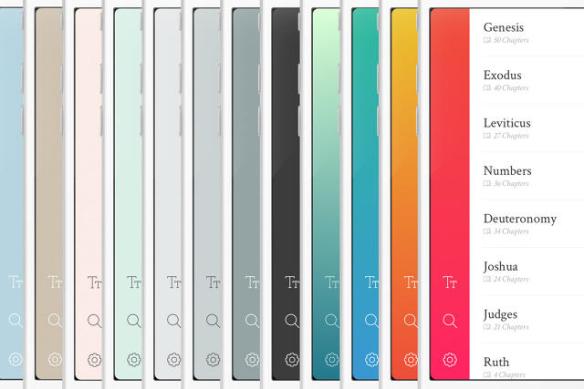
Kory Westerhold and his cofounder, Yahoo Design Director Aaron Martin, give co.Design an exclusive look at their beautiful new bible app. READ MORE: Ex-Apple Designer Rethinks The Bible For A Mobile World | Co.Design | business + design.

30 Useful Apps For Students You Probably Don’t Know About | InformED


The number of college students taking at least one online course has nearly doubled over the past five years according to a report by market research agency Refuel.

Online students are often faced with the challenge of juggling their academic responsibilities alongside families or full-time jobs, which is certainly no easy task.

Technology can help students better manage their learning by providing everything from study aids and research tools to time-management apps, so it’s somewhat surprising to learn that few students are actually using such tools for learning purposes.

The majority of students use online and mobile apps primarily for entertainment according to the Refuel report, with over 70% using them for games, 67% using them for music, and 64% using them for social networking.

If you want to encourage your students to start taking advantage of the many technology tools available to them, here are a few examples of the types of productivity and learning apps that can support them in their studies.

SEE THE LIST OF TOOLS: 30 Useful Apps For Students You Probably Don’t Know About | InformED

Reuters | New KNFB smartphone app gives sight to the blind | KurzweilAI


The National Federation of the Blind, the nation’s leading advocate for access to print by the blind, has applauded the release of KNFB Reader, a new app for the iPhone and other Apple iOS devices, which uses the phone’s camera and state of the art optical character recognition (OCR) technology to give the blind instant access to the contents of print materials.

Members of the National Federation of the Blind have worked with KNFB Reading Technology, which developed the app along with Sensotec, KNFB Reader is now available in the Apple iTunes app store.

READ MORE: Reuters | New KNFB smartphone app gives sight to the blind | KurzweilAI.

7 Tech Upgrades to the Old-School Science Class | Mashable


7 Tech Upgrades to the Old-School Science Class

Technological breakthroughs have flooded into classrooms, changing the face of K-12 education. From smart boards to smartphones, these digital trends have become useful educational tools in the teaching process. While todays kids are learning the same lessons and concepts, they are absorbing in different ways.

With new apps and interactive sites, science class, in particular, has received a few upgrades. We took a look at how science technology has evolved over time, and what adjustments have been made.

READ MORE:  7 Tech Upgrades to the Old-School Science Class | Mashable

Lego Fusion Blends Virtual and Physical Gameplay | Mashable


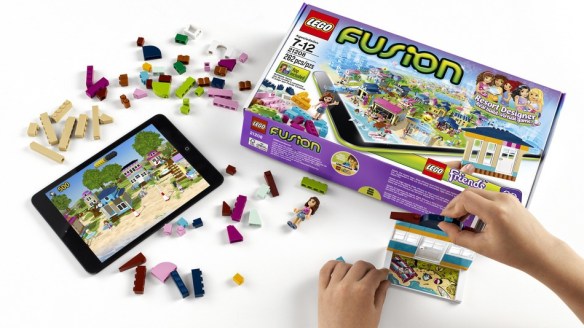
Leave it to Lego to use the word “fusion” correctly. The construction-toy companys new Lego Fusion analog-to-digital game sets are a true blend of real-world Lego building and tablet-app play.

Announced on Wednesday, and shipping in August and September, Lego Fusion boxes each come with 200 Lego pieces. They let you build and play in app-based virtual worlds that include a tower-defense game called “Battle Towers,” a town-building game called “Town Master,” a racing game called “Create and Race” and “Resort Designer.” What you build in the real world can be captured and used in the iOS and Android tablet apps. Each structure then becomes part of the game, and each game can be a part of your world or the larger Lego social community, where others are using their Fusion sets to build similar worlds. Towers can battle towers, race cars can compete against each other and townspeople can take virtual metros to visit other player’s towns.

Read more: Lego Fusion Blends Virtual and Physical Gameplay | Mashable

Apple Just Put Its App Design Bible On iBooks For Free | Gizmodo


Apple’s iOS Human Interface Guidelines, a set of tips and rules for designers that was previously only available through the developer portal, is free on iBooks as of today. It’s a little glimpse into how Apple hopes app developers will follow its lead when it comes to design.

The “book,” which is more of a primer, covers everything from aesthetic decisions to actual user experience decisions. For example, in the Color and Typography chapter, we learn about kerning and font size. Meanwhile, we also get insight into the nitty gritty of UX—from consistency to figuring out who your users even are.

It sounds like a document for developers, but it’s actually a fascinating insight into how Apple thinks about design. That ranges from building palettes of “pure, clean colors” to breeding trust in your users: “Important: Don’t tell people to reboot or restart after installing your app. Restarting takes time and can make your app seem unreliable and hard to use.”

Read More: Apple Just Put Its App Design Bible On iBooks For Free | Gizmodo

The US is opening up the Smithsonian’s digitized art collection | Engadget


The White House promised that it would open up government data last year, and it’s now expanding those plans in some intriguing directions. For one, it’s opening up the Smithsonian American Art Museum’s digitized collection; you’ll soon get to build apps and other tools using the institution’s artwork as a foundation. Even curators don’t have that much access right now, the administration says. via The US is opening up the Smithsonian’s digitized art collection | Engadget

From the White House Continued Progress and Plans for Open Government Data:

  • Smithsonian American Art Museum Collection: The Smithsonian American Art Museum’s entire digitized collection will be opened to software developers to make educational apps and tools. Today, even museum curators do not have easily accessible information about their art collections. This information will soon be available to everyone.