Listen to Free, High-Quality AudioBooks of Classic Literature on Spotify: Austen, Dickens, Tolstoy & More | Open Culture


Where music goes, technologically speaking, audio books soon follow. We’ve had audio books on vinyl LP, on cassette tape, on CD, and on MP3, just like we’ve had music. Now that so many of us pull up our daily jams on Spotify, it shouldn’t come as a surprise that we can do a fair bit of our “reading” there as well. We’ve found a few lists that gather up the best audio book available on Spotify, including 21 classics and a collection of Shakespeare plays and sonnets at Gnarl’d, ten evergreen literary picks from Lifehacker, and a Spotify forum thread dedicated to subject.

Below, you’ll find Spotify links to more than 60 classic works of literature that, even if you struggled on getting them read in your English classes, you can now revisit in a perhaps much more lifestyle-compatible medium. To listen to any of these, you will of course need Spotify’s software and account. MORE: Listen to 60+ Free, High-Quality AudioBooks of Classic Literature on Spotify: Austen, Dickens, Tolstoy & More | Open Culture.

For more great audio, don’t forget to visit our collection, 630 Free Audio Books: Download Great Books for Free | Open Culture.

 

Publishers Know You Didn’t Finish “The Goldfinch” — Here’s What That Means For The Future Of Books | BuzzFeed News


Millions may have held their suspicions, but last month the Canadian e-reader company Kobo confirmed it: Most people who buy The Goldfinch don’t actually finish it. According to the company’s data, less than half of Canadian and British Kobo readers in 2014 made it to the end of Donna Tartt’s behemoth novel, one of the best-selling of the year.

How did Kobo know this? Like every e-reader and reading-app maker today, the company, a subsidiary of the Japanese e-commerce titan Rakuten, has access to a comprehensive suite of data about the reading behavior of its users. In a white paper titled “Publishing in the Era of Big Data” and released this fall, the company announced that “with the onset of digital reading … it is now possible to know how a customer engages with the book itself — what books were left unopened, which were read to the very last word and how quickly.” In other words, if you read books digitally, the people who serve you those books more than likely know just what kind of reader you are…READ MORE: Publishers Know You Didn’t Finish “The Goldfinch” — Here’s What That Means For The Future Of Books | BuzzFeed News.

Windows Holographic: Microsoft Goes Full Throttle Into Virtual Reality | Mashable


Microsoft introduced Windows Holographic, a technology that gives us a “world with holograms,” during its Windows 10 event on Wednesday. It would let a user transform one’s living room into a “surreal gaming environment,” according to the company.

There are no wires. No external cameras.

It works with Microsoft’s HoloLens headset, which allows users to wirelessly view holograms. Both the HoloLens and Windows 10 are slated to be available this fall.

READ MORE: Windows Holographic: Microsoft goes full throttle into virtual reality | Mashable

The Top UX Predictions for 2015 | UX Magazine


Top UX predictions for 2015 from UX Magazine contributors. The Top UX Predictions for 2015 | UX Magazine

The Future of the Book | The Economist


“The digital transformation of the way books are written, published and sold has only just begun.” Essay on The Future of the Book | The Economist. Listen. Scroll. Flip.

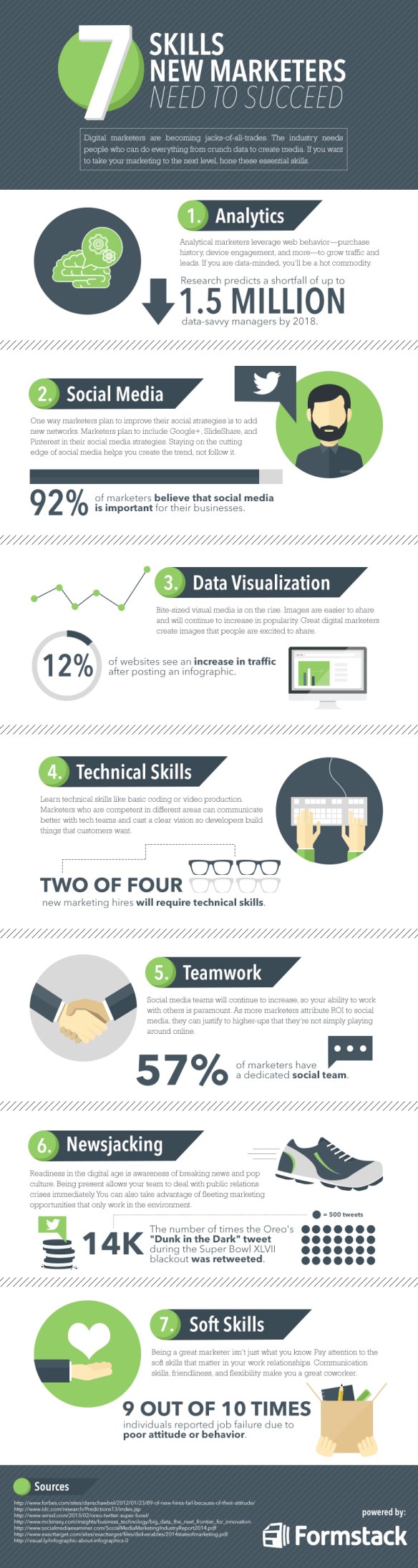
7 Skills New Marketers Need to Succeed [Infographic] | Marketing Darwinism


7 Skills New Marketers Need to Succeed | Marketing Darwinism

The Story Behind The Web’s Weirdest, Hardest Riddle | Co.Labs


The Story Behind The Webs Weirdest, Hardest Riddle ⚙ Co.Labs ⚙ code + community

In 2004 a small website appeared that contained a browser-based game called Notpron, which has since been hailed as “the hardest riddle on the Internet.” It consists of a series of 140 puzzles and riddles that get progressively more complex. Completing the game requires knowledge in a diverse range of fields including HTML programming, sound and graphics editing, music apprehension, research skills, and even remote viewing.

Out of the 17 million players that have attempted the game in the last decade only 31 have completed it. That’s just one in every 550,000 players–or, to put it another way, the chances you’ll be hit by lightning once in your lifetime are 41 times greater than they are for you solving Notpron.

To celebrate the games 10th anniversary I asked David Münnich, Notpron’s creator, to go down the rabbit hole of how and why it was created–and what it all means.

READ MORE: The Story Behind The Webs Weirdest, Hardest Riddle ⚙ Co.Labs ⚙ code + community.

Cybersecurity Lab | NOVA Labs | PBS


Cybersecurity | NOVA Labs | PBS

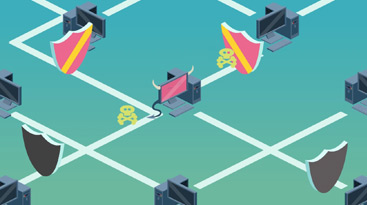
The Cybersecurity Lab is a game designed to teach people how to keep their digital lives safe, spot cyber scams, learn the basics of coding, and defend against cyber attacks. Players assume the role of the chief technology officer of a start-up social network company that is the target of increasingly sophisticated cyber attacks. In the game, players must complete challenges to strengthen their cyber defenses and thwart their attackers. The Lab also features stories of real-world cyber attacks, a glossary of cyber terms, and short animated videos that explain the need for cybersecurity, privacy versus security, cryptography (cyber codes), and what exactly hackers are. MORE: Cybersecurity | NOVA Labs | PBS.

Kids Need To Learn Digital Literacy—Not How To Code | ReadWrite


The new narrative in education, echoed from Silicon Valley to Washington, D.C., is: “Everyone should learn to code.” But something’s getting lost in translation between technologists and parents of students around the country. Let’s get this out of the way: Not everyone needs to learn how to code. Coding is just one part of the constantly evolving technological landscape. There’s a big difference between learning how to code and having a fundamental understanding of how technology and software operate. Of the two, the latter is way more important for most people. What students—and, really, anyone who wants to function in careers in the future—should learn is how to be digitally literate.

READ MORE: Kids Need To Learn Digital Literacy—Not How To Code | ReadWrite

Sony quietly starts selling Digital Paper E Ink tablet online [For U.S. Only] | CNET


Sonys Digital Paper E Ink e-reader/tablet hybrid has now been made available to buy, directly through the Sony website, as well as from the licensed resellers through which the tablet started being sold in May, Good E Reader has reported.

READ MORE: Sony quietly starts selling Digital Paper E Ink tablet online | CNET.