Apple Just Put Its App Design Bible On iBooks For Free | Gizmodo


Apple’s iOS Human Interface Guidelines, a set of tips and rules for designers that was previously only available through the developer portal, is free on iBooks as of today. It’s a little glimpse into how Apple hopes app developers will follow its lead when it comes to design.

The “book,” which is more of a primer, covers everything from aesthetic decisions to actual user experience decisions. For example, in the Color and Typography chapter, we learn about kerning and font size. Meanwhile, we also get insight into the nitty gritty of UX—from consistency to figuring out who your users even are.

It sounds like a document for developers, but it’s actually a fascinating insight into how Apple thinks about design. That ranges from building palettes of “pure, clean colors” to breeding trust in your users: “Important: Don’t tell people to reboot or restart after installing your app. Restarting takes time and can make your app seem unreliable and hard to use.”

Read More: Apple Just Put Its App Design Bible On iBooks For Free | Gizmodo
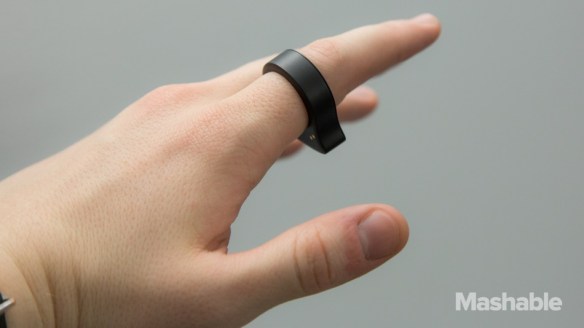
Nod Bluetooth Ring Controls All Your Smart Devices | Mashable


As our primary computing environment gradually shifts from the desktop to mobile, so too will our interface needs. To that end, a group engineers in Mountain View, Calif. believe that they have the solution for the next phase of interfaces, and it comes in the form of a ring.

The Nod ring is a Bluetooth-enabled gesture controller that connects to your smartphone to accomplish a number of input and controller tasks all by using natural motions with your finger.

In addition extending the capabilities of your smartphone, the ring can also be connected to other smart devices, such as a smart television and other Internet-connected devices like the Nest. If a device doesn’t have Bluetooth capability, you can connect the ring to your smartphone, which will then connect to the device via Wi-Fi. Read more: Nod Bluetooth Ring Controls All Your Smart Devices | Mashable

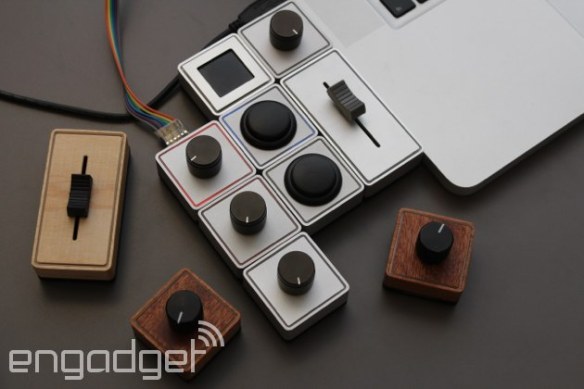
Palette’s modular controller brings dials and sliders to your laptop (hands-on) | Engadget


Palette

Palette co-founder Calvin Chu has a problem with how people work. “Creative professionals spend so much of their time on the computer, and at the moment, they still use a very generic one-size-fits-all keyboard and mouse interface.” It doesn’t make sense, he says — photographers, gamers, film editors, musicians and accountants all using the same interface? Surely there is a better way. “It should be specialized and made for your needs, and that’s where we came up for the idea for Palette.” Palette is Chu’s answer to a world that’s discarded tactile dials and switches for keyboards, mice and touch screens. It’s a modular collection of buttons, sliders and potentiometers that can be programmed to do almost anything on your PC. We took a look at an early prototype of the customizable controller to reacquaint ourselves with the tactile world.

Read: Palette’s modular controller brings dials and sliders to your laptop (hands-on)  | Engadget

Primo Is An Arduino Robot That Teaches Kids Programming Logic Through Play [Kickstarter] | TechCrunch


Dan Shapiro’s Robot Turtles board game Kickstarter showed there is serious appetite for kids’ games that aren’t just fun to play with but also sneakily teach core coding principles. Instead of the $25,000 he was aiming for, Shapiro raised more than $630,000. Geeky moms and dads clearly have money, and will spend it on the right bit of educational kit.

With that kind of Kickstarter community response, it’s pretty likely we’re set to see a wave of educational toys doing cool fun stuff with programming principles. To wit, meet Primo: a physical programming interface that teaches children programming logic while they control the movements of an Arduino-powered robot.

Read: Primo Is An Arduino Robot That Teaches Kids Programming Logic Through Play | TechCrunch.

MIT Invents A Shapeshifting Display You Can Reach Through And Touch | Co.Design


We live in an age of touch-screen interfaces, but what will the UIs of the future look like? Will they continue to be made up of ghostly pixels, or will they be made of atoms that you can reach out and touch?

At the MIT Media Lab, the Tangible Media Group believes the future of computing is tactile. Unveiled today, the inFORM is MIT’s new scrying pool for imagining the interfaces of tomorrow. Almost like a table of living clay, the inFORM is a surface that three-dimensionally changes shape, allowing users to not only interact with digital content in meatspace, but even hold hands with a person hundreds of miles away. And that’s only the beginning.

Read more: MIT Invents A Shapeshifting Display You Can Reach Through And Touch | Co.Design | business + design.

Bill Gates Unveiled Windows 30 Years Ago | Gizmodo


No matter what you think of Windows 8, it’s certain that Windows is both iconic and significant in the evolution of personal computing. It’s a series of operating systems, of course, but it’s also been a concept, a way of thinking, an influencer, and a touchstone for 30 years since Bill Gates introduced it on November 10, 1983.

The “Interface Manager” that would become Windows went into development in 1981 and finally had its public release as Windows 1.0 in November 1985. This first stab wasn’t actually a full OS, but more of a “graphical shell” that extended MS-DOS to have a user interface, as it is known today.

But Windows 1.0 had many defining OS features, like a calendar, clock, Microsoft Paint, a text editor, terminal, and clipboard. Windows allowed users to view multiple program windows at once, yup, though they couldn’t overlap at all. The early days of tiles! And 1.0 enabled data transfer between programs. Plus, it came with drivers for things like keyboards and the Microsoft Mouse, which had debuted earlier in 1983.

30 years seems simultaneously like an incredibly long time and a quick blur when you consider how Windows has evolved and spread to dominate between 80% and 90% OS marketshare. Windows 8 made it clear that Microsoft views interactive touch integration as crucial to a PC operating system going forward into the fourth Windows decade. Too bad hyper Ballmer ads won’t be the face of the next era.

Bill Gates Unveiled Windows 30 Years Ago Today | Gizmodo.

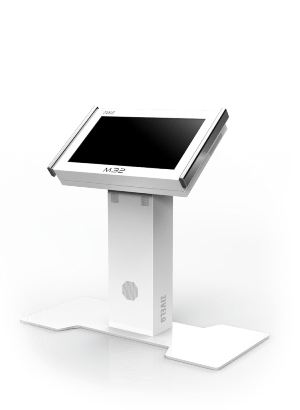
SAPL To Debut Digital Commons, Test “Public Proof” OverDrive Kiosk | The Digital Shift


As a beta tester for OverDrive, SAPL will be experimenting with an installation of the company’s new OverDrive Media Station (OMS) interface on a ruggedized kiosk that could be deployed in public areas outside of a library.

SAPL will be featuring the OMS interface on a Zivelo M32 Floor Display, a pedestal-mounted kiosk made with an aircraft-grade aluminum enclosure. With swipes and taps that will be intuitive for anyone who has used a tablet or smartphone, patrons can navigate the OMS interface to explore a library’s collection of ebooks, audiobooks, music, and videos, and easily read or listen to samples, place holds, or have an available ebook sent to their tablet, e-reader, or smartphone.

See the full article: SAPL To Debut Digital Commons, Test “Public Proof” OverDrive Kiosk | The Digital Shift.

OverDrive OMS