Windows Holographic: Microsoft Goes Full Throttle Into Virtual Reality | Mashable


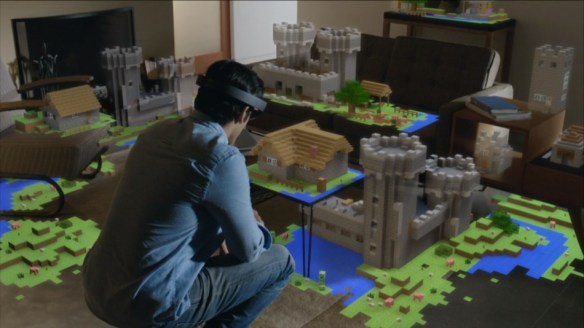
Microsoft introduced Windows Holographic, a technology that gives us a “world with holograms,” during its Windows 10 event on Wednesday. It would let a user transform one’s living room into a “surreal gaming environment,” according to the company.

There are no wires. No external cameras.

It works with Microsoft’s HoloLens headset, which allows users to wirelessly view holograms. Both the HoloLens and Windows 10 are slated to be available this fall.

READ MORE: Windows Holographic: Microsoft goes full throttle into virtual reality | Mashable

Disabled Boy Learns to Play Piano With His Eyes Using Virtual-Reality Headset | The Guardian


Eye Play the Piano is the work of Japanese VR headset manufacturer Fove, working with the University of Tsukuba. The project is pitched as a “universal piano” which children can play using eye movements while wearing the headset.

Through the use of Fove’s eye-tracking technology, the headmount recognises the user’s eye movement. The user blinks on one of the many panels within the interface to trigger the preferred note, which is then conveyed to the piano,” explains the Eye Play the Piano website.

READ MORE: Disabled boy learns to play piano with his eyes using virtual-reality headset | Technology | The Guardian.

Google Cardboard Is The Right Virtual-Reality Gadget For Right Now. But What’s Next? | Fast Company


I’d like to try the Cardboard experience to compare to the Oculus Rift. I tried OR at Netspeed 2014, experiencing an under water universe (boring with unwieldy navigation) and a roller coaster (exciting; definitely created a unique, visceral experience that made me want to puke my guts out after). Looking forward to more virtual reality experiences as the tech and devices evolve.
Google Cardboard Is The Right Virtual-Reality Gadget For Right Now. But Whats Next? | Fast Company | Business + Innovation

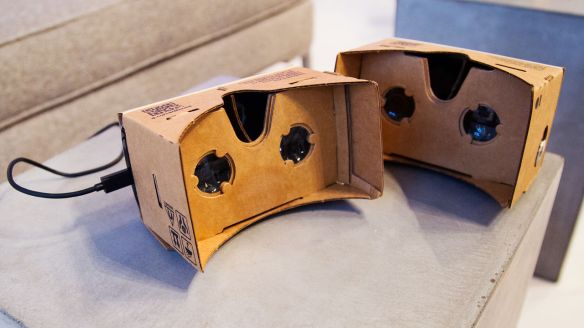
Google Cardboard has come a long way since Android honcho Sundar Pichai introduced it with a sheepish grin six months ago. The smartphone virtual reality viewer, made from folded-up cardboard with a pair of attached lenses—you supply an Android phone to provide computing power and a display—has shipped more than 500,000 units as of early December. (You can build your own Cardboard, or buy a ready-made version from not-quite-official sources for under $30.) Google has now added a Play Store showcase for the best Cardboard apps, and released a software development kit to spur even more VR app creation.

For a project that took mere weeks to throw together, Cardboard has done surprisingly well. But its success also puts it in an awkward position, somewhere between the oddball project that Cardboard appeared to be back in June and the serious business that prompted Facebooks $2 billion acquisition of Oculus VR in February. As virtual reality matures, is Cardboard prepared to mature with it?

READ MORE: Google Cardboard Is The Right Virtual-Reality Gadget For Right Now. But What’s Next? | Fast Company | Business + Innovation.

E-Book Legal Restrictions Are Screwing Over Blind People | WIRED


Snip

…For the nearly 8 million people in the US with some degree of vision impairment, the advent of ebooks and e-readers has been both a blessing and a burden. A blessing, because a digital library—everything from academic textbooks, to venerated classics, to romance novels—is never further away than your fingertips. A burden, because the explosion of ebooks has served as a reminder of how inaccessible technology really can be…

READ MORE: E-Book Legal Restrictions Are Screwing Over Blind People | WIRED

How Technology Is Warping Your Memory | HuffPo


Take a moment to think about the last time you memorized someone’s phone number. Was it way back when, perhaps circa 2001? And when was the last time you were at a dinner party or having a conversation with friends, when you whipped out your smartphone to Google the answer to someones question? Probably last week.

Technology changes the way we live our daily lives, the way we learn, and the way we use our faculties of attention — and a growing body of research has suggested that it may have profound effects on our memories (particularly the short-term, or working, memory), altering and in some cases impairing its function.

The implications of a poor working memory on our brain functioning and overall intelligence levels are difficult to over-estimate…READ MORE: How Technology Is Warping Your Memory | HuffPo

Reading On A Screen Before Bed Might Be Killing You | HuffPo


You’ve heard that using screens before bedtime can mess with your sleep, but new research suggests the problem is even more serious.

Reading from an iPad before bed not only makes it harder to fall asleep, but also impacts how sleepy and alert you are the next day, according to new research from Brigham and Womens Hospital in Boston, Massachusetts. The study, published in the journal Proceedings of the National Academy of Sciences on Monday, said the findings could impact anyone who uses an eReader, laptop, smartphone, or certain TVs before bed.

The new research supports conclusions from older studies, which have also found that screen time before sleep can be detrimental.

READ MORE: Reading On A Screen Before Bed Might Be Killing You | HuffPo

Mattel Pulls Sexist Barbie Book “I Can Be A Computer Engineer” Off Amazon | TechCrunch


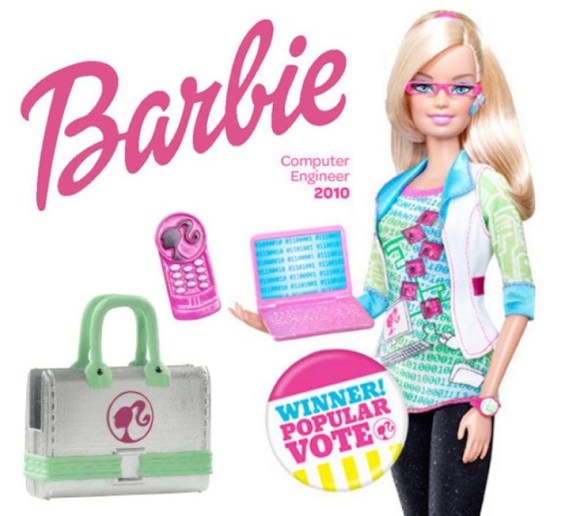
The makers of Barbie seem to apologize A LOT for underestimating young women. This time the Internet’s buzzing over a pretty cringe-worthy Barbie book, “I Can Be A Computer Engineer,” published out of Random House.

READ MORE: Mattel Pulls Sexist Barbie Book “I Can Be A Computer Engineer” Off Amazon | TechCrunch.

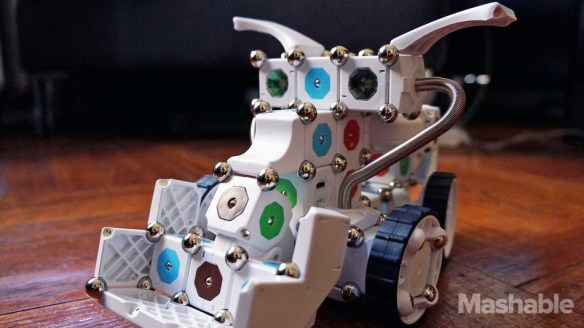
Moss is a pricey Erector set for robot lovers [REVIEW] | Mashable


Browsing toy stores these days is often a constant reminder that they don’t make toys like they used to — because, in most cases, they make them better. It’s row after row of products you wish had been around back in your younger days. This goes double for the high-tech toys including robotics, smart devices and construction kits. Moss is a little bit of each.

The second product from Boulder, Colorado-based hardware startup Modular Robotics began life as a Kickstarter campaign late last year, when it managed to capture more than three and a half times its lofty $100,000 goal. And it’s not tough to see why. The robotics kit promises balances education and entertainment.

READ MORE Moss is a pricey Erector set for robot lovers [REVIEW] | Mashable

The Latest in EdTech Trends: 70 Resources Roundup | OEDB.org


Lists recently posted resources related to MOOCs, big data, Gamification, The Flipped Classroom, 3D Printing, Mobile Learning and Digital Textbooks. READ: The Latest in EdTech Trends: 70 Resources Roundup | OEDB.org.

Your Next Psychologist May Prescribe The Legend of Zelda | Mashable


When Carly McCullar, 32, was diagnosed with autism spectrum disorder as an adult, she wanted to improve her social and communication skills before heading into the next stage of her life.

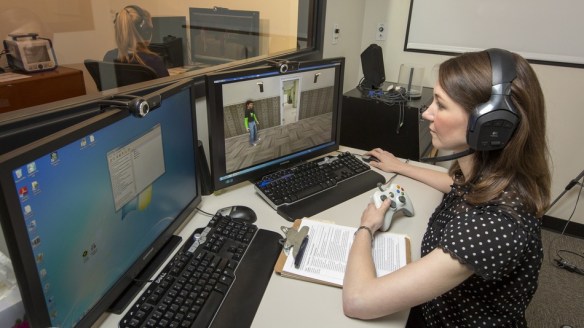
Never having received such help before, she volunteered to participate in a unique treatment program: virtual reality. Sitting at a computer that tracked her facial expressions, the game tested her social cognition and provided feedback, McCullar played through various realistic scenarios, including a job interview, a confrontation with a loud neighbor and even dating.

The program, a collaborative effort from gaming technology experts and health researchers at the Center for BrainHealth at the University of Texas at Dallas, simulates everyday experiences and social situations that are typically difficult for those with autism or anxiety disorders. And its just one example in a growing trend in which video games are forms of therapy. READ MORE: Your Next Psychologist May Prescribe The Legend of Zelda | Mashable