Woman Puts Deus Ex On Computer Chip In Her Hand | Kotaku


Zoe Quinn doesn’t just make heartfelt, experimental games like Depression Quest. She’s also pretty set on becoming a cyborg, judging from the cyberpunk as hell implants she’s gotten over the last couple of years.

READ MORE: Woman Puts Deus Ex On Computer Chip In Her Hand | Kotaku

Artists Etch Comic Strip Into a Single Strand of Hair | Mashable


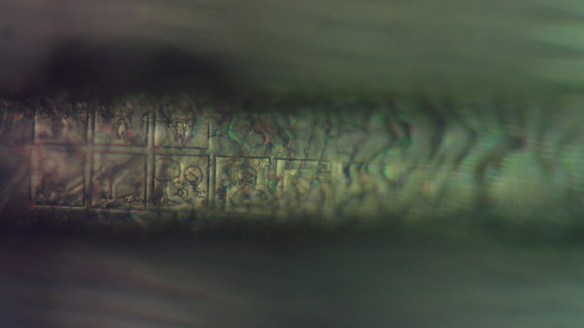
The eye-strain implications alone are staggering. To promote the upcoming Exceptional Hardware Software Meeting (EHSM) in Hamburg, Germany, a team of DIY artists and scientists has etched the world’s smallest comic strip on a single human hair.

READ MORE: Artists Etch Comic Strip Into a Single Strand of Hair | Mashable

10 New Breakthrough Technologies 2014 | MIT Technology Review


Technology news is full of incremental developments, but few of them are true milestones. Here we’re citing 10 that are. These advances from the past year all solve thorny problems or create powerful new ways of using technology. They are breakthroughs that will matter for years to come.

  1. Agricultural Drones
  2. Ultraprivate Smartphones
  3. Brain Mapping
  4. Neuromorphic Chips
  5. Genome Editing
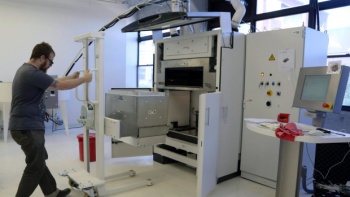
  6. Microscale 3-D Printing
  7. Mobile Collaboration
  8. Oculus Rift
  9. Agile Robots
  10. Smart Wind and Solar Power

READ MORE ON EACH STORY: 10 New Breakthrough Technologies 2014 | MIT Technology Review

jim golden animates vintage devices for ‘relics of technology’ | designboom


portland-based photographer jim golden delivers a hearty dose of nostalgia in his series ‘relics of technology’, comprising animated gifs and still life images. geometrically placed in a palette of vintage tones, the documented objects are society’s ‘technological’ media devices from the past, brought to life in a collection of moving images

See all the images: jim golden animates vintage devices for relics of technology | designboom

An Amazing Discovery: Andy Warhol’s Groundbreaking Computer Art | WIRED


An Amazing Discovery: Andy Warhol’s Groundbreaking Computer Art | Design | WIRED

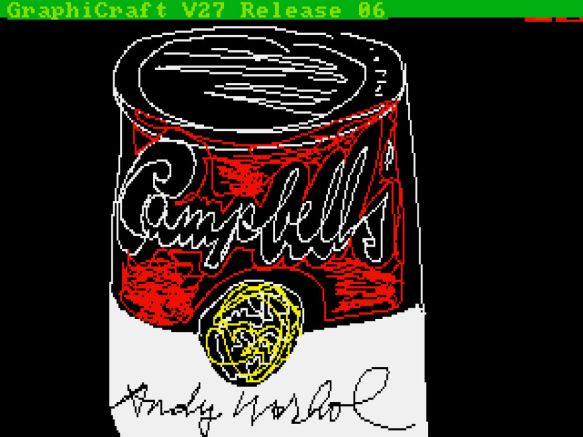
Back in the mid-1980s, Andy Warhol made a series of digital artworks on an Amiga 1000, a personal computer created by Commodore International. The artist, tapped by the company to be a spokesperson for the computer’s multimedia capabilities, created a few public pieces as part of a marketing campaign, but it was unknown if he had made any digital artworks on his own time.

Decades later, we now know he did. Stashed away on dozens of unlabeled floppy disks was a treasure trove of never-before-seen Warhol works that were slowly deteriorating. A multi-year, collaborative effort between a team of artists, museum professionals and the Carnegie Mellon Computer Club unearthed 28 works of art and a host of 1980s graphics software that Warhol used to create these digital pieces. Read more: An Amazing Discovery: Andy Warhol’s Groundbreaking Computer Art | Design | WIRED.

3D Printer Creates Magazine Cover Smaller Than A Grain of Salt | The Escapist


McGill University’s new 3D printer could produce 2000 copies of the same object before you’d finally spot them without a microscope.

If you thought the tech industry had a strange habit of miniaturizing everything, know that the print industry is now fully capable of catching up in that department. Canadian researchers at McGill University recently put a new microscopic 3D printer through its paces by producing a 0.011 by 0.014 millimeter National Geographic Kids cover, along with a map of Canada measured in micrometers. Obviously these images are impossible to view normally and could only be seen with the aid of a screen projecter. In fact, the magazine printout is so miniscule that if you made 2000 copies, you’d have just enough to cover a single grain of salt.

Read more: 3D Printer Creates Magazine Cover Smaller Than A Grain of Salt | The Escapist.

MIT’s FingerReader Helps The Blind Read With A Swipe Of A Digit | TechCrunch


At MIT’s Media Labs, researchers Roy Shilkrot, Jochen Huber and others are working on the “FingerReader,” a ring-like device that straps itself around your finger and reads printed text out loud with a synthesized voice, thanks to a mounted camera and heavily modified open source software. Read more: MIT’s FingerReader Helps The Blind Read With A Swipe Of A Digit | TechCrunch.

NASA’s About To Release a Mother Lode of Free Software | Gizmodo


If you’ve been thinking about getting started on the rocket project that’s been on your mind for ages, now is a good time to get serious. Next week, NASA will release a massive software catalog with over 1,000 projects. It’s not the first time the space agency’s released code, but it is the first time they’ve made it so easy.

The breadth and variety of the software projects that NASA’s about to give away are difficult to express. It’s not just a bunch of algorithms and star-finding software, though stuff like that is in there. The crazy geniuses that land rovers on Mars are actually releasing code for ultra high-tech NASA stuff like rocket guidance systems and robotics control software. There’s even some artificial intelligence.

And did I mention it’s all free? Read more: NASA’s About To Release a Mother Lode of Free Software | Gizmodo.

See also: NASA Technology Transfer Portal

‘Mind-reading’ technology can reconstruct faces from the viewer’s brain | CNET


Researchers at Yale have developed a method of reconstructing faces locked in the memories of other people. Read more: ‘Mind-reading’ technology can reconstruct faces from the viewer’s brain | CNET.

This Little-Known iOS Feature Will Change the Way We Connect | Wired.com


A new iOS app called FireChat is blowing up in the App Store. But it’s not the app itself that’s causing such a stir, it’s the underlying networking technology it taps into.

The idea behind FireChat is simple. It’s a chatting app. After registering with a name — no email address or other personal identifiers required — you’re dropped into a fast-moving chatroom of “Everyone” using it in your country. The interesting aspect, however, is the “Nearby” option. Here, the app uses Apple’s Multipeer Connectivity framework, essentially a peer-to-peer feature that lets you share messages (and soon photos) with other app users nearby, regardless of whether you have an actual Wi-Fi or cellular connection.

Read More: This Little-Known iOS Feature Will Change the Way We Connect | Gadget Lab | Wired.com.