An Ingenious Museum Design That Turns Visitors Into Creators | WIRED


An Ingenious Museum Design That Turns Visitors Into Creators | Design | WIRED

In the revamped Cooper Hewitt, still in Carnegie Mansion, there will be around 15 new interactive screen displays where users can draw, design, and virtually explore the Cooper Hewitt collection. Much of this will happen via an electronic pen conceived by Local Projects and Diller Scofidio + Renfro, and designed by Cooper Hewitt, GE, Sistelnetworks and Undercurrent. Each is paired with a unique URL on the visitor’s ticket, and as guests pass through different galleries they can touch the tip of their pen to wall text next to objects they find interesting, or inspiring. The pen then stores those selections. The museum still is finalizing details, but either way what follows will be a free-flowing, open-ended experience: with their pen, visitors can download all their selected items into a screen, and begin designing.

Read More: An Ingenious Museum Design That Turns Visitors Into Creators | Design | WIRED

The Secret To Creativity, Intelligence, And Scientific Thinking | Fast Company


The Secret To Creativity, Intelligence, And Scientific Thinking | Fast Company | Business + Innovation

The image is from cartoonist Hugh MacLeod, who came up with such a brilliant way to express a concept that’s often not that easy to grasp.

The image makes a clear point—that knowledge alone is not useful unless we can make connections between what we know. Whether you use the terms “knowledge” and “experience” to explain the difference or not, the concept itself is sound…READ MORE: The Secret To Creativity, Intelligence, And Scientific Thinking | Fast Company | Business + Innovation.

Lego Fusion Blends Virtual and Physical Gameplay | Mashable


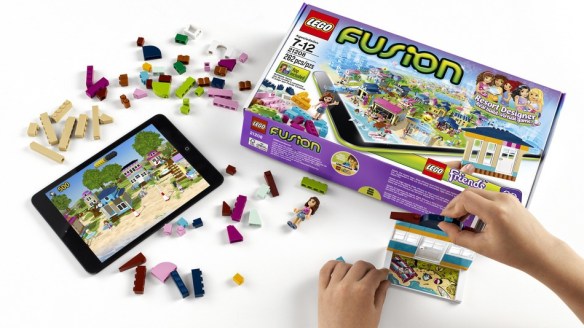
Leave it to Lego to use the word “fusion” correctly. The construction-toy companys new Lego Fusion analog-to-digital game sets are a true blend of real-world Lego building and tablet-app play.

Announced on Wednesday, and shipping in August and September, Lego Fusion boxes each come with 200 Lego pieces. They let you build and play in app-based virtual worlds that include a tower-defense game called “Battle Towers,” a town-building game called “Town Master,” a racing game called “Create and Race” and “Resort Designer.” What you build in the real world can be captured and used in the iOS and Android tablet apps. Each structure then becomes part of the game, and each game can be a part of your world or the larger Lego social community, where others are using their Fusion sets to build similar worlds. Towers can battle towers, race cars can compete against each other and townspeople can take virtual metros to visit other player’s towns.

Read more: Lego Fusion Blends Virtual and Physical Gameplay | Mashable

Niice Is A Beautifully Simple Tool To Create Moodboards | TechCrunch


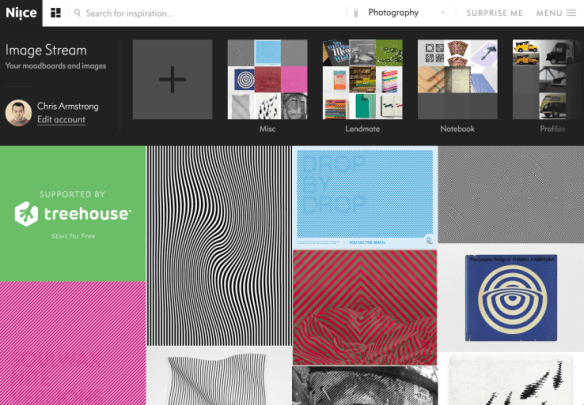
Every now and again I’m pitched a startup that I “get” instantly because it addresses a problem I’ve faced in the past and solves it in a simple, laser-focussed way. Niice is one such startup. It’s created a tool aimed at designers who need to create moodboards — a collection of inspirational images — in order to seed the creative process. The cloud-based moodboard-making service quietly launched a freemium version earlier this week.

Part image search engine, part image collection creator, Niice lets you search for images within its preselected image sources consisting of design galleries and various image communities on the web. The idea is to save designers having to trawl through bookmarked sites or rely solely on something like Google image search, as well exposing them to images they might not otherwise come across.

READ MORE: Niice Is A Beautifully Simple Tool To Create Moodboards | TechCrunch.

This Museum Gave Kids Crayon Helmets And Let Them Go Wild | Gizmodo


If drawing on the walls at home is a no-no, drawing on the walls at a museum is a massive dont-even-think-about-it. Or it was, until the playful design duo behind Matheny Studio teamed up with Melbournes National Gallery of Victoria to create a new on-site space where kids can strap on crayon studded helmets, shoes, and all kinds of wacky gear and go completely nuts. All. Over. Everything.

READ MORE” This Museum Gave Kids Crayon Helmets And Let Them Go Wild | Gizmodo

The Largest Makerspace On The Planet Opens In Columbus, Ohio | TechCrunch


Announced as far back as January, the efforts of founder Alex Bandar, COO Casey McCarty and Shop/Production Manger Matt Hatcher have finally come to fruition; the Columbus Idea Foundry — a 65,000 square ft. “makerspace” in the heart of Columbus, Ohio — is open in its brand new location.

READ MORE: The Largest Makerspace On The Planet Opens In Columbus, Ohio | TechCrunch

Find Your Passion With These 8 Thought-Provoking Questions | Co.Design


Warren Berger, author of A More Beautiful Question, collected the provocative questions top designers, tech innovators, and entrepreneurs ask themselves to spark creativity. Read more: Find Your Passion With These 8 Thought-Provoking Questions | Co.Design

See also: Scared Of Failing? Ask Yourself These 6 Fear-Killing Questions | Co.Design

Palette’s modular controller brings dials and sliders to your laptop (hands-on) | Engadget


Palette

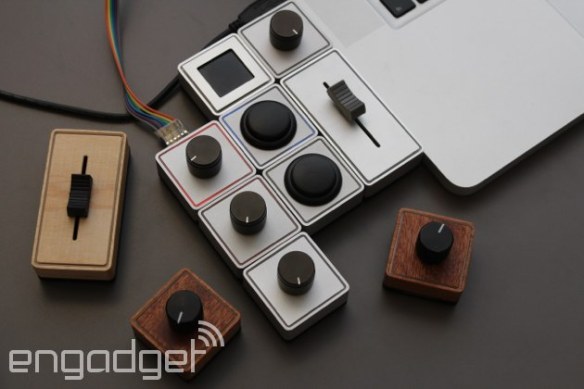
Palette co-founder Calvin Chu has a problem with how people work. “Creative professionals spend so much of their time on the computer, and at the moment, they still use a very generic one-size-fits-all keyboard and mouse interface.” It doesn’t make sense, he says — photographers, gamers, film editors, musicians and accountants all using the same interface? Surely there is a better way. “It should be specialized and made for your needs, and that’s where we came up for the idea for Palette.” Palette is Chu’s answer to a world that’s discarded tactile dials and switches for keyboards, mice and touch screens. It’s a modular collection of buttons, sliders and potentiometers that can be programmed to do almost anything on your PC. We took a look at an early prototype of the customizable controller to reacquaint ourselves with the tactile world.

Read: Palette’s modular controller brings dials and sliders to your laptop (hands-on)  | Engadget

Google Reveals Its 9 Principles of Innovation | Fast Company


Ever wonder what makes the Google the holy grail of productivity and creativity? There’s no magic in the drinking water at the Mountain View, CA company. The tech giant draws from what Google’s chief social evangelist, Gopi Kallayil, calls the nine core principles of innovation.

Kallayil shared his insights at this week’s San Francisco Dreamforce summit. Here are the nine rules that any enterprise, large or small, can adopt to steal Google’s innovative culture.

The principles:

  1. Innovation Comes From Anywhere
  2. Focus On The User
  3. Aim To Be Ten Times Better
  4. Bet On Technical Insights
  5. Ship And Iterate
  6. Give Employees 20 Percent Time
  7. Default To Open Processes
  8. Fail Well
  9. Have A Mission That Matters

Read more: Google Reveals Its 9 Principles of Innovation | Fast Company | Business + Innovation.

What Neuroscience Says About The Link Between Creativity And Madness | Co.Design


The idea that very creative people are also a little crazy has been around since humanity’s earliest days. In ancient Greece, Plato noted the eccentricities of poets and playwrights, and Aristotle saw that some creative types were also depressives. In modern times, that connection has persisted, from Robert Schumann hearing voices guide his music to Sylvia Plath sticking her head in an oven to Van Gogh cutting off his ear to Michael Jackson … being Michael Jackson.

Today the link between creativity and mental illness is firmly embedded in the public conscience. Unlike some supposed cultural wisdoms, however, there’s a good bit of scientific evidence behind this one. Behavioral and brain researchers have found a number of strong if indirect ties between an original mind and a troubled one (many summarized in a recent post by psychologist Scott Barry Kaufman at his Scientific American blog).

Read: What Neuroscience Says About The Link Between Creativity And Madness | Co.Design | business + design.