Study Finds That #Active Video #Gaming May Be As Good For #Kids As Playing Outside | TechCrunch


Researchers at the University Of Tennessee At Knoxville have confirmed what my kids believe they already know – that some video gaming can be as physically intense for younger gamers as playing outside.

Before you let your toddlers have a four-hour Minecraft session, however, check out the methodology [hint “active gaming”]. READ MORE: Study Finds That Active Video Gaming May Be As Good For Kids As Playing Outside | TechCrunch.

Play Lego Worlds, A New Minecraft Competitor From Lego, Right Now | TechCrunch #LEGOWorlds #Minecraft


When Minecraft came out, I heard a lot of people describe as sort of like virtual Lego. Now, there’s a game for which that description is even more apt: Lego Worlds, an open world building game that lets users create using virtual Lego bricks, and interact with the world as a customizable minifigure avatar. READ MORE: Play Lego Worlds, A New Minecraft Competitor From Lego, Right Now | TechCrunch.

STEM Curriculum Turned Into An Addictive [iOS] Game | Co.Design #STEM #apps


Levers, pulleys, and wheels—they’re tools that outline some of the most foundational principles in physics. But foundational principles are boring. What’s fun is using a lever to catapult a boulder at a castle, breaking down the bricks one by one to discover a dragon sleeping inside.

That is the premise of Simple Machines, the latest iOS app by the educational game studio Tinybop. In the past, Tinybop has made interactive books on the human body and plant life. They’ve created a fun simulator for kids to build their own robots. But with Simple Machines, they’re taking aim at a very particular part of student curriculum: The first stages of STEM (science, technology, engineering, and math), in which kids commonly learn about six “simple machines”—the lever, pulley, wheel, wedge, inclined plane, and screw.

READ MORE: STEM Curriculum Turned Into An Addictive Game | Co.Design | business + design.

Video Game Link to Psychiatric Disorders Suggested by Study | The Guardian #gaming #psychology


People who regularly play action video games could be at increased risk of developing neurological and psychiatric disorders, a study suggests.

The research, published in a Royal Society journal on Wednesday, found that people who played games such as Call of Duty, Grand Theft Auto V and Tomb Raider were more likely to employ navigational strategies associated with decreased grey matter in the hippocampus part of the brain.

Decreased volume in the hippocampus has been associated with disorders such as schizophrenia, post-traumatic stress disorder, depression and Alzheimer’s disease.

The lead study author, Prof Greg West, from the University of Montreal’s department of psychology, said the paper indicated that benefits of video games, such as improved attention and perception, highlighted in previous studies, could come at a price.

READ MORE: Video game link to psychiatric disorders suggested by study | Technology | The Guardian

MinecraftEdu Takes Hold in Schools | School Library Journal #minecraft #education


There aren’t any express objectives or any real way to win in Minecraft. It’s a “sandbox,” in gaming speak—offering free play without a specific goal and currently used by more than 18.5 million players, with some 20,000 more signing up every day. Users may choose between Creative Mode, in which they can build using unlimited resources by themselves or with friends, with no real danger or enemies, and Survival Mode, where they fend off enemies and other players and fight for resources and space. They can trade items and communicate using a chat bar. Modifications (or mods) can add complexity by creating things like economic systems that let players buy and sell resources from in-game characters using an in-game currency system. These downloadable mods can also add computer science concepts and thousands of additional features.

MINECRAFTEDU

Minecraft’s worlds and possibilities are truly endless—and increasingly, so are its educational adaptations for school use. Available on multiple platforms (Apple, Windows, Linux, PlayStation, Xbox, Raspberry Pi, iOS, Android, Windows Phone), the game’s flexibility and collaborative possibilities make it a favorite among devotees of gamification.

“Minecraft is like LEGOs on steroids,” says Eric Sheninger, a senior fellow at the International Center for Leadership in Education. “Learners of all ages work together to ultimately create a product that has value to them,” he adds. “The simple interface provides students in the classroom with endless possibilities to demonstrate creativity, think critically, communicate, collaborate, and solve problems.” A Swedish student research study also showed that collaboration in Minecraft provided a more immersive problem-solving experience than group LEGO building.

via MinecraftEdu Takes Hold in Schools | School Library Journal.

How do I start playing video games? A beginner’s guide | The Guardian + Top 20 best video games for beginners | The Guardian


Recently, several non-techy friends have sidled up to me and asked, in hushed conspiratorial tones: “Keith, should I be playing video games?”

It’s an interesting question for two reasons. First, I write about video games for a living; that’s my job. So what did they think I was going to say? “No, they’re a massive waste of time”? Secondly, a few years ago, people my age were feeling guilty about playing video games, now there are people feeling guilty that they’re not. This is progress.

So for all the potential gamers out there who are thinking about taking up a joypad but don’t know where to start, or which games to try, or what a joypad looks like, here is a quick guide

READ MORE: How do I start playing video games? A beginner’s guide | Technology | The Guardian.

So you’ve bought a shiny new games console, or a ridiculously powerful PC, or the latest smartphone iteration, and now you want to play games on it. What happens next?

Well, if you’ve been doing the whole gaming thing for years, you’ll know which review sites to go to, what developers and publishers produce the best stuff and what everyone is looking forward to playing. But if you’re just starting out, it can all be a bit … overwhelming. Every year around 1,000 new titles are released on consoles and PC, and there are more than 300,000 games available on the Apple App Store. So how are you supposed to work out what to play?

Following our Beginner’s Guide to Gaming, here are 20 titles which will get you started. We’ve included smartphone, console and PC titles, and instead of focusing on titles aimed specifically at non-gamers, we’ve tried to select excellent recent titles that will introduce you to more complex gaming experiences and represent where the medium is right now.

READ MORE: Top 20 best video games for beginners | Technology | The Guardian.

Cosplay, Comics, and Geek Culture in Libraries [Blog] by Ellyssa Kroski


Ellyssa Kroski of iLibrarian fame said farewell to the iLibrarian blog in late 2014. iLibrarian was one of my top resources for emerging technologies in libraries and information services. I will miss the iLibrarian posts but am excited about the new website she has launched called Cosplay, Comics, and Geek Culture in Libraries. I’ve participated in coding and medieval times events over the past few years and am surprised at how quickly these events are transitioning into the mainstream. With the increasing popularity and growth of these activities, CCGC in Libraries is sure to be a great resource for librarians and fans of cosplay, comics and geek culture.

Speaking of geek culture, I’ve been watching TNT’s The Librarians series and I guess I’m hooked. It’s silly and over the top but I enjoy the mix of science fiction, mystery and adventure. IMO each episode’s concept/theme is more interesting than the overarching storyline. Cassandra’s outfits are way too distracting though! The remaining 2 episodes of Season 1 air tonight, January 18, 2015, on the Space channel in Canada. 

Via the CCGC in Libraries website.

Welcome everyone to Cosplay, Comics, and Geek Culture in Libraries! This is an exciting time for geeks of all kinds to be involved with libraries as today’s savvy libraries have begun to embrace new ways to engage library patrons such as fandom events, comic book and graphic novel collections, comic cons, cosplay events.

The intersection of these interests with libraries is a perfect match as libraries are striving to develop entertaining and educational new programs and services that will appeal to not only children but young adults as well as “kids at heart” of all ages. And these new programs and resources fit well with the interests of cosplayers who can utilize the equipment in library makerspaces such as 3D printers and sewing machines to create many of their props and costume pieces, as well as comics fans who can come to the library to read comics and graphic novel collections, video and board game enthusiasts who attend library gaming events, and geeks of all types who are drawn to “nerd nights”, Dr. Who marathons, and Harry Potter socials, etc.

I decided to start this blog, not only because I am a self-proclaimed geek, cosplayer, and comics reader and collector myself, but because this is a cutting-edge area of growth in libraries with significant appeal to today’s patrons. I think that there is much that we can do to expand and develop this type of programming and collection development. And I’m not alone. I’ve been joined by a talented group of international writers, librarians, information professionals, and library patrons to provide articles and inspiration to libraries seeking to incorporate cosplay, comics, and geek culture in their libraries!


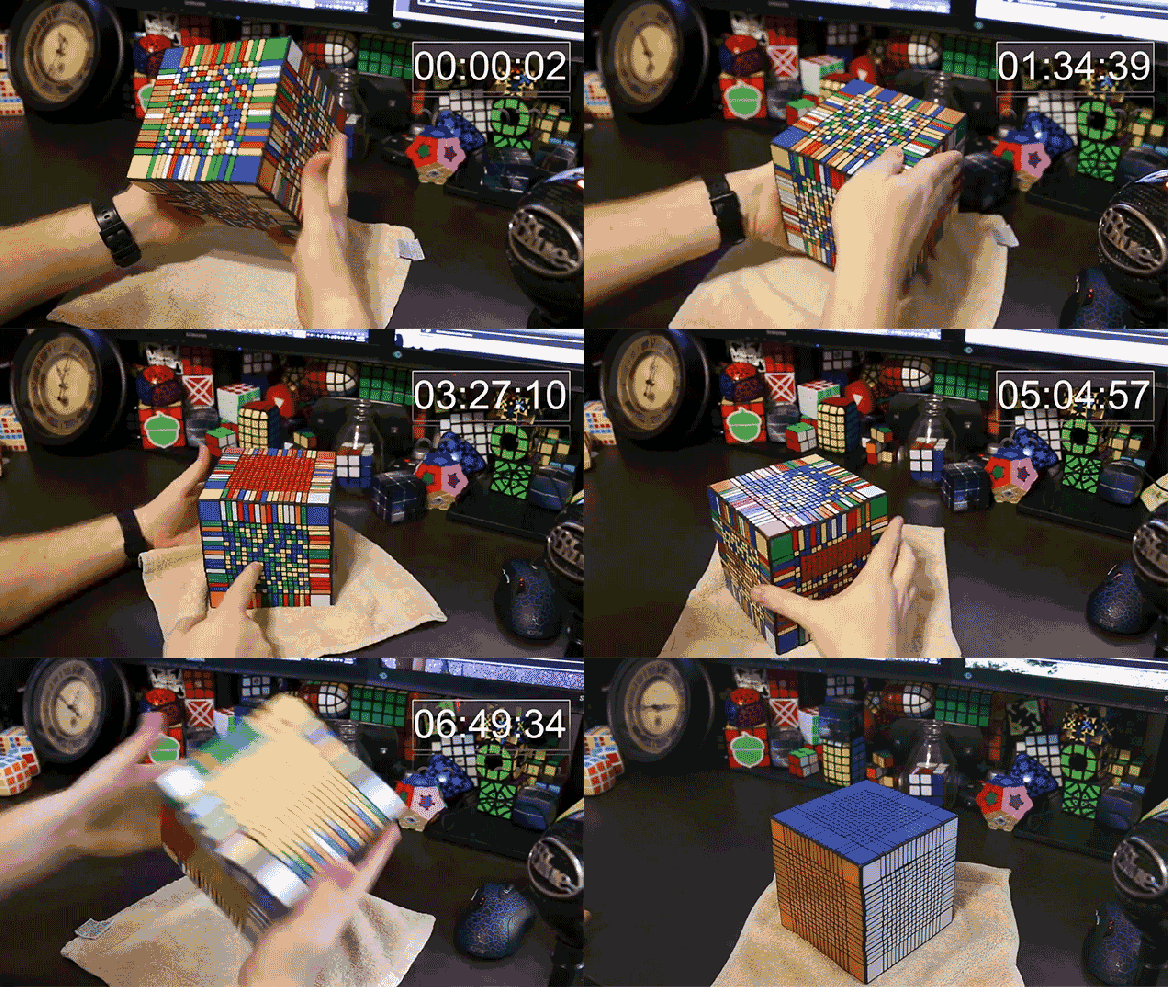
It Took This Guy Over 7 Hours To Solve the World’s Hardest Rubik’s Cube | Gizmodo


It Took This Guy Over 7 Hours To Solve the World's Hardest Rubik's Cube

Fascinating to glimpse the different types of Rubik’s Cubes this guy has in his collection. I thought there was only the original! The 17x17x17 cube would be a unique addition for libraries to have available for patrons to borrow. 

Seven hours sounds just about right for the average puzzle enthusiast to solve a standard 3x3x3 Rubik’s Cube. But Youtuber RedKB isn’t your average puzzle enthusiast. Instead of tackling a 3x3x3 cube, he solves this incredibly complex 17x17x17 cube designed by Oskar Van Deventer. In the end it took him about seven-and-a-half hours to get all the colored sides put back in order. READ MORE: It Took This Guy Over 7 Hours To Solve the World’s Hardest Rubik’s Cube | Gizmodo

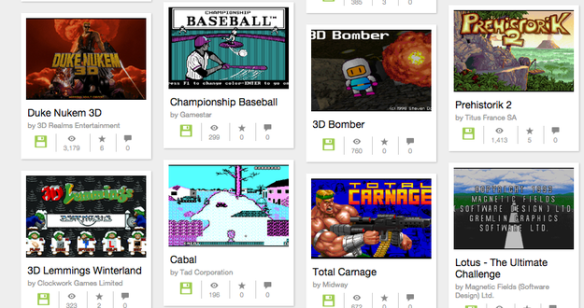
Over 2,400 MS-DOS Games — Like Oregon Trail — Can Now Be Played Online | BuzzFeed News


archive.org

Rejoice, ’90s kids: More than 2,400 of your favorite MS-DOS games are now available to play online via the Internet Archive. READ MORE: Over 2,400 MS-DOS Games — Like Oregon Trail — Can Now Be Played Online | BuzzFeed News.

Related
Internet Archive offers 900 classic arcade games for browser-based play | Ars Technica

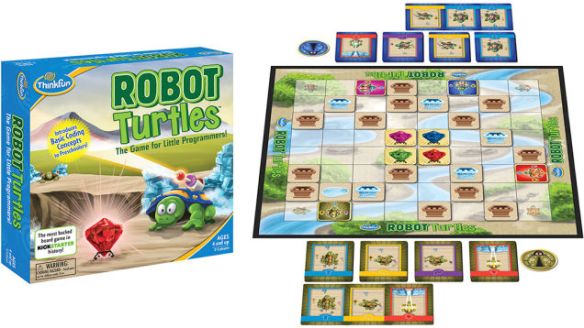
A Board Game That Teaches Four-Year-Olds How To Code | Kinja


When was the last time a champion speller rolled up to a Bee in a Ferrari? Never. If you really want to guarantee your kids make something of themselves one day, youll want to forget board games like Scrabble and focus on building real-world skills. Not only does Robot Turtles teach a love of Herpetology the study of reptiles it also teaches them the basics of computer programming—aka coding.

Read More: A Board Game That Teaches Four-Year-Olds How To Code | Kinja