Why Facebook Would Pay $3 Billion for Snapchat (And Why It Shouldn’t) | Wired.com


Facebook just tried to spend $3 billion on a 20-person company that lets you send disappearing photos. At least, that’s the word from The Wall Street Journal, a rather trustworthy source.

According to the paper, SnapChat rejected the offer. But the amazing thing is that Facebook would offer that much money in the first place. SnapChat has no revenues, and its collection of users — however many there are — is puny when you consider that Facebook reaches over 1.2 billion people around the world. Across the internet, so many people are asking themselves: Why on earth would Facebook offer so much for this tiny company?

Read more: Why Facebook Would Pay $3 Billion for Snapchat (And Why It Shouldn’t) | Wired Business | Wired.com.

25 Awesome Social Media Tools Your Brand Should Be Using [Infographic] | Marketing Technology Blog

Image


25 Awesome Social Media Tools Your Brand Should Be Using

News: Education & Technology, Librarianship


Education & Technology

With MakerBot Academy, the 3-D Printing Movement Aims for Schools | AllThingsD
The company announced on Tuesday an initiative to begin seeding its Replicator 3-D printing machines inside of K-12 schools across the U.S. The effort comes in partnership with DonorsChoose.org, a site that allows public school teachers to make online requests for classroom projects, which are then backed by a Kickstarter-like funding drive.

Twitter goes for the masses with new storytelling feature | CNET
Twitter excels in capturing the “moment” as events happen, but it isn’t great at telling a story. With custom timelines, the company hopes to lure a broader audience by giving it coherent narratives rather than just the raw materials.

Librarianship

How Iran Uses Wikipedia To Censor The Internet | BuzzFeed
A new study from the University of Pennsylvania’s Annenberg School claims that Wikipedia might hold the key to understanding how Iran censors, and controls, the internet. The answer, in four words: with a heavy hand.

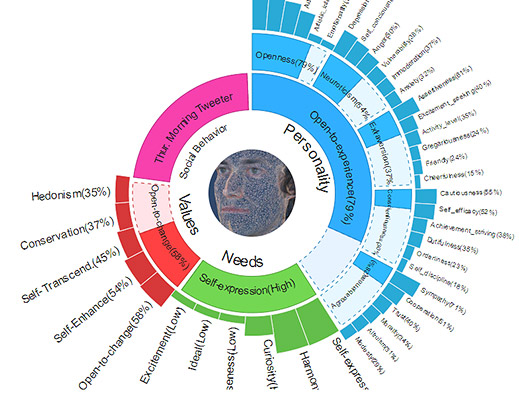
IBM Software Learns Your Personality, Could Tailor Ads Accordingly | MIT Technology Review


Trying to derive a person’s wants and needs—conscious or otherwise—from online browsing and buying habits has become crucial to companies of all kinds.

Now IBM is taking the idea a step further. It is testing technology that guesses at people’s core psychological traits by analyzing what they post on Twitter, with the goal of offering personalized customer service or better-targeted promotional messages.

Read more: IBM Software Learns Your Personality, Could Tailor Ads Accordingly | MIT Technology Review.

IBM Personality Analysis


History of #Hashtags [Infographic] | Offerpop


In just 6 years hashtags have evolved from a simple symbol to one of today’s most valuable marketing tools.

And it doesn’t stop there. Hashtags have integrated the lives of every day people, every day. From a student’s Instagram pic to a CMO’s tweets, the use of hashtags have accelerated into mass popularity.

In this infographic, we’ve compiled some key moments of the hashtag’s lifetime to get a better idea of how this common sign turned into a global icon.

For marketers, the hashtag’s short, but rich history proves its ability to attract attention and build conversations around your message.

via History of #Hashtags | Offerpop.

You may also like:

History of Hashtags

News: Education & Technology, Librarianship


Education & Technology

Twitter had its IPO today. Twitter’s Strong IPO Leaves The Company More Richly Valued On A Per-User Basis Than Facebook At Its Debut | TechCrunch. You may also like: Post-Twitter IPO: Time to fret about a new tech bubble? | CNET and 14 Moments That Defined Twitter | FastCompany

Did your Adobe password leak? Now you and 150m others can check | theguardian
Leak is 20 times worse than the company initially revealed, and could put huge numbers of peoples’ online lives at risk. Direct link to the Adobe leaked credentials checker.

How Pinterest Plans to Woo the Rest of the Internet | FastCompany
Unlike social media platforms like Twitter that capture the here and now, Pinterest is for dreaming of what’s ahead, says CEO Ben Silbermann…“People use Pinterest every day to get ready for and excited about something in their future–what they’re going to make for dinner, what they’re going to teach their classroom of students. If we can create a set of connections between things that they’re interested in, we can help them plan for that future.”

Librarianship

5 sites teens flock to instead of Facebook | MarketWatch


Reviews Snapchat, Pheed, PicsArt, Tumblr, and Vine. Read: 5 sites teens flock to instead of Facebook | MarketWatch

You may also like: Snapchat Ceo Evan Spiegel Talks Sexts And Growth | AP

The Beginner’s Guide to TweetDeck | Mashable


TweetDeck‘s development path might look more like a roller coaster than the typical incline, but it’s for good reason. After Twitter bought the app in 2011, TweetDeck pulled support for various social networks — most recently Facebook — and dropped its mobile apps in order to focus on its core purpose in desktop form: Twitter.

Social media managers and casual tweeters alike can benefit from TweetDeck’s organizational tools, such as customizable columns, multiple account toggling and scheduling. With a modern, clean design and automatically refreshing feeds, TweetDeck’s utility comes in its simplicity and ease in setting up.

Here’s how to get started on TweetDeck. Soon your personal and professional Twitter troubles will be long gone.

Read the guide: The Beginner’s Guide to TweetDeck | Mashable

Related:

Children and the internet: a parent’s guide | The Observer | theguardian


Jamie Oliver has banned his children from social media – and in many families there is a constant battle between demands for privacy and safety. Here, parents share the lessons they have learned and the techniques they use.

Read: Children and the internet: a parent’s guide | Technology | The Observer | theguardian.

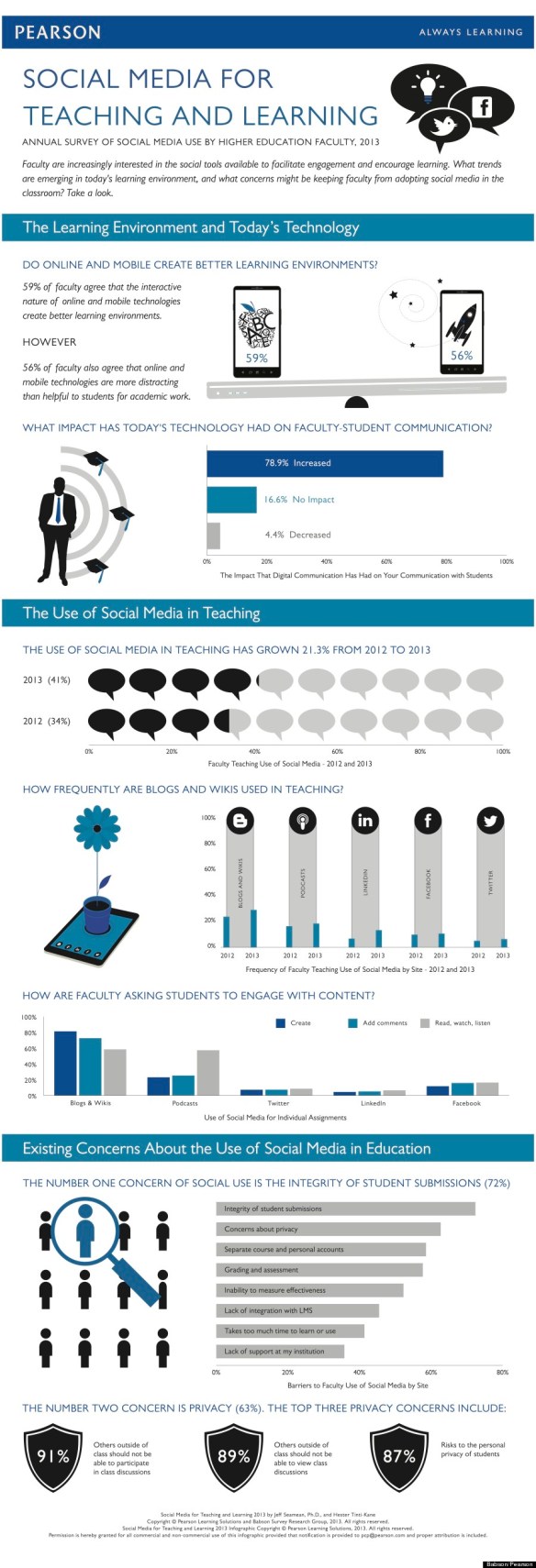
How Professors Are Using Social Media (INFOGRAPHIC) | HuffPost


Article in Full

Professors aren’t so different from the regular populace when it comes to their views on social media.

Just over 70 percent used social media in their personal lives, a survey released last week by Babson Survey Research Group andPearson found. This figure mirrors usage among the general population, according to the Pew Research Center.

Babson and Pearson surveyed 8,000 faculty members from all disciplines in higher education for their report, “Social Media for Teaching and Learning.”

Faculty personally choose to use Facebook more than any other type of social media outlet, according to the report, but were more likely to use blogs and wikis for classroom assignments.

Less than half of faculty — 41 percent — use social media as a tool in class, but that’s up from 33.8 percent in last year’s survey.

“Faculty are not only expanding their use of social media, but also becoming more sophisticated in their use,” Jeff Seaman, co-director of the Babson Survey Research Group, said in a statement. “We see steady growth in adoption year over year; however, there are still great concerns that we hear from every age group, and that holds educators back from full adoption in their teaching.”

Faculty cited “integrity of student submissions” and privacy as their main concerns with social media use. Privacy was a large concern among previous surveys of the general population as well.

Social Media for Teaching and Learning