Category Archives: Technology
Education in the 21st Century [Infographic] | TopMastersInEducation.com

Russia Launching New Search Engine Sputnik to Compete With Google | Mashable
Rostelecom, the country’s state-controlled telecom service, has been charged with creating a search engine to compete with the likes of Google, as well as well local search-engine leader Yandex, which is based in the Netherlands, according to Reuters.
Read: Russia Launching New Search Engine Sputnik to Compete With Google | Mashable.
Adults Reading YA Novels, 7 Unconventional Reasons to Read, VPL Bring Books Back Amnesty Week, Girl Donates 1 MM Books
Are you a YA addict? Jezebel says you should Never Be Ashamed of Being an Adult Into Young Adult Novels.
Beyond the simple pleasure of reading here are 7 Unconventional Reasons Why You Absolutely Should Be Reading Books | HuffPost Books
Vancouver Library offers amnesty for readers facing overdue fines | The Vancouver Sun. Bring your books back Oct. 21-27 in person to have book fines cleared from your library card.
Heartwarming story of determination. Maria Keller, 13-Year-Old Minnesota Girl, Donates 1 Million Books | HuffPostBooks
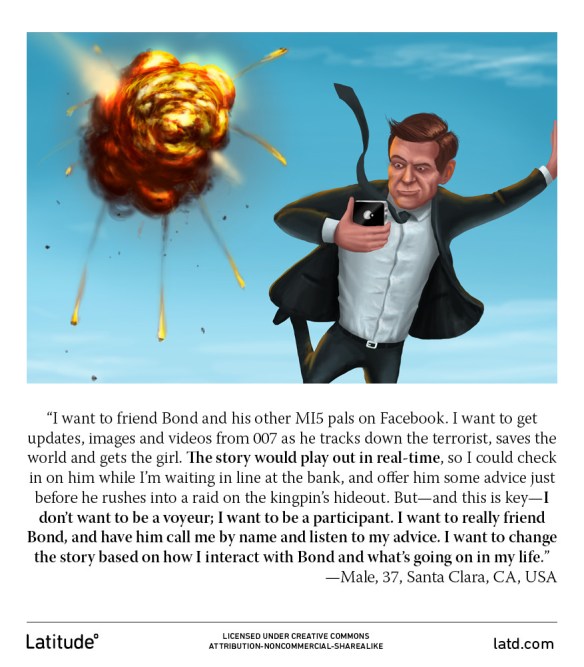
The Future Of Storytelling Is About To Get Wild | ReadWrite
Many of us go about our lives constantly surrounded by screens, immersed in various “stories”: movies, TV shows, books, plot-driven video games, news articles, advertising, and more. Whether we realize it or not, we’re creating new behaviors, routines, mindsets, and expectations around what we watch, read or play—which in turn presents new challenges and opportunities for creators and marketers.
In other words, while the fundamentals of good storytelling remain the same, technology is changing how stories can be told. But what does that mean exactly?
Since last year, Latitude, a strategic insights consultancy, has been conducting an ongoing Future of Storytelling initiative to understand what audiences want for the long haul. Below are eight predictions for the future of storytelling based on what we found. (More information about Latitude’s multi-phase research project is available here.)
- Stories Come Out Of The Screen, Into The Physical World
- Characters Will Become Connections
- Stories Will Unfold From Different Vantage Points
- Stories Will Be Told 24/7
- Storytelling Goes Bottom-Up
- Stories Will Make The World A Better Place
- Videos Will Offer One-Click Storefronts
- Passive Or Active Experience—It’ll Be Your Choice
Read: The Future Of Storytelling Is About To Get Wild | ReadWrite.
Andrew Fitzgerald: Adventures in Twitter fiction | TED.com
In the 1930s, broadcast radio introduced an entirely new form of storytelling; today, micro-blogging platforms like Twitter are changing the scene again. Andrew Fitzgerald takes a look at the (aptly) short but fascinating history of new forms of creative experimentation in fiction and storytelling.
via Andrew Fitzgerald: Adventures in Twitter fiction | Video on TED.com.
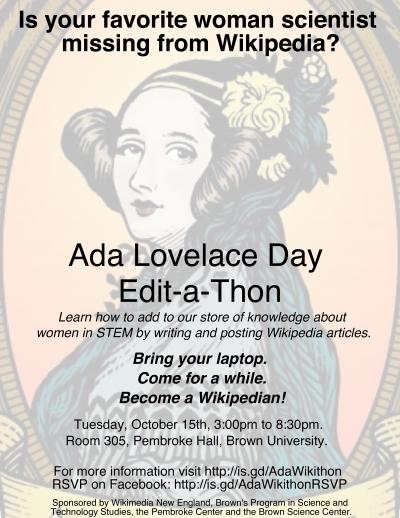
Wiki editing session at Brown University recognizes women in science | Brown University
For generations, including this one, women in science have remained underrepresented and underrecognized. On Oct. 15, 2013, from 3 p.m. to 8:30 p.m, people who want to change that can gather at a Wikipedia “edit-a-thon” to increase the representation of women in science and technology. The event marks Ada Lovelace Day, named for the 19th-century female scientist who pioneered computational programming.
The Joy of Data Driven Storytelling | Leslie Bradshaw
3M Cloud Patron “Buy and Donate”; No Anonymity in Facebook Search; Nye, NASA YouTube Jupiter Series; Making Makerspaces
Patrons can donate to their library via new 3M Cloud feature. 3M Cloud Library Introduces “Buy and Donate” Program Supported by Kobo | TMCnet.com
Privacy setting removed for good. Now anyone can find you on Facebook — no matter what | CNET.
Love science? Want to learn more? Bill Nye, NASA Team Up for Jupiter Mission YouTube Series | PCMAG.com
Creating a makerspace is not that hard according to School Library Journal. Low Tech, High Gains: Starting a Maker Program Is Easier Than You Think | The Digital Shift
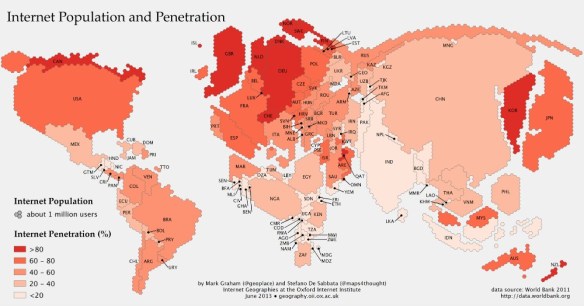
What the World Would Look Like If Countries Were As Big As Their Online Populations | The Atlantic
The map, created as part of the Information Geographies project at the Oxford Internet Institute, has two layers of information: the absolute size of the online population by country (rendered in geographical space) and the percent of the overall population that represents (rendered by color). Thus, Canada, with a relatively small number of people takes up little space, but is colored dark red, because more than 80 percent of people are online. China, by contrast, is huge, with more than half a billion people online, but relatively lightly shaded, since more than half the population is not online. Lightly colored countries that have large populations, such as China, India, and Indonesia, are where the Internet will grow the most in the years ahead. (The data come from the World Bank’s 2011 report, which defines Internet users as “people with access to the worldwide network.”)
 infophile