Bots, Block Chain, and Beacons Hot Topics at LITA #Tech #Trends Panel | ALA Midwinter 2016 #librarianship #libraries #LIS #information


Good post to review current and on the horizon technology trends in information services, including trends I have not heard of yet such as praxis and block chain potential.

READ: Bots, Block Chain, and Beacons Hot Topics at LITA Tech Trends Panel | ALA Midwinter 2016

#Digital #Afterlife: Managing Memories of Loved Ones in the Digital Age | #death #socialmedia #memorials


A little discussed topic but an event we may all be confronted with at some point. Below are some resources I have collected regarding managing your digital afterlife or the memories of loved ones in the digital age. The resources provide information on preserving memories on social profiles such as Facebook, Instagram and Twitter and downloading data from Apple, Google and other services.

Information

Research

Services


Biodiversity Heritage Library Launches #Crowdsourcing #Games | Library Journal #libraries #search #gamification #volunteer


The Purposeful Gaming and BHL project recently launched its first two browser-based video games, Smorball and Beanstalk.  Both are designed to offer players a fun online diversion while helping the Biodiversity Heritage Library (BHL) enable full-text searching of digitized materials. Funded by a grant from the Institute of Museum and Library Services (IMLS), which was awarded in December 2013, the project is exploring how games might be used to entice people to participate in crowdsourcing efforts at libraries and museums. READ MORE: Biodiversity Heritage Library Launches Crowdsourcing Games | Library Journal

30 Simple #Tools For #Data #Visualization | Co.Design #tech


There have never been more technologies available to collect, examine, and render data. Here are 30 different notable pieces of data visualization software good for any designer’s repertoire. They’re not just powerful; they’re easy to use. In fact, most of these tools feature simple, point-and-click interfaces, and don’t require that you possess any particular coding knowledge or invest in any significant training. Let the software do the hard work for you. Your client will never know. MORE: 30 Simple Tools For Data Visualization | Co.Design | business + design.

Additional data visualization services, such as Creately, Doodle.ly and Viewshare listed on infophile’s Tools webpage.

Lessons from the #Digital Classroom | MIT Technology Review #data #education #tech


In four small schools scattered across San Francisco, a data experiment is under way. That is where AltSchool is testing how technology can help teachers maximize their students’ learning. Founded two years ago by Max ­Ventilla, a data expert and former head of personalization at Google, AltSchool runs schools filled with data-gathering technology.

Information is captured from the moment each student arrives at school and checks in on an attendance app. For part of the day, students work independently, using iPads and Chromebooks, on “playlists” of activities that teachers have selected to match their personal goals. Data about each student’s progress is captured for teachers’ later review. Classrooms are recorded, and teachers can flag important moments by pressing a button, as you might TiVo your favorite television show.

The idea is that all the data from this network of schools will be woven into a smart centralized operating system that teachers will be able to use to design effective and personalized instruction. There is even a recommendation engine built in. READ MORE: Educating Data | MIT Technology Review.

The Sexiest (And Last?) Job Of The 21st Century | TechCrunch #careers #tech #datascientist


Data scientist, according to a 2012 Harvard Business Review article, is the sexiest job of the 21st century. Given that its authors are Thomas H. Davenport and D.J. Patil, the declaration is hardly surprising. Nonetheless, the IT industry is besotted with the term, and is expecting huge shortages of skilled workers.

A less well-known paper, “The future of employment: how susceptible are jobs to computerization?,” was published less than a year later by two Oxford academics (data scientists, perhaps). The authors, Carl Benedikt Frey and Michael A. Osborne, examine 702 detailed occupations in the U.S. labor market and estimate that about 47 percent of total U.S. employment is at risk from computerization “over some unspecified number of years, perhaps a decade or two.” Nearly 100 occupations, covering a wide range of skills from manual to mental, showed a 95 percent or higher probability of computerization. READ MORE: The Sexiest (And Last?) Job Of The 21st Century | TechCrunch.

B.C. Court of Appeal Upholds Global Deletion Order Against @Google | Michael Geist #search


The B.C. Court of Appeal has released its decision in Equustek Solutions Inc. v. Jack, a closely watched case involving a court order requiring Google to remove websites from its global index. As I noted in a post on the lower court decision, rather than ordering the company to remove certain links from the search results available through Google.ca, the order intentionally targets the entire database, requiring the company to ensure that no one, anywhere in the world, can see the search results.

READ MORE: B.C. Court of Appeal Upholds Global Deletion Order Against Google | Michael Geist

Why Do Presidents Get Their Own #Libraries? | Atlas Obscura #POTUS #museums


In May, the Obama Foundation announced that Chicago will be the future location of the Barack Obama Presidential Center, which will include a library and museum. The center will become the 14th institution in the National Archives and Records Administration’s presidential library system, which includes centers dedicated to all presidents from Herbert Hoover onwards.

Over the years, millions of public and private dollars and ostensibly, man hours, have been spent curating these institutions. Which begs the question: why?

Franklin D. Roosevelt began this tradition when, in 1939, he decided to hand over his personal and presidential records to the federal government when leaving office. Two years later, the Franklin D. Roosevelt Presidential Library and Museum was built in Hyde Park, New York to house these records. READ MORE: Why Do Presidents Get Their Own Libraries? | Atlas Obscura.

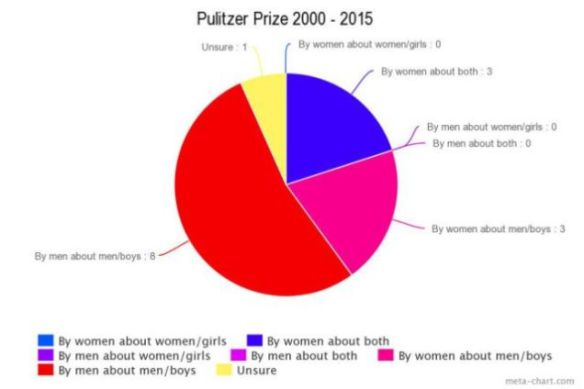
Novelist Finds That #Books About #Women Don’t Win Major #Awards | Jezebel #sexism #genderequality


We already knew that publishing is hard for women. VIDA’s annual count is a persistent reminder that, while the gender gap in publishing has begun to close, it’s still far from approaching equality.

But novelist Nicola Griffith had a feeling that it just wasn’t women writers that were underrepresented; books about women were absent as well. “I’ve been counting, subconsciously then consciously, for 20 years when I was first published and started to see how skewed the playing field was,” Griffith told Fusion. So Griffith gathered the data, and published it on her blog last week.

She found that regardless of the gender of the author, major awards overwhelming favored books about men and boys. READ MORE: Novelist Finds That Books About Women Don’t Win Major Awards | Jezebel

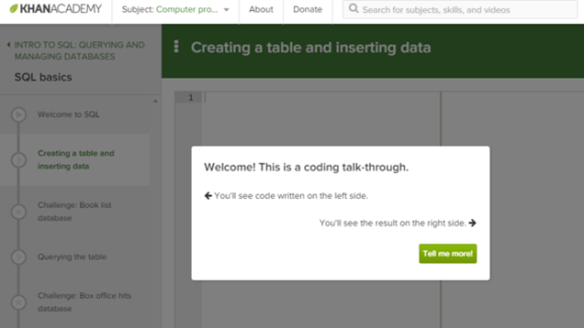
Learn SQL with Khan Academy’s New Interactive Course | LifeHacker #sql @khanacademy


SQL, the popular programming language used to manage data in a relational database, is used in a ton of apps. Khan Academy’s introductory course to SQL will get you started writing SQL in an interactive editor.

READ MORE: Learn SQL with Khan Academy’s New Interactive Course | LifeHacker