A Toy Dinosaur Powered by IBM’s Watson Supercomputer | WIRED #AI #toys #IBMWatson @Kickstarter


Image Credit: CogniToy

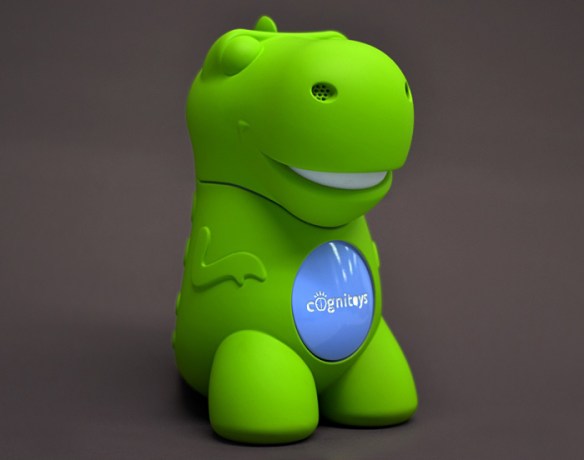
DON COOLIDGE AND JP Benini are bringing cognitive smarts to the world of children’s toys. Coolidge and Benini just launched a Kickstarter for a toy dinosaur toy driven by IBM Watson, the machine learning service based on the company’s Jeopardy-playing cognitive system.

Developed under the aegis of a company called Elemental Path and a project called CogniToys, this tiny plastic dinosaur uses speech recognition techniques to carry on conversations with kids, and according to Coolidge and Benini, it even develops a kind of smart personality based on likes and dislikes listed by each child.

The toy is another example of online machine learning pushing even further into our everyday lives. This is made possible not only by an improvement in AI techniques, but also by the ability to readily deliver these techniques across the net. READ MORE: A Toy Dinosaur Powered by IBM’s Watson Supercomputer | WIRED.

John Oliver’s 16 Minute #OnlineHarassment Rant | Last Week Tonight #satire #misogyny


#AugmentedReality #AR Goggles Aim to Help Legally Blind See | MIT Technology Review #tech #gadgets #disabilities @TechReview


Startup VA-ST thinks its depth-sensing glasses can help people with little sight get around more easily. READ MORE: Augmented-Reality Goggles Aim to Help Legally Blind See | MIT Technology Review

Google’s Guide To Designing With #Empathy | Co.Design #design #accessibility #tech #UX


According to the World Health Organization, more than 1 billion people worldwide have a disability. To Astrid Weber and Jen Devins, Google’s resident accessibility experts, that stat should be stamped on the back of every designer’s hand, because it means that one out of every seven people on the planet is potentially left behind by thoughtless design decisions. At this year’s Google I/O conference in San Francisco, I sat down with the two UX experts and asked them what designers could do to make their apps more accessible. The key, they told me, was using your imagination and having a little more empathy. Here are six ways designers can reach that extra billion.

READ MORE: Google’s Guide To Designing With Empathy | Co.Design | business + design.

B.C. Court of Appeal Upholds Global Deletion Order Against @Google | Michael Geist #search


The B.C. Court of Appeal has released its decision in Equustek Solutions Inc. v. Jack, a closely watched case involving a court order requiring Google to remove websites from its global index. As I noted in a post on the lower court decision, rather than ordering the company to remove certain links from the search results available through Google.ca, the order intentionally targets the entire database, requiring the company to ensure that no one, anywhere in the world, can see the search results.

READ MORE: B.C. Court of Appeal Upholds Global Deletion Order Against Google | Michael Geist

A Brief History Of Deep Linking | TechCrunch #tech


Deep linking has become one of the hottest topics in mobile over the past year as dozens of startups have launched around using, improving and discovering deep links. All of the big platform companies also have projects to own “the deep linking standard” or the search index for mobile. So, what are deep links and where did they come from?

READ MORE: A Brief History Of Deep Linking | TechCrunch.

Why Web Design is Dead | UX Magazine @UXMag #UX #webdesign


Web design is (finally!) dying of irrelevance. Web pages themselves are no longer the center of the Internet experience, which is why designers need to move on to the next challenges—products and ecosystems—if they want to stay relevant.

Web design has no future—a risky statement I know, but this article explains why it has no future and what we, as designers, can do about it. As a discipline, web design has already exhausted its possibilities, an emerging combination of tech and cultural trends highlight the need for a broader approach.

READ MORE: Why Web Design is Dead | UX Magazine

Makers Are Getting Their Own Social Network [Beta] | Engadget #makerspace makerspace.com


Maker Media founder Dale Dougherty speaks with such an infectious exuberance about creating and building that after speaking to him you want to go home and resurrect that project that’s been sitting in your garage or bedroom. From a magazine, to a series of faires and camps for children, Doughterty’s Maker Media reach – and enthusiasm – spans the globe and beginning today, it’s launching a beta of its new MakerSpace social network.

MakerSpace beta invitations are available [on request]. Like the Google model of beta invites, anyone that gets an invitation, can invite a few friends. If you don’t get into the beta, the full site will launch out of beta later this year. But, if you’re lucky enough to get onboard, you can create a profile, find and bookmark projects you find interesting, and post your own projects. Maker is calling it a place to “show and tell.” READ MORE: Makers are getting their own social network | Engadget

I just signed up! Looking forward to finding some ideas for the CoderDojo program I volunteer with. Also available from Makerspace.com is a free makerspace playbook with all you need to know about getting a makerspace up and running in their school or community.

Even Tiny Updates to Tech Can Be Obstacles for the Disabled | WIRED #tech #disabilities #access


I completed a web design for usability course during my MLIS program. For one of the sessions, guest lecturers with disabilities demonstrated how they accessed the Internet and provided insight into the challenges they experience with this activity. An eye-opening learning experience which I’m grateful to have had, which has provided me with greater understanding of the issues the disabled confront accessing the web and how designers can improve web content, layout and features to aid access. I highly recommend reviewing W3C Schools Accessibility Guidelines for more information on removing barriers to web information and communication. The article below discusses another challenge for the disabled when using tech: iterative updates.  

WHEN THE AMERICANS with Disabilities Act was passed 25 years ago, it was intended to usher in a new age of accessibility. It promised recourse from discrimination in employment, transportation and communication—in other words, greater access to the physical world. Since then, the world has evolved in radical ways—physical boundaries have come down as our lives have transitioned by varying degrees to online spaces. It is almost impossible to imagine our daily routines without the use of personal technology. For people with disabilities like myself, technology has opened new doors in ways the historic legislation never could have conceived.

As a person with autism and apraxia—a condition that leads me to have great difficulty with planning and organizing everything from moving my mouth when I speak to the steps needed to wash my hands—I rely upon personal technology for many things. A device that translates my typed words into a voice is my link to the world. And the rise of social media and online classrooms has expanded my networks and ability to participate in activities once closed to me.

But often these are positive outcomes of technology made for the masses rather than benefits baked into the design. And as technology is iterated, I can already see ways in which it has and will continue to create new barriers unless its creators consider a more universal approach.

READ MORE: Even Tiny Updates to Tech Can Be Obstacles for the Disabled | WIRED

The Most Important Insights From Mary Meeker’s 2015 Internet Trends Report | TechCrunch #tech


If you want to understand tech, Mary Meeker’s Internet Trends reports are the closest you’ll get to gospel. Today the Kleiner Perkins partner released her hotly anticipated 2015 edition. But at 197 slides, her presentation can be overwhelming. So we’ve broken down Meeker’s knowledge dump to highlight the most critical data points, and added our analysis so you know what you’re looking at.

READ MORE: The Most Important Insights From Mary Meeker’s 2015 Internet Trends Report | TechCrunch