How To Build A Data Visualization From Scratch | Co.Design #datavisualization


http://www.fastcodesign.com/embed/fd8175cb4fa2c?rel=1&src=embed&veggiemode=1
In this exclusive video created by R/GA with Fast Company, the advertising agency’s data team explains the basics of the art and science of data viz. “We have a mantra that we say: ‘The data is the brief,'” says R/GA managing director Marc Maleh. “The data is what’s going to tell the story—everything else comes second to that.” READ MORE: How To Build A Data Visualization From Scratch | Co.Design | business + design

You may also like:

The Next Big Thing In Design? Less Choice | Co.Design #design #tech


The article discusses the importance and applications of anticipatory design.

Technology has revolutionized the way we live our lives and do business, but it has done a terrible job reducing the stress of so many decisions. Industry by industry, great digital design has eliminated middlemen from the economy and put users in control, making it fast and easy for us to determine what we want and purchase it directly, whether on a computer or over a phone. Now, with unlimited opportunities for decision-making, we have essentially made ourselves the middlemen in our own lives.

The enjoyment, and even fetishization, of the beautifully designed experiences we rely on to make these decisions has distracted us from our original goal of simplifying our lives. We’ve forgotten that the ultimate purpose of an interface is to make things simpler. In the future, the best interface will be no interface at all and the best decisions will be made without me having to make them (but according to my preferences and goals). 

READ MORE: The Next Big Thing In Design? Less Choice | Co.Design | business + design

Chef Watson Dishes Up Unique Recipes Using Cognitive Computing | LifeHacker @IBMChefWatson #recipes


IBM’s Watson is a cognitive computer designed to handle complex problems and learn from and interact with humans. And, with the Chef Watson app, it can create novel recipes through an understanding of food science and people’s taste preferences.

READ MORE: Chef Watson Dishes Up Unique Recipes Using Cognitive Computing | LifeHacker

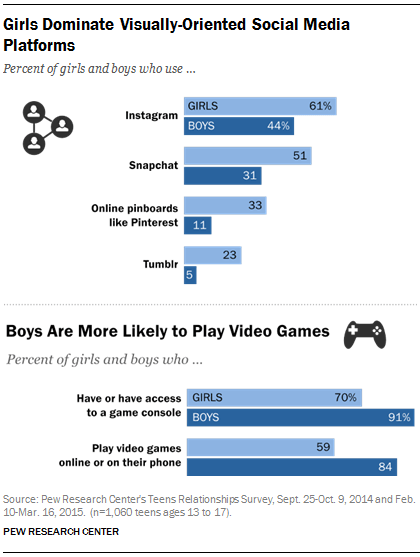
Teens, Social Media & Technology Overview 2015 | Pew Research Center


Read the summary here: Teens, Social Media & Technology Overview 2015 | Pew Research Center’s Internet & American Life Project

Complete Report PDF

9 Facts About Computer Security That Experts Wish You Knew | Gizmodo


Every day, you hear about security flaws, viruses, and evil hacker gangs that could leave you destitute — or, worse, bring your country to its knees. But what’s the truth about these digital dangers? We asked computer security experts to separate the myths from the facts. Here’s what they said.

READ MORE: 9 Facts About Computer Security That Experts Wish You Knew | Gizmodo

Publishers Know You Didn’t Finish “The Goldfinch” — Here’s What That Means For The Future Of Books | BuzzFeed News


Millions may have held their suspicions, but last month the Canadian e-reader company Kobo confirmed it: Most people who buy The Goldfinch don’t actually finish it. According to the company’s data, less than half of Canadian and British Kobo readers in 2014 made it to the end of Donna Tartt’s behemoth novel, one of the best-selling of the year.

How did Kobo know this? Like every e-reader and reading-app maker today, the company, a subsidiary of the Japanese e-commerce titan Rakuten, has access to a comprehensive suite of data about the reading behavior of its users. In a white paper titled “Publishing in the Era of Big Data” and released this fall, the company announced that “with the onset of digital reading … it is now possible to know how a customer engages with the book itself — what books were left unopened, which were read to the very last word and how quickly.” In other words, if you read books digitally, the people who serve you those books more than likely know just what kind of reader you are…READ MORE: Publishers Know You Didn’t Finish “The Goldfinch” — Here’s What That Means For The Future Of Books | BuzzFeed News.

Adobe’s e-book reader sends your reading logs back to Adobe—in plain text [Updated] | Ars Technica


Adobe’s Digital Editions e-book and PDF reader—an application used by thousands of libraries to give patrons access to electronic lending libraries—actively logs and reports every document readers add to their local “library” along with what users do with those files. Even worse, the logs are transmitted over the Internet in the clear, allowing anyone who can monitor network traffic such as the National Security Agency, Internet service providers and cable companies, or others sharing a public Wi-Fi network to follow along over readers’ shoulders.

Ars has independently verified the logging of e-reader activity with the use of a packet capture tool. The exposure of data was first discovered by Nate Hoffelder of The Digital Reader, who reported the issue to Adobe but received no reply.

via Adobe’s e-book reader sends your reading logs back to Adobe—in plain text [Updated] | Ars Technica.

How to Encrypt Everything | Gizmodo


[T]he Electronic Frontier Foundation EFF and Fight for the Future—offers instructions on how we can all avoid mass surveillance. But it also offers a “Privacy Pack” for the average user. Its simply a bundle of free software to help you encrypt your data and communications. You should download it right now.

Encryption doesnt require coding knowledge or math skills, but it does demand some attention and care. The Privacy Pack is a great starting point, but if you want to cover all of your bases, there are few more things you need to do. Weve put together a little guide that includes details on the software in the Privacy Pack and a little bit extra. In case youre not quite sure what encryption is or how it works, EFFs Surveillance Self-Defense site is a great place to start.

READ MORE How to Encrypt Everything | Gizmodo [Phone, Email, Browser, Everything Else]

Fans Create Database of Over 200,000 Jeopardy Questions | Center for Data Innovation


Reddit users have created a machine-readable data set of over 200,000 Jeopardy questions. The data, which the dataset’s creators scraped from fan-created question repository J!-Archive, contains each question’s answer, along with category, dollar value, air date, and other data.

READ MORE: Fans Create Database of Over 200,000 Jeopardy Questions | Center for Data Innovation

A Dead-Simple Tool That Lets Anyone Create Interactive Maps | WIRED


Data surrounds us. It’s everywhere, in the most micro sense small gadgets that track calories we’ve burned, or how much water our plants need to the most macro analytics companies that can monitor, for instance, the health of entire populations. But there are precious few companies actively working on helping us make sense of all that data. One of them is Tableau, a software company that turns heaps of data into visualizations for the common man: teachers, doctors, journalists, you name it. To make those tools clearer and cleaner, they recently partnered with Stamen Design, to release three new map templates, which anyone can play around with by downloading Tableau’s free software.

READ MORE A Dead-Simple Tool That Lets Anyone Create Interactive Maps | Design | WIRED.