10 Breakthrough Technologies 2015 | MIT Technology Review


Introduction: Not all breakthroughs are created equal. Some arrive more or less as usable things; others mainly set the stage for innovations that emerge later, and we have to estimate when that will be. But we’d bet that every one of the milestones on this list will be worth following in the coming years. -The Editors

  • Magic Leap
  • Nano-Architecture
  • Car-to-Car Communication
  • Project Loon
  • Liquid Biopsy
  • Megascale Desalination
  • Apple Pay
  • Brain Organoids
  • Supercharged Photosynthesis
  • Internet of DNA

READ MORE: 10 Breakthrough Technologies 2015 | MIT Technology Review.

10 Gadgets for the Bookworm in Your Life | Mashable


Everyone knows one of them. They always have their nose stuck in a book, they don’t go anywhere without one and they are perennially asking you if you’ve read the book version of that movie that just came out. Bookworms. Book lovers. Bibliophiles.

Although book reading has historically been an analog and solitary activity, 2015 brings with it a new appreciation for digital gadgets, and the book industry isn’t exempt from the wave of tech innovation. READ MORE: 10 gadgets for the bookworm in your life | Mashable

Raspberry Pi 2 runs free Windows 10, costs $35 | CNET


Microcomputing fans take note — there’s a new Raspberry Pi in town. The all-new board brings a host of new hardware, including a Broadcom 900MHz quad-core ARM Cortex-A7 processor and 1GB of RAM. Those upgrades, the Raspberry Pi Foundation says, make the Pi 2 Model B a much more powerful computer — not just a good computer for its $35 price.

The Raspberry Pi is an extremely simple computer that can be yours for very little money. It looks and feels very basic, but can be built into any number of geeky projects, and is designed to get youngsters interested in coding…

…Raspberry Pi is on a collision course with Microsoft’s upcoming Windows 10 operating system. “For the last six months,” the Raspberry Pi Foundation writes on its blog, “we’ve been working closely with Microsoft to bring the forthcoming Windows 10 to Raspberry Pi 2. Microsoft will have much more to share over the coming months. The Raspberry Pi 2-compatible version of Windows 10 will be available free of charge to makers.”

READ MORE: Raspberry Pi 2 runs free Windows 10, costs $35 | CNET.

Windows Holographic: Microsoft Goes Full Throttle Into Virtual Reality | Mashable


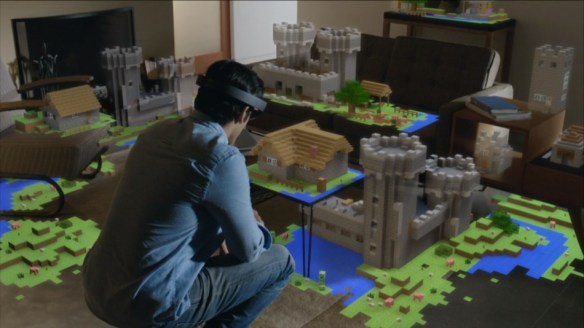
Microsoft introduced Windows Holographic, a technology that gives us a “world with holograms,” during its Windows 10 event on Wednesday. It would let a user transform one’s living room into a “surreal gaming environment,” according to the company.

There are no wires. No external cameras.

It works with Microsoft’s HoloLens headset, which allows users to wirelessly view holograms. Both the HoloLens and Windows 10 are slated to be available this fall.

READ MORE: Windows Holographic: Microsoft goes full throttle into virtual reality | Mashable

James Patterson’s New Book Will Self-Destruct In 24 Hours | Co.Create


I have not read any Patterson books in the last decade or so, as I’m not a fan of his collaborations with other authors to churn out titles. That being said, this is a fantastic book promotion concept. Very creative…and ‘thrilling’ idea.

James Patterson's New Book Will Self-Destruct In 24 Hours | Co.Create | creativity + culture + commerce

He’s got bazillions of fans, sold hundreds of millions of books, and has been called the best paid writer in the world. But this is probably the first time James Patterson will release a book that will actually explode.

READ MORE: James Patterson’s New Book Will Self-Destruct In 24 Hours | Co.Create | creativity + culture + commerce.

Disabled Boy Learns to Play Piano With His Eyes Using Virtual-Reality Headset | The Guardian


Eye Play the Piano is the work of Japanese VR headset manufacturer Fove, working with the University of Tsukuba. The project is pitched as a “universal piano” which children can play using eye movements while wearing the headset.

Through the use of Fove’s eye-tracking technology, the headmount recognises the user’s eye movement. The user blinks on one of the many panels within the interface to trigger the preferred note, which is then conveyed to the piano,” explains the Eye Play the Piano website.

READ MORE: Disabled boy learns to play piano with his eyes using virtual-reality headset | Technology | The Guardian.

Google Cardboard Is The Right Virtual-Reality Gadget For Right Now. But What’s Next? | Fast Company


I’d like to try the Cardboard experience to compare to the Oculus Rift. I tried OR at Netspeed 2014, experiencing an under water universe (boring with unwieldy navigation) and a roller coaster (exciting; definitely created a unique, visceral experience that made me want to puke my guts out after). Looking forward to more virtual reality experiences as the tech and devices evolve.
Google Cardboard Is The Right Virtual-Reality Gadget For Right Now. But Whats Next? | Fast Company | Business + Innovation

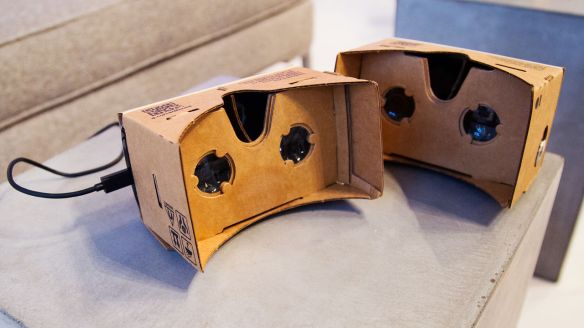
Google Cardboard has come a long way since Android honcho Sundar Pichai introduced it with a sheepish grin six months ago. The smartphone virtual reality viewer, made from folded-up cardboard with a pair of attached lenses—you supply an Android phone to provide computing power and a display—has shipped more than 500,000 units as of early December. (You can build your own Cardboard, or buy a ready-made version from not-quite-official sources for under $30.) Google has now added a Play Store showcase for the best Cardboard apps, and released a software development kit to spur even more VR app creation.

For a project that took mere weeks to throw together, Cardboard has done surprisingly well. But its success also puts it in an awkward position, somewhere between the oddball project that Cardboard appeared to be back in June and the serious business that prompted Facebooks $2 billion acquisition of Oculus VR in February. As virtual reality matures, is Cardboard prepared to mature with it?

READ MORE: Google Cardboard Is The Right Virtual-Reality Gadget For Right Now. But What’s Next? | Fast Company | Business + Innovation.

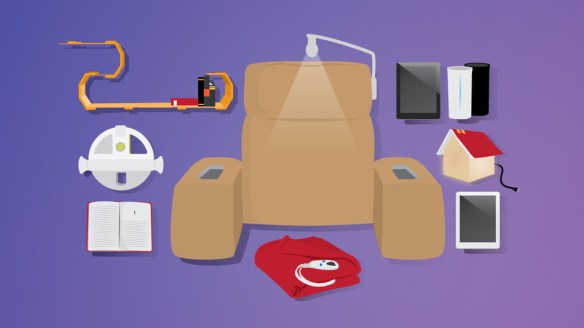
Moss is a pricey Erector set for robot lovers [REVIEW] | Mashable


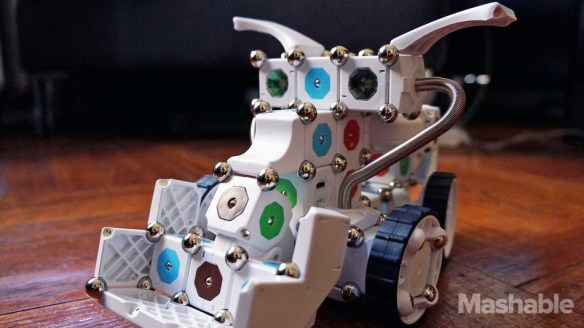
Browsing toy stores these days is often a constant reminder that they don’t make toys like they used to — because, in most cases, they make them better. It’s row after row of products you wish had been around back in your younger days. This goes double for the high-tech toys including robotics, smart devices and construction kits. Moss is a little bit of each.

The second product from Boulder, Colorado-based hardware startup Modular Robotics began life as a Kickstarter campaign late last year, when it managed to capture more than three and a half times its lofty $100,000 goal. And it’s not tough to see why. The robotics kit promises balances education and entertainment.

READ MORE Moss is a pricey Erector set for robot lovers [REVIEW] | Mashable

New Tablet Case Recognizes Sign Language and Translates It Into Text | WIRED


When you’re deaf, finding a job isn’t easy. The trickiest part, explains Ryan Hait Campbell, is the interview. “You’re not required to tell an employer you’re deaf until the interview, but sometimes, they’re a little shocked,” says Campbell, who has been deaf since birth. “They don’t know how to handle it.”

Because of things like this, he says, unemployment rates are staggeringly high among the deaf. Hard numbers are tough to come by, but some figures estimate that around half of people with hearing disabilities are unemployed.

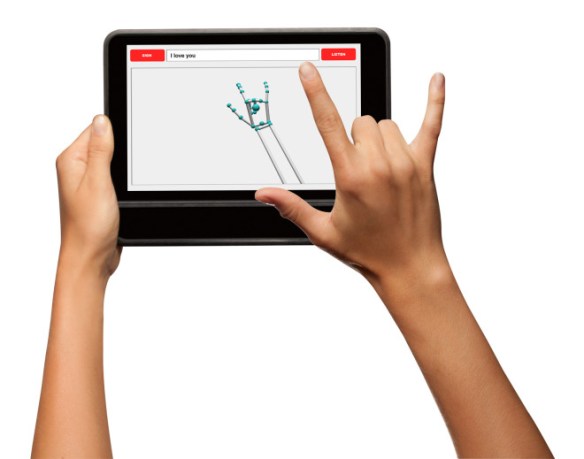
But Campbell wants to change this. He’s the co-founder and CEO of MotionSavvy, an Alameda, California-based startup that’s developing a case for tablet computers that can serve as a virtual interpreter for the deaf. Known as UNI, the case uses gesture recognition technology developed by Leap Motion to translate sign language into audible speech.

READ MORE: New Tablet Case Recognizes Sign Language and Translates It Into Text | WIRED.

Reuters | New KNFB smartphone app gives sight to the blind | KurzweilAI


The National Federation of the Blind, the nation’s leading advocate for access to print by the blind, has applauded the release of KNFB Reader, a new app for the iPhone and other Apple iOS devices, which uses the phone’s camera and state of the art optical character recognition (OCR) technology to give the blind instant access to the contents of print materials.

Members of the National Federation of the Blind have worked with KNFB Reading Technology, which developed the app along with Sensotec, KNFB Reader is now available in the Apple iTunes app store.

READ MORE: Reuters | New KNFB smartphone app gives sight to the blind | KurzweilAI.