Publishers Know You Didn’t Finish “The Goldfinch” — Here’s What That Means For The Future Of Books | BuzzFeed News


Millions may have held their suspicions, but last month the Canadian e-reader company Kobo confirmed it: Most people who buy The Goldfinch don’t actually finish it. According to the company’s data, less than half of Canadian and British Kobo readers in 2014 made it to the end of Donna Tartt’s behemoth novel, one of the best-selling of the year.

How did Kobo know this? Like every e-reader and reading-app maker today, the company, a subsidiary of the Japanese e-commerce titan Rakuten, has access to a comprehensive suite of data about the reading behavior of its users. In a white paper titled “Publishing in the Era of Big Data” and released this fall, the company announced that “with the onset of digital reading … it is now possible to know how a customer engages with the book itself — what books were left unopened, which were read to the very last word and how quickly.” In other words, if you read books digitally, the people who serve you those books more than likely know just what kind of reader you are…READ MORE: Publishers Know You Didn’t Finish “The Goldfinch” — Here’s What That Means For The Future Of Books | BuzzFeed News.
Windows Holographic: Microsoft Goes Full Throttle Into Virtual Reality | Mashable


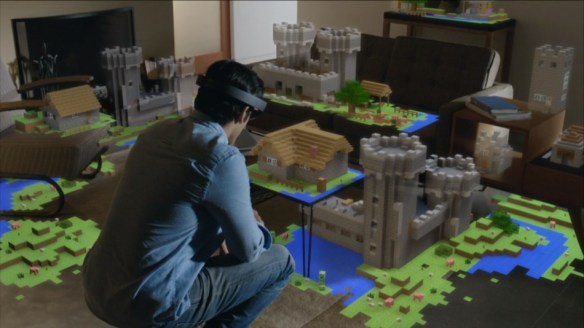
Microsoft introduced Windows Holographic, a technology that gives us a “world with holograms,” during its Windows 10 event on Wednesday. It would let a user transform one’s living room into a “surreal gaming environment,” according to the company.

There are no wires. No external cameras.

It works with Microsoft’s HoloLens headset, which allows users to wirelessly view holograms. Both the HoloLens and Windows 10 are slated to be available this fall.

READ MORE: Windows Holographic: Microsoft goes full throttle into virtual reality | Mashable

James Patterson’s New Book Will Self-Destruct In 24 Hours | Co.Create


I have not read any Patterson books in the last decade or so, as I’m not a fan of his collaborations with other authors to churn out titles. That being said, this is a fantastic book promotion concept. Very creative…and ‘thrilling’ idea.

James Patterson's New Book Will Self-Destruct In 24 Hours | Co.Create | creativity + culture + commerce

He’s got bazillions of fans, sold hundreds of millions of books, and has been called the best paid writer in the world. But this is probably the first time James Patterson will release a book that will actually explode.

READ MORE: James Patterson’s New Book Will Self-Destruct In 24 Hours | Co.Create | creativity + culture + commerce.

Disabled Boy Learns to Play Piano With His Eyes Using Virtual-Reality Headset | The Guardian


Eye Play the Piano is the work of Japanese VR headset manufacturer Fove, working with the University of Tsukuba. The project is pitched as a “universal piano” which children can play using eye movements while wearing the headset.

Through the use of Fove’s eye-tracking technology, the headmount recognises the user’s eye movement. The user blinks on one of the many panels within the interface to trigger the preferred note, which is then conveyed to the piano,” explains the Eye Play the Piano website.

READ MORE: Disabled boy learns to play piano with his eyes using virtual-reality headset | Technology | The Guardian.

Google Cardboard Is The Right Virtual-Reality Gadget For Right Now. But What’s Next? | Fast Company


I’d like to try the Cardboard experience to compare to the Oculus Rift. I tried OR at Netspeed 2014, experiencing an under water universe (boring with unwieldy navigation) and a roller coaster (exciting; definitely created a unique, visceral experience that made me want to puke my guts out after). Looking forward to more virtual reality experiences as the tech and devices evolve.

Google Cardboard Is The Right Virtual-Reality Gadget For Right Now. But Whats Next? | Fast Company | Business + Innovation

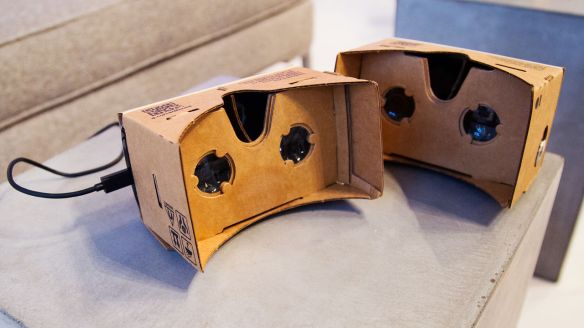
Google Cardboard has come a long way since Android honcho Sundar Pichai introduced it with a sheepish grin six months ago. The smartphone virtual reality viewer, made from folded-up cardboard with a pair of attached lenses—you supply an Android phone to provide computing power and a display—has shipped more than 500,000 units as of early December. (You can build your own Cardboard, or buy a ready-made version from not-quite-official sources for under $30.) Google has now added a Play Store showcase for the best Cardboard apps, and released a software development kit to spur even more VR app creation.

For a project that took mere weeks to throw together, Cardboard has done surprisingly well. But its success also puts it in an awkward position, somewhere between the oddball project that Cardboard appeared to be back in June and the serious business that prompted Facebooks $2 billion acquisition of Oculus VR in February. As virtual reality matures, is Cardboard prepared to mature with it?

READ MORE: Google Cardboard Is The Right Virtual-Reality Gadget For Right Now. But What’s Next? | Fast Company | Business + Innovation.

Over 2,400 MS-DOS Games — Like Oregon Trail — Can Now Be Played Online | BuzzFeed News


archive.org

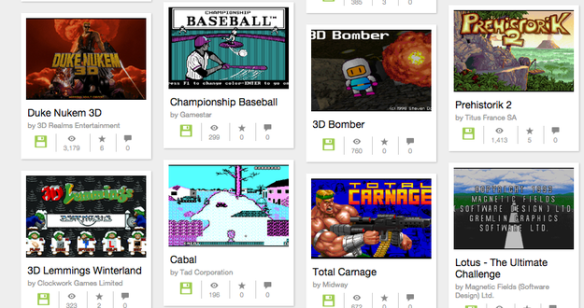
Rejoice, ’90s kids: More than 2,400 of your favorite MS-DOS games are now available to play online via the Internet Archive. READ MORE: Over 2,400 MS-DOS Games — Like Oregon Trail — Can Now Be Played Online | BuzzFeed News.

Related
Internet Archive offers 900 classic arcade games for browser-based play | Ars Technica

Indulge Your Inner Child and Lose a Few Hours To This Online Spirograph | Gizmodo


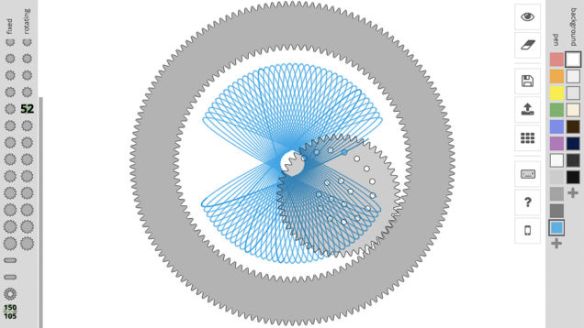
We’ve got computer graphics software thats so powerful it can generate images that make it seem like dinosaurs are back. But they still cant compare to the simple satisfaction you get from making a really complex hypotrochoid or epitrochoid with a marker and some perforated gears. So Nathan Friend was kind enough to build a browser-based Spirograph youre probably going to want to immediately bookmark.

The online Inspirograph, as Nathan calls it, lets you swap in gears of different sizes and choose pretty much any color your computers screen can display. And while you dont get that highly satisfying feeling of pen on paper as you make endless loops, its impossible to screw up your design on this version, unless you accidentally refresh the page.

via Indulge Your Inner Child and Lose a Few Hours To This Online Spirograph | Gizmodo

The Top UX Predictions for 2015 | UX Magazine


Top UX predictions for 2015 from UX Magazine contributors. The Top UX Predictions for 2015 | UX Magazine

How Technology Is Warping Your Memory | HuffPo


Take a moment to think about the last time you memorized someone’s phone number. Was it way back when, perhaps circa 2001? And when was the last time you were at a dinner party or having a conversation with friends, when you whipped out your smartphone to Google the answer to someones question? Probably last week.

Technology changes the way we live our daily lives, the way we learn, and the way we use our faculties of attention — and a growing body of research has suggested that it may have profound effects on our memories (particularly the short-term, or working, memory), altering and in some cases impairing its function.

The implications of a poor working memory on our brain functioning and overall intelligence levels are difficult to over-estimate…READ MORE: How Technology Is Warping Your Memory | HuffPo

Reading On A Screen Before Bed Might Be Killing You | HuffPo


You’ve heard that using screens before bedtime can mess with your sleep, but new research suggests the problem is even more serious.

Reading from an iPad before bed not only makes it harder to fall asleep, but also impacts how sleepy and alert you are the next day, according to new research from Brigham and Womens Hospital in Boston, Massachusetts. The study, published in the journal Proceedings of the National Academy of Sciences on Monday, said the findings could impact anyone who uses an eReader, laptop, smartphone, or certain TVs before bed.

The new research supports conclusions from older studies, which have also found that screen time before sleep can be detrimental.

READ MORE: Reading On A Screen Before Bed Might Be Killing You | HuffPo